 |
| http://www.slideshare.net/MikeGunn/setting-up-byodpptx |
Showing posts with label curriculum. Show all posts
Showing posts with label curriculum. Show all posts
Wednesday, 25 November 2015
BYOD - A viable alternative
There were a lot of people at the National Academies Show today who asked me for a copy of my presentation, and whose names and emails I didn't have time to take down (really sorry! Other people waiting to speak behind me!), so here, for those of you who are gluttons for punishment and want to go through it a second time, is the thing...

Monday, 6 July 2015
#PedagooLondon2015
Very swift blog post following on from a session I delivered to this year's (inspiring!) #PedagooLondon2015 conference...
Apart from the sheer joy of getting to meet forces for positivity such as the likes of @Kevbartle, @hgaldinoshea, @Edutronic_Net, @joeybagstock and several other personal heroes(!), the conference gave me the opportunity to reflect on my own practice, collect my own thoughts on how well it was going, and be realistic in my appraisal of the major obstacles I was facing. Through the ensuing debates about the validity of what I was proposing as a pedagogy on Twitter, you'll see there were plenty of questions which are hard to answer over 140 characters, so if you would like to engage in debate and discussion, please feel free to email me, or leave a comment.
If anyone wants some practical help with implementing the nitty-gritty of this stuff in their school, I'm sure mine will be happy to release me. Probably for a fee. Don't go thinking I get a cut of it neither!
Anyway, here are the slides...
Flipping the classroom using mobile technology
Apart from the sheer joy of getting to meet forces for positivity such as the likes of @Kevbartle, @hgaldinoshea, @Edutronic_Net, @joeybagstock and several other personal heroes(!), the conference gave me the opportunity to reflect on my own practice, collect my own thoughts on how well it was going, and be realistic in my appraisal of the major obstacles I was facing. Through the ensuing debates about the validity of what I was proposing as a pedagogy on Twitter, you'll see there were plenty of questions which are hard to answer over 140 characters, so if you would like to engage in debate and discussion, please feel free to email me, or leave a comment.
If anyone wants some practical help with implementing the nitty-gritty of this stuff in their school, I'm sure mine will be happy to release me. Probably for a fee. Don't go thinking I get a cut of it neither!
Anyway, here are the slides...
Flipping the classroom using mobile technology
Wednesday, 18 June 2014
In defence of Media and Film
I was quaking in my boots a little when OFQUAL published their list of subjects being considered for "reform" (or not!) a few weeks ago. And lo, there it was: Film is disappearing. One of the hardest, most engaging courses I teach, as well as one of the most enjoyable. Going. Going. Gone.
Those of you who follow these developments will know how this story goes: Two hours later OFQUAL rescinded their own publication, claiming that Film should not have been on the list (here if you're interested). Huzzah and hurrah.
But then it struck me that, rather than feeling happy at this, I should have been more than a little indignant at the fact that we have to defend our subject's validity YET AGAIN! So I decided act, and to take their consultation document: For all the good it did. A series of anodine and difficult to disagree with statements which will eventually secure tacit agreement for the measurements they were going to take anyway, I suspect. So I wrote to them. This is my open letter to OFQUAL, in defence of Media and Film Studies' place on our curriculum.
To whom it may concern
I am writing to you
about your online consultation concerning the reform of GCSEs and A Level qualifications.
Having filled in the entire document online, I was disappointed that that the
consultation document provided no opportunity to argue for the continuance of Media
or Film Studies at GCSE, AS and A level, so this letter is a direct appeal in
support of these subjects for your consideration in reforming them.
First, for the vast
majority of the students I teach, Media and Film Studies are the most important
subjects they learn, despite also studying so-called “traditional”
qualifications alongside them. I teach in a highly academic school, and we do
not teach for passes, we teach for excellence. Of the students I teach, seven
in the past year alone have been nominated for national and regional awards for
their Media and Film production work (including BFI Young Film-maker of the
Year). I doubt that they would ever have achieved this level of quality of
their own volition, without someone to introduce the subject to them in the
first place through passion, rigorous academic study and through practical
experimentation. These are the media and film professionals of the future, but
they need time to master their arts. Students who arrive at university to
embark on Media or Film as courses they are studying for the first time are at
a clear disadvantage according to my former students, and the fact that mine
have been training in professional skills since Year 10 means that one day,
they WILL join the industries and move these industries forward innovatively
and creatively, and keep the UK at the very top on international media and film
production, with all that this entails for National economic growth and
prosperity.
On an academic level, I
would draw your attention to the already demanding nature of assessment: GCSE
involves extended comparative writing which motivates many to improve their
linguistic abilities; A level examinations are currently substantial essay-based
examination papers. Both subjects include assessment of research skills, as
well as analytical skills. These are the bedrock of the “traditional”
curriculum we seem to be returning towards, so why would we withdraw subjects
which reinforce such skills?
Second, there is a
popular perception of Media and Film Studies as “soft” subjects, which I would
disagree with fundamentally. The vast majority of my students will also tell
you that Media and Film were far tougher courses than their “academic”
counterparts. In part this is the fault of the mass media itself and its largely
biased reporting of the subjects: The tabloids have no qualms about labelling
our subjects as lesser subjects compared to the “traditional” subjects being
pushed by the present government. The fact that the broadsheets put inverted
commas around the word soft does not
in any way absolve them of blame for reinforcing this perception, in my opinion.
The message from the media is clear: Studying media or film is an easy option.
However, I would argue that OFQUAL is equally to blame in this process for not countering this perception explicitly with evidence. I would contend that the level of demand at both GCSE and A level is very high: Students analyse film and media texts in exactly the same way as they do in English, except that they must take account of not only linguistic characteristics of texts, but also the way the layout, camera angles, editing and sound work in tandem with these linguistic features. This adds layers of meaning which are very subtle, additional to those studied in English, and indeed constitute an entire language of their own. And this only covers the textual analysis aspects of the courses. Film and Media Studies also require that students understand why texts are the way they are, by taking into account institutional, social, political, economic, historical and technological factors which may influence meaning and interpretations of texts. While this is a skill which is taught in English, I would argue that the up-to-date nature of film and media studies enquiries makes it much more challenging for students to interpret the influence of these contexts, as they are not doing so with the benefits of hindsight, or with the help of “expert voices” to guide them. Media and Film students learn a basic framework of analysis, but from there they are applying this to texts which are so new they are largely untouched by academic study. They have to apply their learning very subtly, often drawing in a range of material which benefits other subjects, such as History, English, Philosophy and Ethics, Sociology and Psychology.
However, I would argue that OFQUAL is equally to blame in this process for not countering this perception explicitly with evidence. I would contend that the level of demand at both GCSE and A level is very high: Students analyse film and media texts in exactly the same way as they do in English, except that they must take account of not only linguistic characteristics of texts, but also the way the layout, camera angles, editing and sound work in tandem with these linguistic features. This adds layers of meaning which are very subtle, additional to those studied in English, and indeed constitute an entire language of their own. And this only covers the textual analysis aspects of the courses. Film and Media Studies also require that students understand why texts are the way they are, by taking into account institutional, social, political, economic, historical and technological factors which may influence meaning and interpretations of texts. While this is a skill which is taught in English, I would argue that the up-to-date nature of film and media studies enquiries makes it much more challenging for students to interpret the influence of these contexts, as they are not doing so with the benefits of hindsight, or with the help of “expert voices” to guide them. Media and Film students learn a basic framework of analysis, but from there they are applying this to texts which are so new they are largely untouched by academic study. They have to apply their learning very subtly, often drawing in a range of material which benefits other subjects, such as History, English, Philosophy and Ethics, Sociology and Psychology.
Third, I would argue
that the range of topics which are studied at GCSE and A level is also extending
for students. The subject involves more than a study of mainstream popular film
and media texts. It involves the study of texts from other cultures around the
world, in other languages (my own students study Spanish, French, Iranian and
Cantonese/Mandarin texts), and asks that we understand those cultures so as to
be able to discern their influence on particular films, and their influence on
our own culture. These are skills which are incredibly demanding for students
between the ages of 14 and 18. Furthermore, film and media texts act as a
cultural resource and a way of gaining access to experiences and cultures, and raising
important issues relevant to society today (including, ironically, the idea of
media bias and media agendas, and their influence on the political agenda, the
reason that you are carrying out this consultation in the first place, one
might argue: See point 2 above).

The media and film
industries shape, and arguably construct, the terms of people’s perceptions,
the way people think, their attitudes, values and beliefs. Students need to understand
the role of the media in that process if they are to have any chance of
becoming engaged, active and reflective citizens within our society. If we deny
them these opportunities, we can only blame ourselves when society somnambulates
into a future of fear, despair and obsequious conformity. We owe our students a
better future than that.
I hope that you will
give the above arguments the weight of consideration they deserve when
considering how the subjects should be reformed.
Yours faithfully
Mike Gunn
If you want to write to them with your own equally passionate (but undoubtedly more eloquent) supporting letter, please feel free. The address is below:
Ofqual,
Spring Place,
Coventry Business Park,
Herald Avenue,
COVENTRY
CV5 6UB


PS Rest assured: I didn't post cartoons with my original letter to OFQUAL!
Wednesday, 28 May 2014
The Media Teacher's iPad
As an advocate of BYOD, I've always talked to colleagues about the benefits of different devices and approaches within a "mixed economy" digital learning space (or "classroom where everyone's phone is different, as it's more commonly known). Largely, what you want to do should dictate the type of device you use, and I'm quite happy to work in a multi-device environment. Until I walk into my Media classroom.
I should make it clear that I have no particular beef with any other individual device, or operating system, or anything else at which you think I may be showing signs of beefage. But the iPad has always been, and remains for the moment, the device with the most power in terms of Media and Film teaching. Think about it in terms of the skills you are trying to teach, and you'll see why:
Analysis Skills
Analysis is about note-taking, acquiring knowledge, and applying that knowledge in such a way as to develop critical faculties. This is one area of Media and Film Studies which might be considered "device-neutral" (bear with me here, we're in a new digital environment, and there will plenty more neologisms before the blog is out!). For note-taking, I use Evernote, with its easy-to-use UI, easy sharing, tagging and cataloging, and the ease with which I can record verbal feedback as audio attachments to notes. For formal written work, there's GoogleDocs, with comments, editing, sharing, peer feedback and revision checker facilities (I've written about these here, so forgive me for skimming). We do a lot of mind-mapping through Popplet, we use Notability to distribute, annotate and save PDF resources, and we use Explain Everything amongst others to offer different ways of showing learning. So far, so uncontroversial in BYOD terms. I don't think there is an app there which isn't multi-platform, and that's part of the reason I use them, because the students can get used to them in my lesson, and transfer those skills to their other lessons where a variety of different devices are in use.
Resources and curation
Similarly, in terms of resource curation, there are a host of ways of bringing information together for your students into one place which again should be accessible on whichever platform you want. Except Blackberry. There's always a kid with a Blackberry. And they're always the ones who can't access ANYTHING! I digress, somewhat bitterly...
Youtube is where all my video tutorials go (might just have blogged about that before as well), Pinterest is the magpie nest where I collate all of the useful and/or shiny things I find on the web, and if you don't already have a VLE to centralise all of this stuff at your school and distribute it to your students, you could do worse than Edmodo, an excellent all-rounder which has been made to mimic Facebook in an "acceptable to all teenagers" sort of a way.
Revision
Finally, for revision, there are a couple of nice apps called Revise Media Studies and Revise Film Studies which are, somewhat predictably if you've gathered the gist of this blog so far, also available on iTunes and Google. They're both pretty good for vocabulary learning, though if you want your students to learn specific definitions of yours, why not get them to make their own flashcard sets with Quizlet? It matches definitions to key terms, and has lots of useful games for testing, and it's available... You guessed it. Here's one I made earlier, à la Blue Peter. Or was it Jamie Oliver? Always get those two mixed up.
Practical Media
.PNG) Practical Media and film production are the areas where Google struggles to keep up with the vast breadth of the Apple app ecosystem, and where Windows are, well, the less said the better frankly. Here, iTunes seems to have a plethora of simple tutorial apps available for Film which show you the basics of filming and editing, such as Making Movies Make Sense and for the more advanced students, the more in-depth CLOSE-UP, an app of advanced film vocabulary which is really useful, with a variety of checklists for commenting on different elements of film making. For example, the checklist for Lighting includes sliders between low and high-key, high and low contrast, soft and hard light, as well as options for shadows, composition and light sources. Developers just seem to think that their most lucrative education market will be Apple users, and thus they write first for iTunes. Some stop at that, others get a Google app up and going soon afterwards, but that, I think, is why Apple are currently still ahead of the game.
Practical Media and film production are the areas where Google struggles to keep up with the vast breadth of the Apple app ecosystem, and where Windows are, well, the less said the better frankly. Here, iTunes seems to have a plethora of simple tutorial apps available for Film which show you the basics of filming and editing, such as Making Movies Make Sense and for the more advanced students, the more in-depth CLOSE-UP, an app of advanced film vocabulary which is really useful, with a variety of checklists for commenting on different elements of film making. For example, the checklist for Lighting includes sliders between low and high-key, high and low contrast, soft and hard light, as well as options for shadows, composition and light sources. Developers just seem to think that their most lucrative education market will be Apple users, and thus they write first for iTunes. Some stop at that, others get a Google app up and going soon afterwards, but that, I think, is why Apple are currently still ahead of the game.
Film Scripting
One of my favourite simple apps for creating scripts of any kind (theatre, radio, TV, film) is CeltX, and the iPad app is excellent for this. The app formats scripts exactly as they would be presented professionally, and prompts you for slug-lines, actions, character names, dialogue, parentheses, camera angles et al. When you write in what you want, the app automatically formats the information as it would be in a script. Character information is in capitals and centred, for example, whereas dialogue is indented appropriately. A free account means you can access any of your scripts in the cloud, via the desktop app, the iPad app, or the online editor. Simple, brilliant. Available on Google, but not as crisp or easy to use for some reason. No idea why.
Storyboarding
Storyboarding is one of the film-maker's key tools. There are a shedload of storyboarding apps out there, but the one I love most is Cinemek, because it uses photos taken on the device you are working on, and incorporates them into the storyboard frames. That seems like a faff to some students, because they want to draw something quickly and get on with filming. But the beauty of needing to take photos is that students need to think beyond showing the story events: They need to work out where they are shooting it from, what angle is best, the distance of the camera from the subject etc. And all of this gets them into the swing of thinking of the film product not simply as a story-showing device, but as a means of artistic expression in itself. And while the camera shooting gets them thinking about framing, the storyboard itself gets them to think about timing (they can change the duration of each frame), about camera movement (they can insert track and zoom symbols), about how the script and the visuals go together, and finally they can even play back a quick video to show them how the storyboard looks in motion. Awesomeness.
Filming
If you're a "real" film or media teacher, the iPad filming solution isn't a satisfactory one, but filming on an iPad certainly gives you an idea of pre-viz, and at lower ability levels or for younger age groups, it offers a lot of practical skills if you combine iPad filming with iMovie editing (especially good for its trailer templates) and / or Pinnacle Studio: The two have different functions, but are becoming much of a muchness (speed up, slow down, titles, images, sound effects etc). It's now also possible to get a bit better quality of sound and stability with Mic attachments (such as the iRig system, for use with proper microphones) and tripods designed deliberately for use with iPads. You can even control a multicamera shoot with the Collabracam app and if you want to go really nuts, there are basic Green Screen apps, as well as some more fun things like ACTION MOVIE, an app which allows you to ham up your real-life footage with exploding monsters, tumbling cars, you name it. All of these are plenty to exercise the creative minds of young students, and the process and skills are the basics you want them to learn for later on in their Media and film careers, from pre- to post-production, just a bit simpler.
Print
There are oodles of photo editing apps out there too, many of which do some neat things (Snapseed, Filterstorm, PS Express to name but a few), but few of them seem to do everything you want. For some reason, the apps which alter photos don't do good layout design, and the apps which do good layout aren't great for image editing. Personally I go with PS Touch for combining posters and images, and working with layers especially. There are standard Photoshop tools such as selection, magic wand, painting, cloning and blurring tools, as well as adjustment tools, a load of preset styles and effects, text, fill, gradient, lens flare... You get the idea. There's a lot of stuff. PS Touch makes them savable and they can then be used in other apps from the camera roll. However, having praised it to the heavens for its functionality, I should warn you that the functionality is inversely proportional to its usability! Get your degree first, then try to work out how to use it...
For bringing the whole thing together, QuarkDesign Pad allows you to create full design products which are exportable as PDF and PNG. We use Adobe InDesign with A-level students, but this is pretty good as a cut-down version. The app allows you to place boxes, designated them as text or image or background, give them shape and outlines and colour / opacity properties. And unlike PS Touch, the interface is a lot more intuitive. Between the two of them, you can get some pretty fancy print work going.
Web
There are tonnes of app design and webpage design tools out there to choose from, and I'd be loathe to name one over another, because their suitability will depend largely on your proficiency level and the quality and key functions of what you want to achieve. You can easily knock up something from templates with apps such as Simpl easy website builder. On the other hand, if you want to build from scratch and have something which is CSS editable, you could go for something like i-Dzign Web Page Builder, with its easy WYSIWYG interface, ability to save in a variety of formats, and also the ability to publish via an in app FTP client.
And there you have it. An almost complete tool-kit for Media and Film teachers, all on one portable (beautifully designed and premium-priced) device. Get a class set. Get an AppleTV to show everyone's work, and Robert's your father's brother and other such old-fashioned witticisms.
Enjoy.
I should make it clear that I have no particular beef with any other individual device, or operating system, or anything else at which you think I may be showing signs of beefage. But the iPad has always been, and remains for the moment, the device with the most power in terms of Media and Film teaching. Think about it in terms of the skills you are trying to teach, and you'll see why:
Analysis Skills
Analysis is about note-taking, acquiring knowledge, and applying that knowledge in such a way as to develop critical faculties. This is one area of Media and Film Studies which might be considered "device-neutral" (bear with me here, we're in a new digital environment, and there will plenty more neologisms before the blog is out!). For note-taking, I use Evernote, with its easy-to-use UI, easy sharing, tagging and cataloging, and the ease with which I can record verbal feedback as audio attachments to notes. For formal written work, there's GoogleDocs, with comments, editing, sharing, peer feedback and revision checker facilities (I've written about these here, so forgive me for skimming). We do a lot of mind-mapping through Popplet, we use Notability to distribute, annotate and save PDF resources, and we use Explain Everything amongst others to offer different ways of showing learning. So far, so uncontroversial in BYOD terms. I don't think there is an app there which isn't multi-platform, and that's part of the reason I use them, because the students can get used to them in my lesson, and transfer those skills to their other lessons where a variety of different devices are in use.
Resources and curation
Similarly, in terms of resource curation, there are a host of ways of bringing information together for your students into one place which again should be accessible on whichever platform you want. Except Blackberry. There's always a kid with a Blackberry. And they're always the ones who can't access ANYTHING! I digress, somewhat bitterly...
Youtube is where all my video tutorials go (might just have blogged about that before as well), Pinterest is the magpie nest where I collate all of the useful and/or shiny things I find on the web, and if you don't already have a VLE to centralise all of this stuff at your school and distribute it to your students, you could do worse than Edmodo, an excellent all-rounder which has been made to mimic Facebook in an "acceptable to all teenagers" sort of a way.
Revision
Finally, for revision, there are a couple of nice apps called Revise Media Studies and Revise Film Studies which are, somewhat predictably if you've gathered the gist of this blog so far, also available on iTunes and Google. They're both pretty good for vocabulary learning, though if you want your students to learn specific definitions of yours, why not get them to make their own flashcard sets with Quizlet? It matches definitions to key terms, and has lots of useful games for testing, and it's available... You guessed it. Here's one I made earlier, à la Blue Peter. Or was it Jamie Oliver? Always get those two mixed up.
Practical Media
 |
| CeltX in action |
One of my favourite simple apps for creating scripts of any kind (theatre, radio, TV, film) is CeltX, and the iPad app is excellent for this. The app formats scripts exactly as they would be presented professionally, and prompts you for slug-lines, actions, character names, dialogue, parentheses, camera angles et al. When you write in what you want, the app automatically formats the information as it would be in a script. Character information is in capitals and centred, for example, whereas dialogue is indented appropriately. A free account means you can access any of your scripts in the cloud, via the desktop app, the iPad app, or the online editor. Simple, brilliant. Available on Google, but not as crisp or easy to use for some reason. No idea why.
Storyboarding
 |
| Cinemek: Why can't the kids ever pronounce it?! |
Filming
There are oodles of photo editing apps out there too, many of which do some neat things (Snapseed, Filterstorm, PS Express to name but a few), but few of them seem to do everything you want. For some reason, the apps which alter photos don't do good layout design, and the apps which do good layout aren't great for image editing. Personally I go with PS Touch for combining posters and images, and working with layers especially. There are standard Photoshop tools such as selection, magic wand, painting, cloning and blurring tools, as well as adjustment tools, a load of preset styles and effects, text, fill, gradient, lens flare... You get the idea. There's a lot of stuff. PS Touch makes them savable and they can then be used in other apps from the camera roll. However, having praised it to the heavens for its functionality, I should warn you that the functionality is inversely proportional to its usability! Get your degree first, then try to work out how to use it...
 |
| Quark Design Pad |
For bringing the whole thing together, QuarkDesign Pad allows you to create full design products which are exportable as PDF and PNG. We use Adobe InDesign with A-level students, but this is pretty good as a cut-down version. The app allows you to place boxes, designated them as text or image or background, give them shape and outlines and colour / opacity properties. And unlike PS Touch, the interface is a lot more intuitive. Between the two of them, you can get some pretty fancy print work going.
Web
There are tonnes of app design and webpage design tools out there to choose from, and I'd be loathe to name one over another, because their suitability will depend largely on your proficiency level and the quality and key functions of what you want to achieve. You can easily knock up something from templates with apps such as Simpl easy website builder. On the other hand, if you want to build from scratch and have something which is CSS editable, you could go for something like i-Dzign Web Page Builder, with its easy WYSIWYG interface, ability to save in a variety of formats, and also the ability to publish via an in app FTP client.
And there you have it. An almost complete tool-kit for Media and Film teachers, all on one portable (beautifully designed and premium-priced) device. Get a class set. Get an AppleTV to show everyone's work, and Robert's your father's brother and other such old-fashioned witticisms.
Enjoy.
Sunday, 11 May 2014
BYOD in schools - Part 6: Engaging parents
One of the most important factors in moving forward towards a roll-out of any form of mobile learning school, whether it be iPad 1:1, or BYOD in our case, is getting teachers, students and parents on board with the process simultaneously. Try shooting five basketballs towards a basket at the same time: It's more or less the same exercise. Or planning, teaching, marking, answering a thousand e-mail requests for paperwork and having any sort of life outside of school, for that matter.
I've dealt elsewhere with our general strategy and rationale for the roll-out , and looked specifically at the issues of staff training, student engagement in the process and the part played by Digital Leaders in this process, so forgive me if I don't revisit old ground here. We developed our strategy, worked out how we could train teachers gradually, and interviewed and trained our Digital Leaders to help us with our class trials. But now the big step to a whole-school roll-out looms, and we really need to get ALL of our parents on-board, or they won't allow their students to bring their devices in in the first place.
These are the key points we need to communicate to them, in my opinion:
A fundamental building block of this strategy would be the involvement of students who already use mobile learning, and Digital Leaders in particular. Alongside the teacher-led workshops and model lessons, the student leaders could lead "Genius bar" style sessions including videos of other lessons throughout the year, the students' own thoughts on mobile learning, and the advantages it gives them over other learners. They would be able to show how they themselves support the process in school, answer technical queries, and could also talk to parents knowledgeably about the different sorts of devices they have used, the advantages and disadvantages of each for different subjects, and they could blog about this afterwards so that this advice is permanently there for parents to refer to, with direct links from the school website.
One of the other things this type of festival would facilitate is for other teachers who are less confident about tech use in lessons (from other schools, or from within our own) to get the same information, to interrogate the possibilities for themselves, and to make their own first steps. This would be great CPD for all involved, sharing best and next practice widely, and also enabling schools like ours to clearly demonstrate our role as a support school to those in the wider community. In fact, I think it would be great to follow this up with an hour's TeachMeet at the end of the day for teachers to share their best apps and resources, divided into different categories (AFL, BFL, differentiation and personalisation, etc), so teachers can get what they want out of it. That would act as a great summary of everything which has been shared that day, and really send people away with lots to think about.
After an event like that, I think very few parents will be in any doubt about the school's rationale for using mobile devices to enhance learning, and I would hope that teachers and students would be enthused, and that the wider community would be able to see just what a forward-thinking institution this was...
If we don't engage parents, and show them the realities of modern education, and the potential mobile technology brings within that environment, we risk them not understanding what we are trying to do, and we all know where that leads...
I've dealt elsewhere with our general strategy and rationale for the roll-out , and looked specifically at the issues of staff training, student engagement in the process and the part played by Digital Leaders in this process, so forgive me if I don't revisit old ground here. We developed our strategy, worked out how we could train teachers gradually, and interviewed and trained our Digital Leaders to help us with our class trials. But now the big step to a whole-school roll-out looms, and we really need to get ALL of our parents on-board, or they won't allow their students to bring their devices in in the first place.
These are the key points we need to communicate to them, in my opinion:
- They need to understand that this is not a gimmick to engage students: There is a clear educational rationale behind the move, which we consider will help improve the performance of our students on a long-term basis. In other words, they have to understand that our move is fundamentally about teaching and learning, and that the use of mobile devices in lesson will occur when there is a clear way in which it can augment, modify or redefine the learning in that lesson, and not otherwise.
- They need to understand why we have decided not to specify a particular device (often iPads in these types of schemes), or indeed pay for the roll-out ourselves from school funds. Essentially there are two key reasons for this move, which are economic and pedagogical. Economically, we as a school cannot afford to pay for them ourselves (£70000 every three years?), and if we passed the cost on to the parents, many of them may not be able to afford it either, especially in times of recession, economic insecurity etc. So not only are we saving ourselves money (three more teachers potentially to help their students?), we are also saving them money, as 99.6% of our students already own devices which they probably bring in to school on a daily basis. Pedagogically, much as I am a fan of the iPad itself, I can't pretend that other devices are not catching them up quickly. Each new iPad seems less of an education game-changer than the last, and yet the premium is still charged. More importantly, I think there is real benefit to be had from giving students and parents the choice of what to bring in, and getting them to discuss issues of what each phone/tablet can and cannot do in the context of teaching and learning, rather than mere functionality (my graphics card is faster and bigger than yours, sort of thing).
- We as a school need to address insurance worries head on: Many parents could quite reasonably object to their children being asked to bring mobile devices into school on the grounds that they could get damaged or stolen. But what if they currently allow their child to bring their phone into school at the moment? Then there is no change in the situation. The phones can still be insured as part of household contents insurance or, as many people already do, can be insured as discrete devices. Having said that, we as a school do also need to make it as secure an environment as possible for our students to bring their phones and devices to school safely. That means addressing potential areas where students might have to leave their devices unattended (changing rooms for instance), and ensuring that we are vigilant at all times, and have water-tight security systems in place to protect student property. To my mind, we should be doing that already. Similarly, in this new digital learning environment, we as a school ought to be pressing the insurance industry for easy, cheap and viable schemes which will allow us to protect our students' devices without costing the earth. Already, some financial institutions are beginning to respond to these requirements.
- Finally, I think it is imperative that parents can SEE the enhanced learning which occurs as a result of using mobile devices. They need to see it in action: We should be inviting them to watch model lessons with students, with a debrief showing how it has enhanced the learning, the students' organisation, their motivation and the differentiation which devices can enable. They need to see these enhancements to lessons in order to understand just how much difference mobile learning can make to their child's education. If we can accompany these sessions with Q&A at the end, with both the teacher and the students involved, (as happened here when I taught a lesson in front of colleagues from across the city using the same techniques as part of a rolling programme of CPD observations "for real"), then I think parents will be a lot more positive about the use of mobile technology as an integral part of their child's learning experience.
A fundamental building block of this strategy would be the involvement of students who already use mobile learning, and Digital Leaders in particular. Alongside the teacher-led workshops and model lessons, the student leaders could lead "Genius bar" style sessions including videos of other lessons throughout the year, the students' own thoughts on mobile learning, and the advantages it gives them over other learners. They would be able to show how they themselves support the process in school, answer technical queries, and could also talk to parents knowledgeably about the different sorts of devices they have used, the advantages and disadvantages of each for different subjects, and they could blog about this afterwards so that this advice is permanently there for parents to refer to, with direct links from the school website.
One of the other things this type of festival would facilitate is for other teachers who are less confident about tech use in lessons (from other schools, or from within our own) to get the same information, to interrogate the possibilities for themselves, and to make their own first steps. This would be great CPD for all involved, sharing best and next practice widely, and also enabling schools like ours to clearly demonstrate our role as a support school to those in the wider community. In fact, I think it would be great to follow this up with an hour's TeachMeet at the end of the day for teachers to share their best apps and resources, divided into different categories (AFL, BFL, differentiation and personalisation, etc), so teachers can get what they want out of it. That would act as a great summary of everything which has been shared that day, and really send people away with lots to think about.
After an event like that, I think very few parents will be in any doubt about the school's rationale for using mobile devices to enhance learning, and I would hope that teachers and students would be enthused, and that the wider community would be able to see just what a forward-thinking institution this was...
If we don't engage parents, and show them the realities of modern education, and the potential mobile technology brings within that environment, we risk them not understanding what we are trying to do, and we all know where that leads...
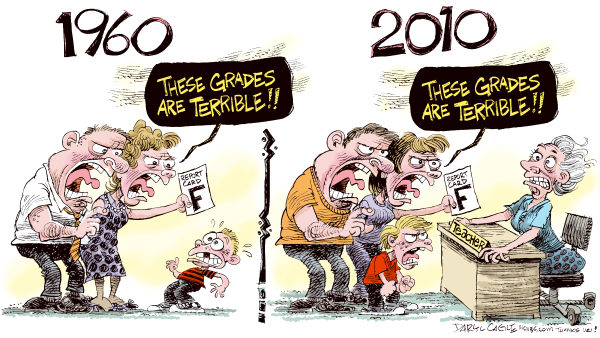 |
| Add caption |
Sunday, 4 August 2013
Leadership secondment: a great experience
Those of you who have been following my blog over the last few months will know/have surmised/been told/have no idea whatsoever that I was seconded to our leadership team for the past two terms. I can honestly say it probably came at the worst possible time for me, with a colleague who had just left the department and not been replaced, having to take on their exam classes, dealing with some serious personal issues of a couple of colleagues and trying to be a decent father and husband (the last two have been more or less accepted as optional by my family for all but the month of August each year, but that doesn't mean I stop trying, or at the very least feeling guilty about failing!). By the end of the process, however, I would say that it was one of the most worthwhile professional things I have done in the last few years.
The reasons for this might be divided into two: The worth lies in what I achieved (which is open to debate) and what I experienced. The latter I think is the most important, especially given the paucity of my achievements. I'm sticking with it as the most important thing at any rate. So what did I experience?
1. The opportunity to organise a whole-school project
Anyone who has read the non-leadership-y blogs of mine will know that the other element I've been captivated by this year is the potential for mobile technology to transform learning. Because of what I'd been doing in the classroom, other colleagues and leadership were getting interested in what I was doing (or wanting to know how I could justify all the expensive iPads at least). Having discussed the potential of the iPads, and the way they were transforming the teaching and learning in my classroom, it was clear that this was a way forward which could really benefit the school, but as I've written elsewhere, we were in no financial position to afford a 1:1 iPad programme. The compromise, which actually turned out to be far less of a compromise than I would have thought, was BYOD.

The scope of the project itself was huge: It consisted of getting SLT and teachers on board, getting technicians on board and working out how to get the network ready, getting student involvement, getting Digital Leaders trained, and trying to manoeuvre a lot of different elements into place simultaneously which gave me a sense of playing twelve-dimensional tetris permanently for seven months. It's arguable that there is no better training for Assistant Headship than exactly this! The whole project is now an integral part of our next three year focus in school, on the personalisation of learning, so I will genuinely be able to say that I have had an impact on teaching and learning across the school which, by the time the project is fully rolled out, will have affected every single student's learning. When you're a middle leader trying to take that next step up the career ladder, this is often the missing link, the whole-school dimension, where candidates come up short.
2. The opportunity to lead CPD
I have rarely worked in a school where there has been such a relentless focus on high-quality CPD, and where the majority of it has been provided by our in-house experts. The BYOD project gave me the chance to lead some of the individualised training our school runs for its staff in order to develop them all as far as we can, and also offered me a chance to view the principles and logistics behind that training programme. For my part, I was able to deliver CPD on how teachers can make use of mobile technology in their teaching and learning, to provide high quality assessment for learning opportunities, and to give students a huge amount of choice in how they learn, and how they present their learning. The CPD I delivered also gave my CPD co-ordinator a good idea of how advanced these practices were, and she in turn gave me the opportunity to deliver similar training to other teachers at TeachMeet Brum (1 and 2) and TeachMeet Cov, as well as at the Coventry Teaching and Learning Partnership. These consequently provided me with networking opportunities with other far-sighted teachers, middle and senior leaders and exposed me more importantly to doubts and questions about what I was introducing which were both sincere and legitimate. By the time I'd gone home to reflect on those questions and obstacles, the planned whole-school initiative was beginning to become much more water-tight, and much less likely to fail. That kind of high-level scrutiny and collaboration has been really useful in formulating my ideas, and also in giving me the confidence that the ideas themselves are worth carrying out from the point of view of enhancing teaching and learning, rather than being just another "initiative". My best moment was when a friend who is high up in the IT industry told me (after a half hour grilling me about our BYOD plans) that he couldn't find a flaw or a gap in them. High praise indeed. For the first time in my career I don't feel as defensive, and I don't see criticism as a negative, but as an opportunity for reflection and growth. Again, a real benefit to my career, no matter which direction it heads in from now.
3. The opportunity to observe a high performing leadership team
The chance to see how a high performing team operates, and what characterises them, was another key learning development for me this year. I got the opportunity to see how this team was shaped by strategic thinking and planning, long-term plans, conviction that your plan will do the job and get the best results, constant checking of the data, digging for the detail and the stories behind it, a focus on excellence rather than initiatives, a daily togetherness and opportunity to talk about operational matters, weekly meetings which were purposeful, focused and always about how to get the best for our students.
I got to see that, while middle leaders and below often think of SLT as purely results-focused managers, they were actually focused now not just on the results, but also on the adults they wanted our students to become: There was review of the curriculum experiences of the students, their extra-curricular experiences, and the out-of-school opportunities we offer them. We spent time looking at different curriculum models such as the IB, the Middle Years Programme etc, and thinking about how closely the experiences they offered matched our aspirations for our children. Oddly enough, the current turmoil within our educational system served me well, as I got to see a team focus on the basics of the educational experience, and prioritise the things which really matter. I came to see that outstanding curriculum, teaching and learning, student experiences etc are never the result of accident or chance.
3. The opportunity to contribute
Within this context, I also had the chance to contribute to the above debates and see whether or not my own ideas stand up to scrutiny at such a high level. I think that's probably all I need to say on that section. They weren't laugh at. To my face, anyway. From my point of view, big win.
4. The opportunity to see how high-performing teams are forged
One of the most significant aspects of the secondment for me was seeing how high-performing teams are built and exploited to get the best out of each person. Like any good classroom, the team were divided differently for different tasks and projects, sometimes clearly in light of what they could bring to the project from their own expertise, but at other times to develop more latent skills which each member of the team perhaps needed to work on to become a more effective and rounded leader. There was a constant theme of support, and wanting to maximise the talents within the team, but also a feeling that they were constantly being asked to move forward, and become even better, even more balanced as individuals. What did I learn about myself within this environment? Well, apparently I've got some decent ideas. I have a focus on systems and strategy which will serve me well, but I also have a good eye on people, and hopefully won't ever put the systems above those people delivering them. Within a high performing leadership team, I held my own, hopefully, and would consider I had a shot at most AHT jobs. Having said that, you can probably see through the number of grammatical qualifiers and self-deprecations in the last few paragraphs that I haven't quite shaken off the demons of my own self-doubt. What I did get to see was that this isn't an entirely negative flaw, and that it also makes me a reflective person, which will again serve me well for the future as I try to grow professionally.

One interesting exercise we undertook as a whole team was a ColourWorks exercise, run by a company (ColourWorks, surprisingly) which asked us to answer a series of random and somewhat irritating questions and then presented us with a bunch of results about our leadership style. Considering how meaningless the exercise felt at the time I was doing it, I have to say that the results were stunningly accurate and insightful. I have 20+ page document at home about me and my leadership style from which neither I, nor any of my family, colleagues or friends have been able to fault more than about three statements. Interestingly, I am less gregarious in leadership than I like to think, and more reflective and logical. I am not pushy, or fiercely driven, and I always value consensus and people. As a result, I think I might be cut out for leadership up to certain levels, but not Headship. I am a good team player, and I can always help others improve their own ideas further, but I'm not necessarily a top leader. Perhaps it's a question of happiness or personal priorities: I find myself not driven enough by ambition to want to disrupt a work life balance which brings me great happiness and satisfaction as well as challenge. I'm not looking to be in a rut, I'm not wanting to coast: I genuinely want to be the best teacher and leader I can be, and to make a difference to as many students as possible. But I think at the very top you need a certain amount more self-belief and, let's face it, cojones, to take on those challenges and assume responsibility for everyone under you. One thing that does occur to me, however, is that someone like me, who doesn't allow things to get in the way of my own happiness, also understands how important this happiness and sense of personal satisfaction are for staff well-being as a whole, and that is an excellent attribute to have on any leadership team.
5. The opportunity to see where middle leaders fit in
As a middle leader I understand my function within the school much better now, and what opportunities I have to be able to help the leadership team by speaking up on matters whose impact I am better placed to understand than they perhaps are. This has also given me far more confidence to express those views, and I've noticed the same confidence emerging in others who have also had the same chance to undertake a secondment as I have. My bond with these people has now become much stronger as a result, and I can see that one of the points of offering secondments to middle leaders is to build this capacity for growth, self-discovery, development, and confidence. Similarly, from the leadership team's point of view, seconding middle leaders allows LT to gauge how broad or parochial the views of school issues are to those middle leaders, as well as how practical, feasible and strategic they are, so that when these middle leaders are consulted on matters affecting the whole school, the leadership have a good deal more faith in the feedback they get if they know the middle leaders in question can see things from both sides of the fence.

The reasons for this might be divided into two: The worth lies in what I achieved (which is open to debate) and what I experienced. The latter I think is the most important, especially given the paucity of my achievements. I'm sticking with it as the most important thing at any rate. So what did I experience?
1. The opportunity to organise a whole-school project
Anyone who has read the non-leadership-y blogs of mine will know that the other element I've been captivated by this year is the potential for mobile technology to transform learning. Because of what I'd been doing in the classroom, other colleagues and leadership were getting interested in what I was doing (or wanting to know how I could justify all the expensive iPads at least). Having discussed the potential of the iPads, and the way they were transforming the teaching and learning in my classroom, it was clear that this was a way forward which could really benefit the school, but as I've written elsewhere, we were in no financial position to afford a 1:1 iPad programme. The compromise, which actually turned out to be far less of a compromise than I would have thought, was BYOD.

The scope of the project itself was huge: It consisted of getting SLT and teachers on board, getting technicians on board and working out how to get the network ready, getting student involvement, getting Digital Leaders trained, and trying to manoeuvre a lot of different elements into place simultaneously which gave me a sense of playing twelve-dimensional tetris permanently for seven months. It's arguable that there is no better training for Assistant Headship than exactly this! The whole project is now an integral part of our next three year focus in school, on the personalisation of learning, so I will genuinely be able to say that I have had an impact on teaching and learning across the school which, by the time the project is fully rolled out, will have affected every single student's learning. When you're a middle leader trying to take that next step up the career ladder, this is often the missing link, the whole-school dimension, where candidates come up short.
2. The opportunity to lead CPD
I have rarely worked in a school where there has been such a relentless focus on high-quality CPD, and where the majority of it has been provided by our in-house experts. The BYOD project gave me the chance to lead some of the individualised training our school runs for its staff in order to develop them all as far as we can, and also offered me a chance to view the principles and logistics behind that training programme. For my part, I was able to deliver CPD on how teachers can make use of mobile technology in their teaching and learning, to provide high quality assessment for learning opportunities, and to give students a huge amount of choice in how they learn, and how they present their learning. The CPD I delivered also gave my CPD co-ordinator a good idea of how advanced these practices were, and she in turn gave me the opportunity to deliver similar training to other teachers at TeachMeet Brum (1 and 2) and TeachMeet Cov, as well as at the Coventry Teaching and Learning Partnership. These consequently provided me with networking opportunities with other far-sighted teachers, middle and senior leaders and exposed me more importantly to doubts and questions about what I was introducing which were both sincere and legitimate. By the time I'd gone home to reflect on those questions and obstacles, the planned whole-school initiative was beginning to become much more water-tight, and much less likely to fail. That kind of high-level scrutiny and collaboration has been really useful in formulating my ideas, and also in giving me the confidence that the ideas themselves are worth carrying out from the point of view of enhancing teaching and learning, rather than being just another "initiative". My best moment was when a friend who is high up in the IT industry told me (after a half hour grilling me about our BYOD plans) that he couldn't find a flaw or a gap in them. High praise indeed. For the first time in my career I don't feel as defensive, and I don't see criticism as a negative, but as an opportunity for reflection and growth. Again, a real benefit to my career, no matter which direction it heads in from now.
3. The opportunity to observe a high performing leadership team
The chance to see how a high performing team operates, and what characterises them, was another key learning development for me this year. I got the opportunity to see how this team was shaped by strategic thinking and planning, long-term plans, conviction that your plan will do the job and get the best results, constant checking of the data, digging for the detail and the stories behind it, a focus on excellence rather than initiatives, a daily togetherness and opportunity to talk about operational matters, weekly meetings which were purposeful, focused and always about how to get the best for our students.
 |
| Copyright owner: Randy Glasbergen |
3. The opportunity to contribute
Within this context, I also had the chance to contribute to the above debates and see whether or not my own ideas stand up to scrutiny at such a high level. I think that's probably all I need to say on that section. They weren't laugh at. To my face, anyway. From my point of view, big win.
4. The opportunity to see how high-performing teams are forged
One of the most significant aspects of the secondment for me was seeing how high-performing teams are built and exploited to get the best out of each person. Like any good classroom, the team were divided differently for different tasks and projects, sometimes clearly in light of what they could bring to the project from their own expertise, but at other times to develop more latent skills which each member of the team perhaps needed to work on to become a more effective and rounded leader. There was a constant theme of support, and wanting to maximise the talents within the team, but also a feeling that they were constantly being asked to move forward, and become even better, even more balanced as individuals. What did I learn about myself within this environment? Well, apparently I've got some decent ideas. I have a focus on systems and strategy which will serve me well, but I also have a good eye on people, and hopefully won't ever put the systems above those people delivering them. Within a high performing leadership team, I held my own, hopefully, and would consider I had a shot at most AHT jobs. Having said that, you can probably see through the number of grammatical qualifiers and self-deprecations in the last few paragraphs that I haven't quite shaken off the demons of my own self-doubt. What I did get to see was that this isn't an entirely negative flaw, and that it also makes me a reflective person, which will again serve me well for the future as I try to grow professionally.

One interesting exercise we undertook as a whole team was a ColourWorks exercise, run by a company (ColourWorks, surprisingly) which asked us to answer a series of random and somewhat irritating questions and then presented us with a bunch of results about our leadership style. Considering how meaningless the exercise felt at the time I was doing it, I have to say that the results were stunningly accurate and insightful. I have 20+ page document at home about me and my leadership style from which neither I, nor any of my family, colleagues or friends have been able to fault more than about three statements. Interestingly, I am less gregarious in leadership than I like to think, and more reflective and logical. I am not pushy, or fiercely driven, and I always value consensus and people. As a result, I think I might be cut out for leadership up to certain levels, but not Headship. I am a good team player, and I can always help others improve their own ideas further, but I'm not necessarily a top leader. Perhaps it's a question of happiness or personal priorities: I find myself not driven enough by ambition to want to disrupt a work life balance which brings me great happiness and satisfaction as well as challenge. I'm not looking to be in a rut, I'm not wanting to coast: I genuinely want to be the best teacher and leader I can be, and to make a difference to as many students as possible. But I think at the very top you need a certain amount more self-belief and, let's face it, cojones, to take on those challenges and assume responsibility for everyone under you. One thing that does occur to me, however, is that someone like me, who doesn't allow things to get in the way of my own happiness, also understands how important this happiness and sense of personal satisfaction are for staff well-being as a whole, and that is an excellent attribute to have on any leadership team.
5. The opportunity to see where middle leaders fit in
As a middle leader I understand my function within the school much better now, and what opportunities I have to be able to help the leadership team by speaking up on matters whose impact I am better placed to understand than they perhaps are. This has also given me far more confidence to express those views, and I've noticed the same confidence emerging in others who have also had the same chance to undertake a secondment as I have. My bond with these people has now become much stronger as a result, and I can see that one of the points of offering secondments to middle leaders is to build this capacity for growth, self-discovery, development, and confidence. Similarly, from the leadership team's point of view, seconding middle leaders allows LT to gauge how broad or parochial the views of school issues are to those middle leaders, as well as how practical, feasible and strategic they are, so that when these middle leaders are consulted on matters affecting the whole school, the leadership have a good deal more faith in the feedback they get if they know the middle leaders in question can see things from both sides of the fence.
So in conclusion...
- I enjoyed the experience thoroughly
- I enjoyed the challenges, and really enjoyed the whole-school responsibilities
- I learnt an immense amount about how schools function, about how leadership works, and about myself and my own style of leadership
- I learnt that leadership teams have real people in them too! And I learnt how to curb my natural tendency to bow in deference to superiors
- I would recommend this to anyone, even if it's just to see what lies on "the other side of the fence"
- If I hadn't been doing this on my full time-table, I think I would conclude that I might be able to manage a leadership job!
And finally, I would say I have learnt this, which I would like to pass on to all potential leaders, of the present or of the future:
Leadership without clearly defined core values, and aims which are consistent with these values, is nothing. Leadership without integrity is nothing. Leadership without reflection and questioning is nothing. Leadership without clear, consistent, transparent communication is nothing.
There's a reason we are given twice as many ears as mouths, but once you're done using the ears, make sure that what you say is true, committed and strong.
Oh, and if any of you are thinking I could easily have describe Michael Gove here, go back and re-read the ears thing.
Now, who's going to give that job...?
Sunday, 26 May 2013
Unfettered Leadership - A Thunk
Quick mini-post today. Forgive the fact that it wasn't just tweeted, but I thought that the quality of responses would be better from comments rather than tweets.
There has been much inspirational talk over the past week by the #Vision2040 group about the future of our schools, the direction of the curriculum etc. I started a bit of blue-sky day-dreaming about how I would run a school if there were no shackles, and then realised how hard it was to come up with concrete answers. Lots of platitudes and generalities and the like (I'm good at them!), but nothing very specific. So in the spirit of thunkage so popular on Twitter, what I want to know is this:
If Michael Gove was to de-politicise education entirely, including his present accountability systems, and you had free rein to do as you liked in your schools, what EXACTLY would you do or change?
Answers in the comments section please. I REALLY want to know what you would do...

Saturday, 16 March 2013
Making Learning Irresistible
Mick Waters
Making learning Irresistible
Last weekend was my first experience of the Coventry Learning Partnership Plus conference, and unfortunately I didn't really get the full flavour of all the excellent workshops going on because my school volunteered me to run one! What I did have was the privilege of hearing Professor Mick Waters talk to us on the Friday night about making learning irresistible. He talked for 90 minutes. It barely felt like 10.
I talked to several people afterwards about what they'd taken from the speech. We were all inspired, but could we put our finger on what exactly the thrust of the talk had been? Could we hell! This blog is my attempt to try and draw some conclusions from what I heard, and summarise where Professor Waters thinks we should be heading in education, a direction I have to say from the outset that I whole-heartedly agree with.
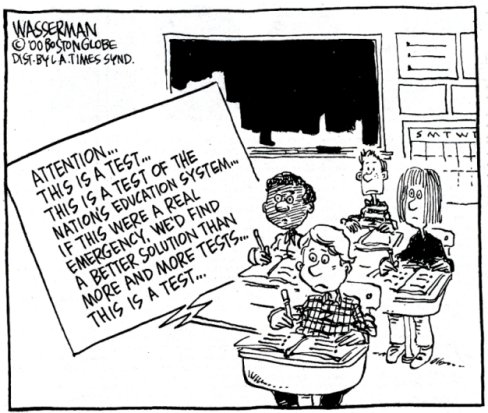 By way of personal context, there has been a lot of talk in our leadership team at school about the role of character in a child's education, about teaching more than simply content, "subjects", and even learning skills. Our current education system seems intent on reducing the really important things we teach our children to lip-service, as it is perhaps not deemed to be measurable, valuable or, dare I use the jargon du jour, "rigorous". This isn't a party political point, as I think the last government's focus on targets, attainment etc are equally blame-worthy in this respect. And nor am I saying we shouldn't be accountable for our results. I am simply arguing that our present focus on what can be measured has created an unhealthy obsession with those things over the other important areas of our educational remit, namely to help students to discover who they are, what they can do, to foster their curiosity, to nurture their talents and interests, and to get them to understand how to accomplish their goals meaningfully in a way which is as beneficial to society as it is to them. Children who care, rather than children who spend, perhaps. Though I'm told this is bad for the economy. By which of course we mean the rich folk at the top of it. Moving on...
Professor Waters' starter for the ten is the contention that, in order to prepare for and learn about the outside world, the UK for some reason corrals students behind a fence, in institutions where we actually ignore and fall behind the real world all the time. We are obsessed by the need to get on, get through the content, and miss out on the chance to make things come alive. In our efforts to have our students undertake "meaningful" activities all the time, while taking the register for example (we make them do planner checks, numeracy activities, give them tonnes of information etc), we fail to realise that the real world is always there to be tapped into.
 Our focus on results has another very negative effect on students: We label them. And we label them in a way which stigmatises them deeply, despite the fact that what we are labelling is transient. One child can't do equations yet. Another has difficulties focusing at a certain time of day. Another can't get to grips with a couple of particular subjects, so we label them "Not achieving 5 A*-C grades"! Here's the thing though: If you were to grade yourself in different subjects at different times, how would you fair? On a scale of Outstanding to Unsatisfactory, how would you rate your own abilities in relation to gardening, decorating, writing, taking photographs, playing an instrument or learning a language? I imagine few of us would be excellent all-rounders, but that's not to say we don't have serious talents in one or more areas: Just look at Einstein. Bit of a failure in school by all accounts. Likewise, students are at different levels in different subjects at different times, but our need to measure things makes it easy for us to focus on the numbers and not the child in front of us. Do the numbers really tell the story? Oddly enough I was listening to a Radio Four business programme the other day where several chief execs were agreeing on this very point, and saying that the data they got on their desks every day was a deeply inferior diagnostic tool compared to direct contact with their people on the ground floor and their customers. A lesson for us all perhaps...
So back to the students: Most of us start out positively in school, but even with the best of intentions, because we can't invest sufficient time to master a skill to the outcome level we want, we end up as "disillusioned triers" who give up on our ability to learn it. Waters does a great experiment with kids: He asks them how they would rate themselves in all of their school subjects. Apparently you never get more than 40% say they're any good at something. But if you ask them about how good they will be at driving and learning to drive, and whether they'll be any good as drivers, they respond overwhelmingly positively. About something they've never tried before. Is it the learning experience which puts us down, or the labeling which occurs along the way?
Similarly we could ask as professionals whether a teacher whose lesson is described as "satisfactory" is actually a satisfactory teacher? Or is this just a label? A snapshot. Under pressure too. Like a terminal exam even. Strikes me as a bit unfair to judge us this way on an annual basis, never mind judging a whole school every four years using that method. But boy do we bust a gut to get the "Outstanding" label! Professor Waters' conclusion was that the Outstanding teacher teaches good lessons consistently, but more than that: He or she also looks after the lonely child in the corridor. Is the latter any less important that the former? Are the teacher who have left a life-long impression on your lives the ones who taught tight formulaic "Outstanding" lessons every day? Or the ones who cared? Who took the time to listen to you? Who took a genuine interest in you as a person?
 Many Outstanding schools are outstanding because they follow "the trudge", and they do it well, and have hit the right formula. The relentless focus on "5 A*-C grades", "RAISEOnline", CVA, the systematic monitoring, the countless interventions: All of these serve to get as many students as possible over that finish line which the data says they should cross, based on mathematical probabilities and algorithms we shouldn't question because they're far too complex for us to understand. And then they suspend the timetable for a day occasionally so that they can do a whole-school activity which will provide the rounding out of their characters (!) which society also requires. Are we really delivering that? Not according to Mick Waters', industry, the government, the parents or the Daily Mail!
A futures learning outlook
What we really need is to focus on what we hope for our students. The government is more focused on the core of knowledge, but we should be producing rounded human beings, and enthusiastic, curious learners. An outstanding teacher's role is to raise the spirits and self-esteem of their students, and to raise their gaze so that they look up at the world around them and see themselves as part of it. Our role is to help them find out who they are, and how they can make a positive difference to the world, and find a sense of their own happiness within the roles they choose for themselves. Our curriculum should be based on the big questions, with students clear about how the small matters fit into the bigger picture. It should prepare them to tackle big questions, and connect to the real world every lesson. Every child should be able to see the relevance of lessons for life in the big wide world as it is today. But I would suggest that this is just one aim. The second, and more important one as far as I am concerned, is this: If we start by showing students how their learning connects to the real world as it is, we should also be fostering the kind of curiosity and thinking which will help them shape the society that we could have. Because demonstrating to students how they could fit into modern society means we implicitly accept everything about that society, including its values and priorities. And I for one think that this demonstrates a real paucity of ambition. I would hope that our children can do a better job of society than we have. But it's unlikely to happen if we persist in telling them that what we have now is the only way it can be done.

The best summary of this perspective I've ever seen was written by a man named Kahlil Gibran, in a brilliant book full of wisdom call The Prophet. Given the daily vacillations in education policy and debate in this country, these thoughts help to anchor me as a teacher and a parent.
Your children are not your children.
They are the sons and daughters of Life's longing for itself.
They come through you but not from you,
And though they are with you, yet they belong not to you.
You may give them your love but not your thoughts.
For they have their own thoughts.
You may house their bodies but not their souls,
For their souls dwell in the house of tomorrow, which you cannot visit, not even in your dreams.
You may strive to be like them, but seek not to make them like you.
For life goes not backward nor tarries with yesterday.
You are the bows from which your children as living arrows are sent forth.
The archer sees the mark upon the path of the infinite,
And He bends you with His might that His arrows may go swift and far.
Let your bending in the archer's hand be for gladness;
For even as he loves the arrow that flies, so He loves also the bow that is stable.
Friday, 14 December 2012
Leadership Philosophy: A first stab

Week three of my ASLDP course, and I had my first chat with my coach afterwards, the venerable @Plestered, and a number of themes are starting to emerge from these sessions, to whit:
- I will never get the course acronym right
- I will never remember my ID badge to sign in with
- Leadership is about moral purpose. And data. And not necessarily in that order.
- Leadership is about vision, and knowing how you want to run your organisation
- Ok, I only thought of four, but the whole numbering thing got the better of me...
 I was discussing this with my coach, as well as talking about the various blogs we're both reading on leadership at the moment, and a recurrent idea seems to be this need to develop one's vision for leadership. At which point he told me I should write mine before my next coaching session.
Let's rewind here: I should write mine before my next coaching session.
OK, rewind a bit further...
I should write my vision for leading a school before my next coaching session.
While I'm still a middle leader.
Before I've learnt anything substantial on this course (and there are those who've rightly expressed doubt that I'm capable of that alone!).
Before I've even started my leadership secondment.
For a theoretical job as a potential Assistant Headteacher.
Before all that, I should try and formulate my vision for how I would lead an entire school.
I should write my vision for leading a school before my next coaching session.
While I'm still a middle leader.
Before I've learnt anything substantial on this course (and there are those who've rightly expressed doubt that I'm capable of that alone!).
Before I've even started my leadership secondment.
For a theoretical job as a potential Assistant Headteacher.
Before all that, I should try and formulate my vision for how I would lead an entire school.
"Excellent idea!" I said.
Sometimes I can be a pillock...

This is what I've come up with so far. With virtually every blog I read and every conversation I have nowadays, I learn more and more, and I'm certain of nothing if not the fact that this wil change drastically with that learning. But every journey starts somewhere. So here are my thoughts on the tools I would use to run a school well:
1) Authenticity and integrity, from top to bottom. From leaders, staff and students. We will not produce a generation of people who have genuine integrity if we don't have it ourselves, and model it day in, day out. It's about people, stupid. And those people need to be valued and supported. If you are not able to value and support the people around you, and the students, and have that principle at your very core, why would you work in this profession?
2) Teaching and learning, curiosity and discovery, should be at the heart of everything we do. We should be a discovery community, staff and students alike. We should be learning from everyone around us, and we should create a system where that is systematically facilitated and celebrated. We should be learning from each other, we should learn from external sources, from business, from the community, from anyone who has something to teach us. We should create time within the curriculum where staff development, research and collaborating on best and next practice is not only prominent but a professional expectation.
3) High expectations. It's not OK for a student not to try their best in your class, is it? But teachers get paid to do their job, so why would it be any more acceptable for us not to give our students our best? I agree that you can't hit Outstanding every single lesson perhaps, but we need to find a sustainable way to give at our highest level as much of the time as possible. And make it sustainable for a whole school year, rather than having people break down due to ill health at the beginning of every holiday.
4) Use the strengths of the people you have. Good managers should manage, good teachers who are at the chalk-face day in day out should be listened to, and should have every possible obstacle to outstanding lessons put aside. Use the talents you have well. I'm sure someone even wrote a parable about it, it's that important. I think it was probably Jesus.
 5) Openness and open doors: If anyone fears me coming in to their classroom, they will get more defensive. Staff and students have to know that failure is a crucial part of the learning mix, and that they should be doing it together. Failure is fine, as long as you learn from it, and progress from it. Consequently all feedback should be developmental. The same principle applies to those at the top of the teaching ladder, with large amounts of expertise, and a desire to experiment and hone their teaching skills, sometimes even try something outlandish. They need to be trusted. They need to be given the freedom and autonomy they need to develop. But that freedom is always coupled with accountability. One is the Yin to the other's Yang. Or vice versa. I can't remember.
6) Curriculum: We are in an unprecedented era of political interference in education, but we are also in an era of considerable freedom. If we allow our freedoms to be curtailed by our response to how others will perceive us, based on league tables and spurious measures of what constitutes a rounded education which we don't agree with in the first place, then we have lost our moral purpose. We need a curriculum which allows every student to find their light, to find the spark that sets their futures alight, and is right for that individual. If we don't provide that, we fail the students. By consequence, we need to be clear with parents what the rationale behind our curriculum decisions are, and we need them to support us in our attempts to give their children what's best for them, rather than what responds to flavour of the month. The students who leave our gates should be as ready as they can be for their futures, whatever that might entail.
7) OK, I know what I'm like if I get a list that goes beyond seven, so let's not push this. There's bound to be more to write in the future, and I'm likely to be changing my mind very soon about all this anyway, so let's stop here. Treat number 7 as your video at the end of term. And as an explicit statement that anyone who retweets to me any more "1047 new ways to enrich education with a pencil sharpener" will be shot! Malice aforethought. No early release from prison.
You've been warned...
(And as for Michael Gove...)

Subscribe to:
Posts (Atom)