 |
| http://www.slideshare.net/MikeGunn/setting-up-byodpptx |
Showing posts with label Acceptable use policy. Show all posts
Showing posts with label Acceptable use policy. Show all posts
Wednesday, 25 November 2015
BYOD - A viable alternative
There were a lot of people at the National Academies Show today who asked me for a copy of my presentation, and whose names and emails I didn't have time to take down (really sorry! Other people waiting to speak behind me!), so here, for those of you who are gluttons for punishment and want to go through it a second time, is the thing...

Sunday, 2 June 2013
BYOD In Schools - Part 4: Student Engagement
This year has seen our school begin the process of implementing a Bring Your Own Device Strategy (BYOD) across the whole school, notionally led by me, which is somewhat worrying. Fortunately my erstwhile co-leader @Gripweed1 has made up for my many deficiencies in the process, and we enter the final half-term of the year, 6 months after starting, having successfully negotiated the first stage of the process. I've blogged about the different parts of Stage One before, but a quick recap may save you trawling through all that:
We started by mapping out the route we would take, looking into other schools which had gone down similar or alternative roads, and identifying areas of planning and infrastructure issues we had to address first before moving forward. We then began involving students with @Gripweed1 leading a highly successful Safer Internet Day, where students were consulted about the rights and responsibilities of them being able to use their own devices in school as a learning tool. Their input was critical in allowing us to develop a BYOD policy, and the intention is to have students review this annually as part of our PHSE programme, to ensure it remains up-to-date and fit for purpose. While our focus shifted on to a small group of "dangerous teachers" who were conducting class trials with the students, we realised that the students were going to be the key to the success or failure of the whole process, and it is this student engagement I want to address today.
So far, we have engaged different sections of the student community at different levels. All were involved in the development of the Acceptable Use Policy, and several classes across different year groups have been involved in exploring the technologies through trials. Now we're looking at the issue of digital leaders, and the contributions they might make to moving the process forward. There is a great deal of talk across the Twittersphere about digital leadership: Some of it is little more than a nod towards it, as I've seen in several schools where student leaders are more or less teachers' assistants. However, there are many other schools where it is clear that students are genuinely leading not just other students, but also the teaching and learning process through mobile technology, and here they seem to be driving the idea forward almost more effectively than if the process were top-down. Mark Anderson (@ICTEvangelist)'s work at Clevedon in the South-West is a case in point, and we have learnt a great deal from his generously shared expertise.
Our initial discussions for the roles of digital leaders looked at a variety of potential roles Digital Leaders could undertake. These ranged from having
You can see that the lists eventually became far too cumbersome to be workable! We were ourselves in danger of losing sight of "the main thing" and turning our digital leaders into glorified Techies, so we changed our focus back to Teaching and Learning, and this proved far more fruitful. All aspects of the role can now be clearly related back to leading, enhancing or supporting teaching and learning, and we have also looked at how digital leaders can be used to smooth the transition of students coming up from primary schools so that they are confident and ready to meet the challenges of secondary. Equally, we would like Digital Leaders to be able to use their experiences to gain accredited qualifications which would help them further a career in this sector if they so wished, and we are currently exploring the sorts of qualifications on offer.
This is what we came up with in the end...
Digital Leadership at Finham Park
Job description
Digital leaders will...
Be able to support teaching and learning through SMART Learning
Be able to support the use of mobile devices by teachers and students
Be able to support and develop the use of VLE
Be able to assist specific departments with the acquisition of teaching and learning resources (apps, websites, software)
Be able to develop outreach programmes
Be able to liaise with primary schools to promote digital transition
 Be able to manage the digital leaders' social media presence
Be able to work with collaborative networks in order promote and share best practice
Be able to support the development of e-safety training across the school
Lead assemblies to whole school on e-safety
Lead lessons to students in e-safety
Lead whole staff training on e-safety
Be able to promote the use of digital technology at whole-school events (e.g. Genius bars at Year 7 parental events)
Be able to offer basic technical support to teachers and departments
Checking computer power, peripherals, sound, mice and keyboards
Helping teachers to use iPads with AppleTV
Clearing a printer jam
Checking toner and paper
Projectors and connections
Problem diagnosis?
Management of school computer screens, uploads and podcasts
Preparation of machine images through FOG
Device usage (ipads and other devices, especially help for staff)
Person Specification
Digital Leaders should...
Be dedicated to this single area of student leadership (there are many other areas of student leadership around the school, but we feel this role is so big it will be time-consuming)
Be a positive role model to other students
Have an interest in developing digital technology skills further
Be responsible users of technology
Be keen to learn to work with other people involved in the creation of a digital environment
Show tenacity and commitment
Be able to demonstrate prior digital skills
Have a clear understanding of safe and responsible social media use
Be willing to foster leadership skills
Our second draft of a job description has yet to be approved, so I put it out here for discussion: Have we missed anything? Can you help us to tweak it further? If I've learnt anything from blogging and tweeting, it's that no idea I've ever had couldn't be improved by somebody out there, so we very much welcome any input here via the comments section below.
The class trials will report back at the end of the year, and hopefully we will have enough evidence that mobile technology can have a tangible impact on teaching and learning to move the project forward across the whole school. At this point, the role of the digital leaders will become crucial in the process, and it is more than likely that they will be leading teachers as much as students. This gets us to a stage I think many schools and SLTs are nervous about, namely where the students' expertise begins to overtake that of the staff. I can empathise with this to an extent, although I have to say that mobile technology is one key area where, if teachers don't learn to step outside of their "sage on the stage" role, we won't move forward very fast. As an old t'ai chi teacher of mine once told his students, "if I don't train you with the aspiration of becoming better than me, who then will I learn from?"
Only if we can get over this psychological obstacle in how we see our role will we truly begin to create a collaborative learning environment, where teachers and students move each other forward.
We started by mapping out the route we would take, looking into other schools which had gone down similar or alternative roads, and identifying areas of planning and infrastructure issues we had to address first before moving forward. We then began involving students with @Gripweed1 leading a highly successful Safer Internet Day, where students were consulted about the rights and responsibilities of them being able to use their own devices in school as a learning tool. Their input was critical in allowing us to develop a BYOD policy, and the intention is to have students review this annually as part of our PHSE programme, to ensure it remains up-to-date and fit for purpose. While our focus shifted on to a small group of "dangerous teachers" who were conducting class trials with the students, we realised that the students were going to be the key to the success or failure of the whole process, and it is this student engagement I want to address today.
So far, we have engaged different sections of the student community at different levels. All were involved in the development of the Acceptable Use Policy, and several classes across different year groups have been involved in exploring the technologies through trials. Now we're looking at the issue of digital leaders, and the contributions they might make to moving the process forward. There is a great deal of talk across the Twittersphere about digital leadership: Some of it is little more than a nod towards it, as I've seen in several schools where student leaders are more or less teachers' assistants. However, there are many other schools where it is clear that students are genuinely leading not just other students, but also the teaching and learning process through mobile technology, and here they seem to be driving the idea forward almost more effectively than if the process were top-down. Mark Anderson (@ICTEvangelist)'s work at Clevedon in the South-West is a case in point, and we have learnt a great deal from his generously shared expertise.
Our initial discussions for the roles of digital leaders looked at a variety of potential roles Digital Leaders could undertake. These ranged from having
- FROG champions who would train students and teachers in the use of our FROG VLE
- Technical support leaders who would almost be apprentice technicians
- E-Safety Specialists whose job would be to advise and monitor e-safety across the school
- Device Specialists whose job would be to look at the way certain device workflows could be translated to other devices without causing problems
- We even then started thinking about having specialists in different types of software as these need considerable training too, for example Adobe specialists, Microsoft Specialists, Android Specialists etc
You can see that the lists eventually became far too cumbersome to be workable! We were ourselves in danger of losing sight of "the main thing" and turning our digital leaders into glorified Techies, so we changed our focus back to Teaching and Learning, and this proved far more fruitful. All aspects of the role can now be clearly related back to leading, enhancing or supporting teaching and learning, and we have also looked at how digital leaders can be used to smooth the transition of students coming up from primary schools so that they are confident and ready to meet the challenges of secondary. Equally, we would like Digital Leaders to be able to use their experiences to gain accredited qualifications which would help them further a career in this sector if they so wished, and we are currently exploring the sorts of qualifications on offer.
This is what we came up with in the end...
Digital Leadership at Finham Park
Job description
Digital leaders will...
Be able to support teaching and learning through SMART Learning
Be able to support the use of mobile devices by teachers and students
Be able to support and develop the use of VLE
Be able to assist specific departments with the acquisition of teaching and learning resources (apps, websites, software)
Be able to develop outreach programmes
Be able to liaise with primary schools to promote digital transition
 Be able to manage the digital leaders' social media presence
Be able to work with collaborative networks in order promote and share best practice
Be able to support the development of e-safety training across the school
Lead assemblies to whole school on e-safety
Lead lessons to students in e-safety
Lead whole staff training on e-safety
Be able to promote the use of digital technology at whole-school events (e.g. Genius bars at Year 7 parental events)
Be able to offer basic technical support to teachers and departments
Checking computer power, peripherals, sound, mice and keyboards
Helping teachers to use iPads with AppleTV
Clearing a printer jam
Checking toner and paper
Projectors and connections
Problem diagnosis?
Management of school computer screens, uploads and podcasts
Preparation of machine images through FOG
Device usage (ipads and other devices, especially help for staff)
Person Specification
Digital Leaders should...
Be dedicated to this single area of student leadership (there are many other areas of student leadership around the school, but we feel this role is so big it will be time-consuming)
Be a positive role model to other students
Have an interest in developing digital technology skills further
Be responsible users of technology
Be keen to learn to work with other people involved in the creation of a digital environment
Show tenacity and commitment
Be able to demonstrate prior digital skills
Have a clear understanding of safe and responsible social media use
Be willing to foster leadership skills
Our second draft of a job description has yet to be approved, so I put it out here for discussion: Have we missed anything? Can you help us to tweak it further? If I've learnt anything from blogging and tweeting, it's that no idea I've ever had couldn't be improved by somebody out there, so we very much welcome any input here via the comments section below.
 |
Only if we can get over this psychological obstacle in how we see our role will we truly begin to create a collaborative learning environment, where teachers and students move each other forward.
 |
| http://ui.asu.edu/blog/wp-content/uploads/2010/06/cartoon1.jpg |
Sunday, 5 May 2013
BYOD Implementation In Schools - Part 3: Staff training
I've been teaching for many years now, and I've seen many an initiative come and go. My present school is one of the few I've ever taught in where initiatives are very much superseded by foci. This may sound like no difference at all, but for me the difference has been in the time taken to research, test, trial and embed practice over the long term. Three years our school spent on an AFL "initiative": I'd argue that after three years, that's not an initiative any more: That's a focus. And a pretty serious one at that. And it has brought the vast majority of our staff on in leaps and bounds.

One of the reasons a focus works better than an initiative is that a focus necessitates full staff commitment, and therefore training. Staff training has been one of the key strands to our BYOD trials at Finham Park, and we are now into our second term. We began by converting one of our school's dozen or so TALK Groups (Teaching and Learning Communities, groups which all staff are part of, including learning supervisors and student teachers) into a group solely devoted to looking at the use of mobile technology to enhance teaching and learning. We co-opted a number of staff covering all faculties, and importantly, covered different levels of technological skill. We didn't want the trial group to be a geek-fest, because any good ideas we came up with could immediately be rejected by other staff on roll-out as just being for the technologically competent or gifted. We had to make sure that this was transparently seen as a focus which could benefit all teachers no matter what level of technological competence they were at.
During our first meeting we shared our strategy for the BYOD programme (published here if anyone's desperately interested), and shared our rationale behind it. We also made our expectations clear to the staff involved in the trial:

Finally, we needed to liaise with our Tech Support to work out a way to logistically get every student in the trial put on the wifi. In our case, we weren't prepared to simply open the access to everyone, so the technicians agreed to put each individual device on for us. This liaison with our technicians has been extended by inviting one of them to join our TaLK Group each session, so they have a far better overview about what we're trying to achieve, and can give us good advice on the optimal way to achieve these goals. So far, it has been a fruitful relationship which has allowed us as teachers to appreciate the concerns of the Tech Support department, while also allowing them to see what we are trying to achieve as teachers. I will let you know as things develop, but so far I have to say that this mutual collaboration has proven very useful.
The format of our meetings has followed the format we established for the TaLK Groups when we were trialling AFL techniques: We spend the first ten minutes or so sharing individual experiences, we assist with solutions where problems have arisen, and we generally pat each other on the back encouragingly for how far we've come since last time (think Alcoholics Anonymous meets Star Trek convention). We then go on to look at specific areas where we want to improve our practice: It could be the use of specific AFL techniques, or getting students to organise their work on mobile devices, or investigating a new app: Whatever. We get everyone to pick a partner who is interested in exploring the same area for mutual support, and another partner to go to for advice, and we arrange informal mutual observations, research sharing or discussions to explore whatever it was we wanted to focus on. The meetings are every half-term or so, to give teachers time not only to explore, but also to embed ideas into their practice. And this same cycle of plan-do-review happens during each session, and we help each other move forward with our practice. Simples.
Between the group, our main areas of focus so far have included assessment for learning, obviously, but also how we can use mobile technology to improve student organisation and student independence too, with personalised learning strategies being developed through mobile technology.
By next meeting, we will start assessing the impact of the group’s discussions on our practice so far. I'm looking forward to hearing about the individual ideas, the progress, but also seeing what areas we need to iron out before we can go any further with this scheme: Technical issues, infrastructure, teaching and learning problems, all of these are bound to focus our attentions, because unless we can get rid of as many obstacles as possible in our initial group work, we will leave ourselves open to staff who don't want to engage with these ideas simply rejecting them because "the systems aren't in place". And we can't afford that.

We will also be looking during our next session more closely at the SAMR model (with thanks to @ICTevangelist from whom we blatantly nicked this one!). The SAMR framework will allow us to assess how effective mobile technology is in enhancing learning. It is easy to get carried away with the novelty of a new focus in the classroom, especially one as shiny and pretty as mobile technology, but unless we can be sure that these technologies are being used in a way which moves learning and teaching forward, then there isn't really much point in making such a song and dance about them. We're hoping that this model will serve as a benchmark, allowing us to reflect on how far along the path we are actually moving, and how far we are genuinely transforming learning. More on this as we go forward. Now I need to work on our Digital Leaders strategy...
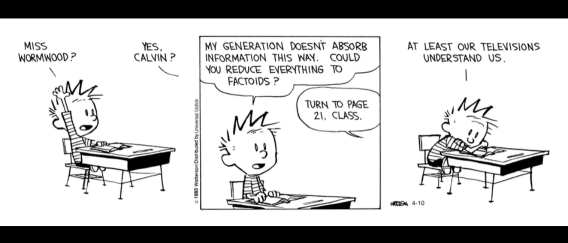
Apposite cartoon...

And choon and video to really cheer you up. Seriously, watch it...

One of the reasons a focus works better than an initiative is that a focus necessitates full staff commitment, and therefore training. Staff training has been one of the key strands to our BYOD trials at Finham Park, and we are now into our second term. We began by converting one of our school's dozen or so TALK Groups (Teaching and Learning Communities, groups which all staff are part of, including learning supervisors and student teachers) into a group solely devoted to looking at the use of mobile technology to enhance teaching and learning. We co-opted a number of staff covering all faculties, and importantly, covered different levels of technological skill. We didn't want the trial group to be a geek-fest, because any good ideas we came up with could immediately be rejected by other staff on roll-out as just being for the technologically competent or gifted. We had to make sure that this was transparently seen as a focus which could benefit all teachers no matter what level of technological competence they were at.
During our first meeting we shared our strategy for the BYOD programme (published here if anyone's desperately interested), and shared our rationale behind it. We also made our expectations clear to the staff involved in the trial:
- To develop their interest and skills in SMART learning in their classroom
- To experiment with different web-based apps to enhance learning experience, variety, assessment and effectiveness
- To bring back tips, techniques, ideas, apps, problems and obstacles to each TALK group meeting for discussion
- To develop skills further based on each TALK group session
- To help roll out their experiences and expertise to other teachers, with the help of Digital Leaders when we are confident the major infrastructure obstacles have been tackled
- Learning to use devices to enhance AFL in class
- Managing behaviour in the digital classroom
- Establishing expectations with students within this new learning environment
- How to get the students' devices onto the wifi network

Finally, we needed to liaise with our Tech Support to work out a way to logistically get every student in the trial put on the wifi. In our case, we weren't prepared to simply open the access to everyone, so the technicians agreed to put each individual device on for us. This liaison with our technicians has been extended by inviting one of them to join our TaLK Group each session, so they have a far better overview about what we're trying to achieve, and can give us good advice on the optimal way to achieve these goals. So far, it has been a fruitful relationship which has allowed us as teachers to appreciate the concerns of the Tech Support department, while also allowing them to see what we are trying to achieve as teachers. I will let you know as things develop, but so far I have to say that this mutual collaboration has proven very useful.
The format of our meetings has followed the format we established for the TaLK Groups when we were trialling AFL techniques: We spend the first ten minutes or so sharing individual experiences, we assist with solutions where problems have arisen, and we generally pat each other on the back encouragingly for how far we've come since last time (think Alcoholics Anonymous meets Star Trek convention). We then go on to look at specific areas where we want to improve our practice: It could be the use of specific AFL techniques, or getting students to organise their work on mobile devices, or investigating a new app: Whatever. We get everyone to pick a partner who is interested in exploring the same area for mutual support, and another partner to go to for advice, and we arrange informal mutual observations, research sharing or discussions to explore whatever it was we wanted to focus on. The meetings are every half-term or so, to give teachers time not only to explore, but also to embed ideas into their practice. And this same cycle of plan-do-review happens during each session, and we help each other move forward with our practice. Simples.
Between the group, our main areas of focus so far have included assessment for learning, obviously, but also how we can use mobile technology to improve student organisation and student independence too, with personalised learning strategies being developed through mobile technology.
By next meeting, we will start assessing the impact of the group’s discussions on our practice so far. I'm looking forward to hearing about the individual ideas, the progress, but also seeing what areas we need to iron out before we can go any further with this scheme: Technical issues, infrastructure, teaching and learning problems, all of these are bound to focus our attentions, because unless we can get rid of as many obstacles as possible in our initial group work, we will leave ourselves open to staff who don't want to engage with these ideas simply rejecting them because "the systems aren't in place". And we can't afford that.

We will also be looking during our next session more closely at the SAMR model (with thanks to @ICTevangelist from whom we blatantly nicked this one!). The SAMR framework will allow us to assess how effective mobile technology is in enhancing learning. It is easy to get carried away with the novelty of a new focus in the classroom, especially one as shiny and pretty as mobile technology, but unless we can be sure that these technologies are being used in a way which moves learning and teaching forward, then there isn't really much point in making such a song and dance about them. We're hoping that this model will serve as a benchmark, allowing us to reflect on how far along the path we are actually moving, and how far we are genuinely transforming learning. More on this as we go forward. Now I need to work on our Digital Leaders strategy...
Apposite cartoon...
And choon and video to really cheer you up. Seriously, watch it...
Saturday, 16 February 2013
Bring Your Own Device in schools - an implementation strategy Part 2
I blogged a little while ago about the journey we are taking in our school to implement a SMART Learning strategy, facilitated by a scheme allowing students to bring their own devices to the learning environment. We've been through the exploration phases, the feasibility stage, and the infrastructure set-up stage in that post, so forgive me if I don't go into it again. Read it for yourselves, I can't be bothered to type it all out again, I'm on holiday, and I've given you enough repetition of the same hyperlink in the last sentence that you can't miss it!
Developing an Acceptable Use Policy:
At the time of writing it we were on the verge of conducting a school-wide Safer Internet Day project, most ably led by my co-conspirator @Gripweed1 (definitely worth following). The lesson was conducted by all mentors across all students, and Associate Staff and SLT were attached to classes too, so it was genuinely a school-wide discussion. The theme was the rights and responsibilities of using digital devices and the internet, both inside and out of school, and the ultimate aim was to engage the students in defining what would become our Acceptable Use Policy. The responses we got from students were very high quality, with a great deal more emphasis on the responsibilities they had than the rights, and a lot of intelligent discussion about where one person's rights conflicted with those of others. The results were presented in assemblies to each college by the ICT students leaders, so the students could see what we had done with their input, and we are now hoping to run a more focused Baraza*-style consultation of the students to focus their ideas down into a simple, user-friendly policy which achieves their buy-in.
* Baraza: noun, of African origin: To sit round in a village circle and have a chat about making the village a better place in order to hit FFTD targets, or something like that. I don't know. Head's idea, but works really well
Now, however, we reach the squash stage: There are a number of simultaneous processes we have to carefully carry out at the same time, but without any of them getting too far ahead of the others, lest the whole thing falls apart. The key stake-holders are all involved in these stages, because to put it simply:
 Before students start using the devices for learning, the teachers need to be ready to use them, and need to be able to overcome a range of technical obstacles in their way. You may be lucky enough to have a great team of techies in your school to be able to help out with this, but frankly, even with the best will in the world, once there are 1500 plus devices around the place, they're in it way beyond their eye-balls. Our strategy is to train a crew of digital leaders across all years whose job it will be to assist in two key ways:
Staff Training:
Our next stage in our school is to get a group of digital enthusiasts together to lead the initiative further. We could call these "dangerous teachers". We could equally call them "canon fodder" I guess, but let's stay positive! These need not, and ideally should not, be tech-experts. Restricting this part of the project to the tech-savvy will alienate anyone else too easily, and make it seem like a clique of "boys with toys", at the risk of stereotypical gender generalisation. Better to have a cross-curricular range of gifted enthusiastic amateurs who know the potential, and want to develop it.
Staff who are developing new pedagogies need time to experiment and explore. That would go for any new idea, whether it be co-construction, SOLO Taxonomy, Flipped learning or whatever. All the more so for SMART Learning. Not only do they need time to get to grips with a device, but they then need time to work out how it fits into their curriculum, what the potential for it is. Mark Anderson (@ICTEvangelist) has written some superb guidance on how to move mobile device use through a variety of stages from the enhancement of teaching to its transformation, and teachers who are taking on this challenge will have to work their way gradually through these stages to get the best out of them.

In a BYOD environment, teachers wil initially be looking at web-based tools which anyone can access no matter what device, and then be looking at more specific apps for certain tasks, some of which may be exclusive to certain platforms. At the moment, there are a great many apps I use on iPads which are simply not available on Android, but others may be, and teachers will go on to explore those, as well as eventually looking at subject-specific apps. All of this takes time and regular training, which is why the teachers shouldn't also have to worry about the technical side of things going wrong, hence the digital leadership programme.
Once the teachers feel comfortable with their devices, and their potential, it can easily be made part of those digital leaders' remits to ask what departments' needs are, and to find possible solutions to present to the teachers, almost reversing the teacher-student relationship.
For me, this is one of the most crucial areas of staff training: To get them to accept that in a fast-moving, hi-tech world, they are no longer the "sage on the stage". If teachers have the humility to accept that they may not know something, but that by working with students there will be a way to find out, they will establish strong collaborative relationships which could mark a fundamental shift in the way students see the relationship too. When students and teachers are brought down to the same sort of level, the focus on learning and progress becomes much sharper, with both parties constantly interrogating the path they're taking, and the tools they're using.
We also need to get away from the idea of "safe teaching". All teaching should be inherently dangerous, and perhaps uncertain, but if the final destination is something which is agreed from the start, collaboration will get us there in the end. Hopefully this will pave the way for a far more risk-taking culture, and it requires a brave leap of faith from leadership teams to allow their staff to try to fly, and watch them occasionally fall. But in the words of one of my favourite philosophers...
"Why do we fall? To pick ourselves up." Might be a prize for guessing the philosopher. Leave your guesses in the comments section...
Class Trials:
So after the digital leaders are trained, the next stage is class trials led by those "dangerous teachers". This would involve allowing teachers to experiment, try different ideas with different classes, getting digital leaders alongside them each step of the way, meeting regularly to discuss new needs until the staff are completely comfortable, at which point the digital leader roles can be extended even further to include pedagogical questions, such as "what works best if we are trying to...?". You can see we're not talking about an overnight process here. In my opinion, if you don't give SMART learning the time to bed in, and support it with a long-term development strategy, it will not become an effective tool in the learning toolbox.
Once those classes, teachers and digital leaders feel comfortable in their roles, and have ironed out a lot of the worst potential pitfalls, then you can start bringing the rest of the staff onboard, training them in exactly the same way.
Eventually you want to get to a stage when the technology is a non-issue. It's invisible. Its use is seamlessly integrated into classrooms in a way which enhances learning, but doesn't get in the way of learning. The same is true of behaviour problems which devices may seem to be causing. Students need to be trained into a routine of how to use mobile technology effectively to assist their learning, but if they do misuse it (for Facebook, games, texts etc), then what you have is a behaviour issue, which should be challenged as such. Part of our job as teachers is to show students that there is another way to use this type of technology, beyond the recreational. And as one BYOD enthusiast told me once, students disengaging with lessons on their mobile phone are often much easier to spot than those who are quietly simply staring out of the window. Either way, they need to be engaged in the learning process, and that's our job.
Next instalment: Parental engagement. How to sell your idea for SMART learning to get parental support for it. They're the ones paying for the devices, after all...
 For anyone interested, this is an outline of our strategy and rationale at Finham Park:
Finham Park School SMART Learning implementation strategy
Developing an Acceptable Use Policy:
At the time of writing it we were on the verge of conducting a school-wide Safer Internet Day project, most ably led by my co-conspirator @Gripweed1 (definitely worth following). The lesson was conducted by all mentors across all students, and Associate Staff and SLT were attached to classes too, so it was genuinely a school-wide discussion. The theme was the rights and responsibilities of using digital devices and the internet, both inside and out of school, and the ultimate aim was to engage the students in defining what would become our Acceptable Use Policy. The responses we got from students were very high quality, with a great deal more emphasis on the responsibilities they had than the rights, and a lot of intelligent discussion about where one person's rights conflicted with those of others. The results were presented in assemblies to each college by the ICT students leaders, so the students could see what we had done with their input, and we are now hoping to run a more focused Baraza*-style consultation of the students to focus their ideas down into a simple, user-friendly policy which achieves their buy-in.
* Baraza: noun, of African origin: To sit round in a village circle and have a chat about making the village a better place in order to hit FFTD targets, or something like that. I don't know. Head's idea, but works really well
Now, however, we reach the squash stage: There are a number of simultaneous processes we have to carefully carry out at the same time, but without any of them getting too far ahead of the others, lest the whole thing falls apart. The key stake-holders are all involved in these stages, because to put it simply:
- We can't switch on unrestricted access to wifi until we have students agreeing to how it will be used
- We can't allow students to use their devices willy-nilly (stop me if I get technical) without showing them how to use them responsibly in an educational context, to assist their learning
- We can't teach them how powerful these tools are for learning unless we have teachers trained in the use of SMART devices and pedagogy
- We can't expect the teachers to also be trained up in the potential technical problems associated with different devices, so we have to train up digital leaders to assist in technical matters
- And we can't do any of this without the rationale for it being clear to the parents themselves, who are otherwise quite within their rights to wonder how their children can learn in a class where they are allowed mobile devices out when these very same devices are exactly what prevents them getting any form of decent conversation out of their offspring once they get home at night!!
You get the idea. Lots of people to get on-board, lots to work out in terms of the order in which to do this. So this is our priority list:
Digital Leadership training:
 Before students start using the devices for learning, the teachers need to be ready to use them, and need to be able to overcome a range of technical obstacles in their way. You may be lucky enough to have a great team of techies in your school to be able to help out with this, but frankly, even with the best will in the world, once there are 1500 plus devices around the place, they're in it way beyond their eye-balls. Our strategy is to train a crew of digital leaders across all years whose job it will be to assist in two key ways:
- With basic device problems, functionality, logins, printer problems etc
- With helping the teachers source ideas for using the new technology in learning
If we can get at least one digital leader in every classroom across each year, the teacher hopefully shouldn't need to worry about stopping the entire lesson because "Sir, my phone's not working!" The teacher will have enough on their plate without having to worry about that, and moreover, the less confident a teacher is, the fewer obstacles it will take before they jack it all in as unworkable, new-fangled etc etc. The role of digital leaders is to shoulder those technical responsibilities, and that will take a lot of training.
Staff Training:
Our next stage in our school is to get a group of digital enthusiasts together to lead the initiative further. We could call these "dangerous teachers". We could equally call them "canon fodder" I guess, but let's stay positive! These need not, and ideally should not, be tech-experts. Restricting this part of the project to the tech-savvy will alienate anyone else too easily, and make it seem like a clique of "boys with toys", at the risk of stereotypical gender generalisation. Better to have a cross-curricular range of gifted enthusiastic amateurs who know the potential, and want to develop it.
Staff who are developing new pedagogies need time to experiment and explore. That would go for any new idea, whether it be co-construction, SOLO Taxonomy, Flipped learning or whatever. All the more so for SMART Learning. Not only do they need time to get to grips with a device, but they then need time to work out how it fits into their curriculum, what the potential for it is. Mark Anderson (@ICTEvangelist) has written some superb guidance on how to move mobile device use through a variety of stages from the enhancement of teaching to its transformation, and teachers who are taking on this challenge will have to work their way gradually through these stages to get the best out of them.
In a BYOD environment, teachers wil initially be looking at web-based tools which anyone can access no matter what device, and then be looking at more specific apps for certain tasks, some of which may be exclusive to certain platforms. At the moment, there are a great many apps I use on iPads which are simply not available on Android, but others may be, and teachers will go on to explore those, as well as eventually looking at subject-specific apps. All of this takes time and regular training, which is why the teachers shouldn't also have to worry about the technical side of things going wrong, hence the digital leadership programme.
Once the teachers feel comfortable with their devices, and their potential, it can easily be made part of those digital leaders' remits to ask what departments' needs are, and to find possible solutions to present to the teachers, almost reversing the teacher-student relationship.
For me, this is one of the most crucial areas of staff training: To get them to accept that in a fast-moving, hi-tech world, they are no longer the "sage on the stage". If teachers have the humility to accept that they may not know something, but that by working with students there will be a way to find out, they will establish strong collaborative relationships which could mark a fundamental shift in the way students see the relationship too. When students and teachers are brought down to the same sort of level, the focus on learning and progress becomes much sharper, with both parties constantly interrogating the path they're taking, and the tools they're using.
We also need to get away from the idea of "safe teaching". All teaching should be inherently dangerous, and perhaps uncertain, but if the final destination is something which is agreed from the start, collaboration will get us there in the end. Hopefully this will pave the way for a far more risk-taking culture, and it requires a brave leap of faith from leadership teams to allow their staff to try to fly, and watch them occasionally fall. But in the words of one of my favourite philosophers...
"Why do we fall? To pick ourselves up." Might be a prize for guessing the philosopher. Leave your guesses in the comments section...
Class Trials:
So after the digital leaders are trained, the next stage is class trials led by those "dangerous teachers". This would involve allowing teachers to experiment, try different ideas with different classes, getting digital leaders alongside them each step of the way, meeting regularly to discuss new needs until the staff are completely comfortable, at which point the digital leader roles can be extended even further to include pedagogical questions, such as "what works best if we are trying to...?". You can see we're not talking about an overnight process here. In my opinion, if you don't give SMART learning the time to bed in, and support it with a long-term development strategy, it will not become an effective tool in the learning toolbox.
Once those classes, teachers and digital leaders feel comfortable in their roles, and have ironed out a lot of the worst potential pitfalls, then you can start bringing the rest of the staff onboard, training them in exactly the same way.
Eventually you want to get to a stage when the technology is a non-issue. It's invisible. Its use is seamlessly integrated into classrooms in a way which enhances learning, but doesn't get in the way of learning. The same is true of behaviour problems which devices may seem to be causing. Students need to be trained into a routine of how to use mobile technology effectively to assist their learning, but if they do misuse it (for Facebook, games, texts etc), then what you have is a behaviour issue, which should be challenged as such. Part of our job as teachers is to show students that there is another way to use this type of technology, beyond the recreational. And as one BYOD enthusiast told me once, students disengaging with lessons on their mobile phone are often much easier to spot than those who are quietly simply staring out of the window. Either way, they need to be engaged in the learning process, and that's our job.
Next instalment: Parental engagement. How to sell your idea for SMART learning to get parental support for it. They're the ones paying for the devices, after all...

Finham Park School SMART Learning implementation strategy
Subscribe to:
Posts (Atom)