 |
| http://www.slideshare.net/MikeGunn/setting-up-byodpptx |
Showing posts with label digital leaders. Show all posts
Showing posts with label digital leaders. Show all posts
Wednesday, 25 November 2015
BYOD - A viable alternative
There were a lot of people at the National Academies Show today who asked me for a copy of my presentation, and whose names and emails I didn't have time to take down (really sorry! Other people waiting to speak behind me!), so here, for those of you who are gluttons for punishment and want to go through it a second time, is the thing...

Sunday, 11 May 2014
BYOD in schools - Part 6: Engaging parents
One of the most important factors in moving forward towards a roll-out of any form of mobile learning school, whether it be iPad 1:1, or BYOD in our case, is getting teachers, students and parents on board with the process simultaneously. Try shooting five basketballs towards a basket at the same time: It's more or less the same exercise. Or planning, teaching, marking, answering a thousand e-mail requests for paperwork and having any sort of life outside of school, for that matter.
I've dealt elsewhere with our general strategy and rationale for the roll-out , and looked specifically at the issues of staff training, student engagement in the process and the part played by Digital Leaders in this process, so forgive me if I don't revisit old ground here. We developed our strategy, worked out how we could train teachers gradually, and interviewed and trained our Digital Leaders to help us with our class trials. But now the big step to a whole-school roll-out looms, and we really need to get ALL of our parents on-board, or they won't allow their students to bring their devices in in the first place.
These are the key points we need to communicate to them, in my opinion:
A fundamental building block of this strategy would be the involvement of students who already use mobile learning, and Digital Leaders in particular. Alongside the teacher-led workshops and model lessons, the student leaders could lead "Genius bar" style sessions including videos of other lessons throughout the year, the students' own thoughts on mobile learning, and the advantages it gives them over other learners. They would be able to show how they themselves support the process in school, answer technical queries, and could also talk to parents knowledgeably about the different sorts of devices they have used, the advantages and disadvantages of each for different subjects, and they could blog about this afterwards so that this advice is permanently there for parents to refer to, with direct links from the school website.
One of the other things this type of festival would facilitate is for other teachers who are less confident about tech use in lessons (from other schools, or from within our own) to get the same information, to interrogate the possibilities for themselves, and to make their own first steps. This would be great CPD for all involved, sharing best and next practice widely, and also enabling schools like ours to clearly demonstrate our role as a support school to those in the wider community. In fact, I think it would be great to follow this up with an hour's TeachMeet at the end of the day for teachers to share their best apps and resources, divided into different categories (AFL, BFL, differentiation and personalisation, etc), so teachers can get what they want out of it. That would act as a great summary of everything which has been shared that day, and really send people away with lots to think about.
After an event like that, I think very few parents will be in any doubt about the school's rationale for using mobile devices to enhance learning, and I would hope that teachers and students would be enthused, and that the wider community would be able to see just what a forward-thinking institution this was...
If we don't engage parents, and show them the realities of modern education, and the potential mobile technology brings within that environment, we risk them not understanding what we are trying to do, and we all know where that leads...
I've dealt elsewhere with our general strategy and rationale for the roll-out , and looked specifically at the issues of staff training, student engagement in the process and the part played by Digital Leaders in this process, so forgive me if I don't revisit old ground here. We developed our strategy, worked out how we could train teachers gradually, and interviewed and trained our Digital Leaders to help us with our class trials. But now the big step to a whole-school roll-out looms, and we really need to get ALL of our parents on-board, or they won't allow their students to bring their devices in in the first place.
These are the key points we need to communicate to them, in my opinion:
- They need to understand that this is not a gimmick to engage students: There is a clear educational rationale behind the move, which we consider will help improve the performance of our students on a long-term basis. In other words, they have to understand that our move is fundamentally about teaching and learning, and that the use of mobile devices in lesson will occur when there is a clear way in which it can augment, modify or redefine the learning in that lesson, and not otherwise.
- They need to understand why we have decided not to specify a particular device (often iPads in these types of schemes), or indeed pay for the roll-out ourselves from school funds. Essentially there are two key reasons for this move, which are economic and pedagogical. Economically, we as a school cannot afford to pay for them ourselves (£70000 every three years?), and if we passed the cost on to the parents, many of them may not be able to afford it either, especially in times of recession, economic insecurity etc. So not only are we saving ourselves money (three more teachers potentially to help their students?), we are also saving them money, as 99.6% of our students already own devices which they probably bring in to school on a daily basis. Pedagogically, much as I am a fan of the iPad itself, I can't pretend that other devices are not catching them up quickly. Each new iPad seems less of an education game-changer than the last, and yet the premium is still charged. More importantly, I think there is real benefit to be had from giving students and parents the choice of what to bring in, and getting them to discuss issues of what each phone/tablet can and cannot do in the context of teaching and learning, rather than mere functionality (my graphics card is faster and bigger than yours, sort of thing).
- We as a school need to address insurance worries head on: Many parents could quite reasonably object to their children being asked to bring mobile devices into school on the grounds that they could get damaged or stolen. But what if they currently allow their child to bring their phone into school at the moment? Then there is no change in the situation. The phones can still be insured as part of household contents insurance or, as many people already do, can be insured as discrete devices. Having said that, we as a school do also need to make it as secure an environment as possible for our students to bring their phones and devices to school safely. That means addressing potential areas where students might have to leave their devices unattended (changing rooms for instance), and ensuring that we are vigilant at all times, and have water-tight security systems in place to protect student property. To my mind, we should be doing that already. Similarly, in this new digital learning environment, we as a school ought to be pressing the insurance industry for easy, cheap and viable schemes which will allow us to protect our students' devices without costing the earth. Already, some financial institutions are beginning to respond to these requirements.
- Finally, I think it is imperative that parents can SEE the enhanced learning which occurs as a result of using mobile devices. They need to see it in action: We should be inviting them to watch model lessons with students, with a debrief showing how it has enhanced the learning, the students' organisation, their motivation and the differentiation which devices can enable. They need to see these enhancements to lessons in order to understand just how much difference mobile learning can make to their child's education. If we can accompany these sessions with Q&A at the end, with both the teacher and the students involved, (as happened here when I taught a lesson in front of colleagues from across the city using the same techniques as part of a rolling programme of CPD observations "for real"), then I think parents will be a lot more positive about the use of mobile technology as an integral part of their child's learning experience.
A fundamental building block of this strategy would be the involvement of students who already use mobile learning, and Digital Leaders in particular. Alongside the teacher-led workshops and model lessons, the student leaders could lead "Genius bar" style sessions including videos of other lessons throughout the year, the students' own thoughts on mobile learning, and the advantages it gives them over other learners. They would be able to show how they themselves support the process in school, answer technical queries, and could also talk to parents knowledgeably about the different sorts of devices they have used, the advantages and disadvantages of each for different subjects, and they could blog about this afterwards so that this advice is permanently there for parents to refer to, with direct links from the school website.
One of the other things this type of festival would facilitate is for other teachers who are less confident about tech use in lessons (from other schools, or from within our own) to get the same information, to interrogate the possibilities for themselves, and to make their own first steps. This would be great CPD for all involved, sharing best and next practice widely, and also enabling schools like ours to clearly demonstrate our role as a support school to those in the wider community. In fact, I think it would be great to follow this up with an hour's TeachMeet at the end of the day for teachers to share their best apps and resources, divided into different categories (AFL, BFL, differentiation and personalisation, etc), so teachers can get what they want out of it. That would act as a great summary of everything which has been shared that day, and really send people away with lots to think about.
After an event like that, I think very few parents will be in any doubt about the school's rationale for using mobile devices to enhance learning, and I would hope that teachers and students would be enthused, and that the wider community would be able to see just what a forward-thinking institution this was...
If we don't engage parents, and show them the realities of modern education, and the potential mobile technology brings within that environment, we risk them not understanding what we are trying to do, and we all know where that leads...
 |
| Add caption |
Saturday, 20 July 2013
BYOD in schools - Part 5: What we need from Digital Leaders
So last week we finally interviewed our first set of digital leaders. They will have a huge role in the roll-out of our whole-school BYOD scheme (SMART Learning©) as and when it happens. Specifically, we are expecting them to support our students and our staff as we experiment with using digital devices to enhance teaching and learning across the school. We want teachers to be confident about this process, and we want the Digital Leaders to act as their safety net and inspiration, having explored digital teaching techniques, apps, websites, and ironed out any potential technical obstacles which often put teachers off experimenting with newer technologies. Which is quite a big ask for any 13-14 year old.
Our initial rationale for introducing a BYOD scheme was based around the type of students we have at Finham Park. They are generally motivated, achieve well, looking to be well-taught, and looking to succeed. However, we have a lot of students at the top end whose strategy is to "succeed through obedience": "Tell me what I need to do, and I'll do it" style of thing. It sounds ideal, but it encourages people to coast rather than to think for themselves at a more profound, inquisitive level, and we really wanted these students to break through the glass ceiling and start a life-long journey of discovery and self-motivated learning. These were our key aims:
- Increase student motivation
- Stop students relying on teachers
- Promote independence and inquiry
- Allow for personalisation
- Get students ready for the demands of the future workplace
So what exactly are we looking for in our Digital Leaders? How will they contribute towards these SMART learning aims? Some of the key qualities we need from them are:
* An understanding of the needs of students and, more importantly, scared reticent adults!
* Innovation - Departments which are linked to Digital Leaders want to explore innovative teaching and learning strategies, but they often don't know where to start. It's important to remember that, if you're reading this and thinking you know exactly where to start in this quest, then you're probably in a minority of 10% of the teaching profession who are currently connected, be it via Twitter, Google Plus or blog-reading. For the rest who really want to try something new but don't know where to start, the innovation and inspiration have to come from the Digital Leaders.
One of the interesting questions we asked them at interview was this: You are asked to bring in your own tablet or smartphone to school in order to assist with your learning, but your parents refuse to let you. How would you convince them that there is a good educational rationale for allowing you to use your devices in school? I think the best student leaders we interviewed were able to understand and articulate how far-reaching this change to our normal educational landscape might be, and saw what a game-changer BYOD potentially is. Implicitly, they also understand the significance of their role in this context. They know that they will need to lead the way in this revolution, and think outside of the box. Already we've been surprised by the quality of some of their ideas for educational technology solutions, including writing bespoke apps for departments, so we're confident we've made good appointments.
* Problem-solving and lateral thinking - Another area which often puts teachers off trying new technologies is the fear of the technologies going wrong in front of an entire class, and chaos ensuing! We have to train these student leaders to be able to deal with the simple but frequent technical problems which might impede progress, and hopefully give the teachers the confidence to try new things knowing that there will always be a safety net for them. Digital Leaders will be the superheros to the rescue! As Scott Adams has wisely said, the students who learn to master the new technologies which will dominate our society in the future will eventually become the alpha males and females of the future, on an evolutionary level.

Already the training we're offering is based around problem-solving, and our students seem to be eager to show their problem-solving abilities. Our tech wizard has asked if any of them fancy coming in over the summer to learn to put a computer together for themselves, and they were well up for it. It's that level of inquisitiveness which will stimulate their problem-solving abilities further.
* Good communication skills - Having the confidence to deal with teachers and other students is probably the most important skill our Digital Leaders will need. Being able to ascertain what someone wants when they're to exactly sure themselves is hard. It involves really perceptive questions, clear understanding and excellent listening skills. In many ways, it requires them to understand that they are putting their skills forward as a service to others, but that others define what the parameters of that service are, and that takes a level of both confidence and humility at the same time, paradoxically.

* Patience and enthusiasm - In spades. Enthusiasm will be the torch that lights the way for our staff and students. They already want to know how they can be better at what they do, and they will look to anyone who can show them great ideas. But once the enthusiasm and the great ideas are there, the Digital Leaders will also need the patience to be able to explain them to a variety of different people who will understand them in a variety of different ways, and at different speeds. Essentially, the Digital Leaders will be developing the subtle skills teachers use every day. And at their age, that will be an impressive feat!
* E-safety awareness - Finally, this is one area which any school wishing to go down a BYOD/iPad/1:1 route will need to tackle. We are letting students access the devices with which they connect to the world, any time, anywhere. While we will always treat attempts to use social media in appropriately in class as behaviour issues rather than technology issues, we need to be aware that students will nevertheless quite naturally be accessing social media around school at other times, and we need to educate students about the problems this might create for them. Frankly, I'm not sure teachers are the best people to do this, for a number of reasons:
- They are not the digital natives that the students are.
- They are not necessarily listened to when they take on a "moralising" tone on any issue.
- And more often than not, their own knowledge of e-safety issues is far from adequate.
I know people who are otherwise extremely professional, but when it comes to their social media presence, seem to have very little awareness of the reach of their comments, and the potential to cause offence. As such, we are reliant on our Digital Leaders to help train the rest of our students and indeed our staff, to ensure that we operate in a community that takes full advantage of the enormous benefits of social media, without leaving ourselves vulnerable to its pitfalls. The DLs have already offered to lead staff training, to take assemblies and PHSE sessions on Internet safety, and we think they'll do a far better job of it than we will.
There is also a sense of competition between the new Digital Leaders, which when they are in their pairs and teams has been very good natured, but also made them try to be as helpful as possible. They really are trying to push themselves individually and as a team, and that tells us that we've made some good appointments for the future.
We have now attached them DLs in groups of four or five to the three core departments for next term. Already they have contacted the Subject Leaders, and been given areas to research over the summer, so that by the time we come back in September, they will be ready with their latest ideas on teaching and learning.
And we are SO looking forward to this journey...
For this summer, on our BYOD journey, it's over and it, but we'll be blogging more as the scheme develops next term. Until then, if you have a problem, if no-one else can help, and if you can find them, maybe you can hire... The DL Team (@FPS_DL).


Saturday, 15 June 2013
10 Ways to use a Youtube channel in education
Youtube: The ultimate distraction (apart from Twitter, but that's for grown-ups, right?).
A marmite resource which teachers either love or hate. Personally, I love it. Marmite me up all day long, if you will. It provides a never-ending source of educational videos, inspiration, challenge, provocation and kittens launching themselves at erratic torch-beams wielded by sadistic owners waiting for their cat to splat into a wall and bag them £500 from "You've Been Framed". What's not to like?
 Apart from the cats bit, that's why I started our own Finham Park Media Youtube channel. It's been building up gradually over the last few months, the longer I've been on my journey to explore how iPads and BYOD technologies can be used to enhance my own teaching and learning practice (previously blogged about here and here, so forgive me if I don't go over old ground). I've found it an invaluable companion to this journey, so I thought I would share the countless opportunities Youtube offers educationalists in this blog*. In the form of a list. So you can count them. Ahem...
1. The simplest way to use Youtube is as a place of stimulus and discussion for class topics. A video URL can easily be set as research, to provoke debate, to extend thinking for more able students or to help explain something more simply for those having trouble getting to grips with a new concept. Once the students watch the video you've shared, the comments section below allows for the debate to occur. If you "Favourite" the video, it will appear in your channel, and you can then direct students to your channel, and supervise and moderate what they're saying, especially if you have set this as a homework task.
2. I love using Youtube as a place for flipped learning videos too: I create a very simple video, say a tutorial on a concept I'm teaching, an app or piece of software I need students to be able to use, or instructions for hardware such as cameras, particularly useful for subjects like ICT, Media, Photography, DT, Music etc (example here). A Youtube channel allows you to curate all of your videos in one easily-accessed place for your students.

 7. Not only that, but if your students are serious about their work, the channel acts as a networking opportunity for your students, to allow others to see what they have done, and allow them to talk about and discuss their work with industry professionals. It might even get them noticed by someone really important, but even if they're don't get signed for their first multi-million dollar film deal, the channel opens up the way for discussions with people who can help them to improve their practice. In one recent example, a friend of mine who works on video effects saw the work of a student and started a conversation with them about how they could get better, and different techniques they could use. hey presto, the student's next piece was even better. Feedback from an expert certainly carries more weight than mine does (apparently!).
One final word on Youtube. Many schools block it, despite the fact that it is the most extensive resources of video material the world has ever seen. For me, that's all horribly wrong. The fact that students could access inappropriate material via Youtube is not a reason to ban it. After all, no school banned the Internet, despite the rumour that at one stage it consisted of 90% pornography (This may be apocryphal and impossible to prove, but you have to admit it's persuasive and emotive: Everything we need from a "Gove-fact"!) Essentially, it should not be for technicians or bureaucrats to decide what your students can and can't access. It should be for the teacher. If the teacher doesn't feel confident that students will stay on task and use learning-related sites they have stipulated, then they shouldn't take a risk in using it. On the other hand, if you feel you trust your students, or that you have the ability to manage behaviour (it is the behaviour which you are criticising after all, not the technology), then use it. As far as I am concerned, what students can access should be a matter of teaching and learning, not decided by technicians. They are there to serve the teaching and learning community after all, and that's a powerful argument to take to leadership teams to get them to unblock these sites.

A marmite resource which teachers either love or hate. Personally, I love it. Marmite me up all day long, if you will. It provides a never-ending source of educational videos, inspiration, challenge, provocation and kittens launching themselves at erratic torch-beams wielded by sadistic owners waiting for their cat to splat into a wall and bag them £500 from "You've Been Framed". What's not to like?
 Apart from the cats bit, that's why I started our own Finham Park Media Youtube channel. It's been building up gradually over the last few months, the longer I've been on my journey to explore how iPads and BYOD technologies can be used to enhance my own teaching and learning practice (previously blogged about here and here, so forgive me if I don't go over old ground). I've found it an invaluable companion to this journey, so I thought I would share the countless opportunities Youtube offers educationalists in this blog*. In the form of a list. So you can count them. Ahem...
1. The simplest way to use Youtube is as a place of stimulus and discussion for class topics. A video URL can easily be set as research, to provoke debate, to extend thinking for more able students or to help explain something more simply for those having trouble getting to grips with a new concept. Once the students watch the video you've shared, the comments section below allows for the debate to occur. If you "Favourite" the video, it will appear in your channel, and you can then direct students to your channel, and supervise and moderate what they're saying, especially if you have set this as a homework task.
2. I love using Youtube as a place for flipped learning videos too: I create a very simple video, say a tutorial on a concept I'm teaching, an app or piece of software I need students to be able to use, or instructions for hardware such as cameras, particularly useful for subjects like ICT, Media, Photography, DT, Music etc (example here). A Youtube channel allows you to curate all of your videos in one easily-accessed place for your students.
I then set it as homework for students to watch and take notes on, so that they come to the lesson knowing how to do what I've been describing, or as a minimum, having questions they want clarifying. The ability to review the videos as often as they like allows the students not to feel they have to move at the same middle-ground pace as the rest of the class, and personalises the learning a little more. Allowing questions right from the start of the lesson also allows me to differentiate from the start, allowing those who know what they're doing to get right on, while I can spend time helping those who had questions. I should say at this point that I am aware there has been much criticism of the Khan Academy approach to flipped learning, about the boring videos and inaccuracies,
Video tutorial but these criticisms mostly miss the point, which is the principle that if you create a video of information you've already taught in class, it can not only be accessed any time to refresh the students' memories, but it can also be done slightly differently to differentiate, be that to stretch the most able, or to assist the less. The great thing about having these videos on your own channel is that you can arrange them into playlists on the same subjects, and have the playlist order follow the same logical order that students should tackle them in, gradually getting harder. the students are improving their skills with every video, but tackling each new topic at their own pace, once they fell they have mastered the preceding step.


3. I tend to use flipped video lessons in conjunction with Ted-Ed, a brilliant resource in itself which I've described elsewhere. It allows you to take any TED or Youtube video and create quizzes based on the videos which students can undertake as the test of how well they have done their homework, and be used as the basis for differentiation from the start of the class. The test immediately shows who has not done the homework, who has done it but needs more input, and who should be moved on straight away. The quizzes can be done different ways, in class, using different software, or even paper if you're into that sort of thing, but the TED-Ed quiz facility has a few nice features (such as hints about where in the video the answer lies if students struggle, and a self-marking facility) which add to the variety of your teaching.

4. The same principle applies to teachers. I use my Youtube channel to help other teachers with app tutorials to help them work out how to make best use of certain apps to improve their teaching and learning. Again, all of these are arranged into playlists, by topic, to make them hopefully easier to find. I learnt a lot from other teachers who have put tutorials on Youtube (@eyebeams was one particular early inspiration), and a Youtube channel for me just felt like an easy way to share things I was showing teachers in my own school.
5. However, new media technologies take us way beyond simply finding things other clever people have done, and this is where your own Youtube channel comes into its own. For a start, if your students create their own video work (on phones, iPads, at home, on PCs etc), it is the place to store it for later referral, for assessment (remember, you can comment on their work from there). The process of uploading is incredibly easy once you have the video file, or even more automatic from certain apps which are already linked to Youtube.
6. This also acts as a public showcase for your students' work, which is a huge incentive for them. You need their permission to share this work publicly (you can upload things to Youtube but keep them private, or stipulate that only people in your classes can see them), but if they and the people they filmed are happy with it, you can then open the channel up to more public eyes and exposure. This knowledge that anyone could come across their work can really sharpen their focus and inspire students to produce over and above their usual class efforts.
 7. Not only that, but if your students are serious about their work, the channel acts as a networking opportunity for your students, to allow others to see what they have done, and allow them to talk about and discuss their work with industry professionals. It might even get them noticed by someone really important, but even if they're don't get signed for their first multi-million dollar film deal, the channel opens up the way for discussions with people who can help them to improve their practice. In one recent example, a friend of mine who works on video effects saw the work of a student and started a conversation with them about how they could get better, and different techniques they could use. hey presto, the student's next piece was even better. Feedback from an expert certainly carries more weight than mine does (apparently!).
8. The discussion and comments sections for videos also allow an opportunity for extended peer feedback: By sharing the links with other schools, you allow your students to put their work before a broader audience of their peers, and a broader range of criticism. This acts the same way as the way other colleagues share their class blogs between schools, and with the same positive effect in my experience.
9. Additionally, I think having your own channels allows you to share your students' work with other teaching professionals, providing an opportunity for moderation. Anyone who finds themselves in my position of working in a small department without a budget to send you to those costly moderation meetings will appreciate the ability to share your links with other professionals and get their opinion on the marks you're giving, or how the work could be improved, especially if you're feeling a bit too close to the work to be objective.
10. Finally, there is a great deal to be said for how far a Youtube channel gets you noticed as a school. Ours has attracted attention from all over the place, and when people from around the country discuss the work of Finham Park students, many of them have seen it on our Youtube channels, so our school's reputation is enhanced.
*If you are about to skip the rest of this blog o the basis that Youtube is blocked in your school, I suggest starting at the LAST paragraph

Sunday, 2 June 2013
BYOD In Schools - Part 4: Student Engagement
This year has seen our school begin the process of implementing a Bring Your Own Device Strategy (BYOD) across the whole school, notionally led by me, which is somewhat worrying. Fortunately my erstwhile co-leader @Gripweed1 has made up for my many deficiencies in the process, and we enter the final half-term of the year, 6 months after starting, having successfully negotiated the first stage of the process. I've blogged about the different parts of Stage One before, but a quick recap may save you trawling through all that:
We started by mapping out the route we would take, looking into other schools which had gone down similar or alternative roads, and identifying areas of planning and infrastructure issues we had to address first before moving forward. We then began involving students with @Gripweed1 leading a highly successful Safer Internet Day, where students were consulted about the rights and responsibilities of them being able to use their own devices in school as a learning tool. Their input was critical in allowing us to develop a BYOD policy, and the intention is to have students review this annually as part of our PHSE programme, to ensure it remains up-to-date and fit for purpose. While our focus shifted on to a small group of "dangerous teachers" who were conducting class trials with the students, we realised that the students were going to be the key to the success or failure of the whole process, and it is this student engagement I want to address today.
So far, we have engaged different sections of the student community at different levels. All were involved in the development of the Acceptable Use Policy, and several classes across different year groups have been involved in exploring the technologies through trials. Now we're looking at the issue of digital leaders, and the contributions they might make to moving the process forward. There is a great deal of talk across the Twittersphere about digital leadership: Some of it is little more than a nod towards it, as I've seen in several schools where student leaders are more or less teachers' assistants. However, there are many other schools where it is clear that students are genuinely leading not just other students, but also the teaching and learning process through mobile technology, and here they seem to be driving the idea forward almost more effectively than if the process were top-down. Mark Anderson (@ICTEvangelist)'s work at Clevedon in the South-West is a case in point, and we have learnt a great deal from his generously shared expertise.
Our initial discussions for the roles of digital leaders looked at a variety of potential roles Digital Leaders could undertake. These ranged from having
You can see that the lists eventually became far too cumbersome to be workable! We were ourselves in danger of losing sight of "the main thing" and turning our digital leaders into glorified Techies, so we changed our focus back to Teaching and Learning, and this proved far more fruitful. All aspects of the role can now be clearly related back to leading, enhancing or supporting teaching and learning, and we have also looked at how digital leaders can be used to smooth the transition of students coming up from primary schools so that they are confident and ready to meet the challenges of secondary. Equally, we would like Digital Leaders to be able to use their experiences to gain accredited qualifications which would help them further a career in this sector if they so wished, and we are currently exploring the sorts of qualifications on offer.
This is what we came up with in the end...
Digital Leadership at Finham Park
Job description
Digital leaders will...
Be able to support teaching and learning through SMART Learning
Be able to support the use of mobile devices by teachers and students
Be able to support and develop the use of VLE
Be able to assist specific departments with the acquisition of teaching and learning resources (apps, websites, software)
Be able to develop outreach programmes
Be able to liaise with primary schools to promote digital transition
 Be able to manage the digital leaders' social media presence
Be able to work with collaborative networks in order promote and share best practice
Be able to support the development of e-safety training across the school
Lead assemblies to whole school on e-safety
Lead lessons to students in e-safety
Lead whole staff training on e-safety
Be able to promote the use of digital technology at whole-school events (e.g. Genius bars at Year 7 parental events)
Be able to offer basic technical support to teachers and departments
Checking computer power, peripherals, sound, mice and keyboards
Helping teachers to use iPads with AppleTV
Clearing a printer jam
Checking toner and paper
Projectors and connections
Problem diagnosis?
Management of school computer screens, uploads and podcasts
Preparation of machine images through FOG
Device usage (ipads and other devices, especially help for staff)
Person Specification
Digital Leaders should...
Be dedicated to this single area of student leadership (there are many other areas of student leadership around the school, but we feel this role is so big it will be time-consuming)
Be a positive role model to other students
Have an interest in developing digital technology skills further
Be responsible users of technology
Be keen to learn to work with other people involved in the creation of a digital environment
Show tenacity and commitment
Be able to demonstrate prior digital skills
Have a clear understanding of safe and responsible social media use
Be willing to foster leadership skills
Our second draft of a job description has yet to be approved, so I put it out here for discussion: Have we missed anything? Can you help us to tweak it further? If I've learnt anything from blogging and tweeting, it's that no idea I've ever had couldn't be improved by somebody out there, so we very much welcome any input here via the comments section below.
The class trials will report back at the end of the year, and hopefully we will have enough evidence that mobile technology can have a tangible impact on teaching and learning to move the project forward across the whole school. At this point, the role of the digital leaders will become crucial in the process, and it is more than likely that they will be leading teachers as much as students. This gets us to a stage I think many schools and SLTs are nervous about, namely where the students' expertise begins to overtake that of the staff. I can empathise with this to an extent, although I have to say that mobile technology is one key area where, if teachers don't learn to step outside of their "sage on the stage" role, we won't move forward very fast. As an old t'ai chi teacher of mine once told his students, "if I don't train you with the aspiration of becoming better than me, who then will I learn from?"
Only if we can get over this psychological obstacle in how we see our role will we truly begin to create a collaborative learning environment, where teachers and students move each other forward.
We started by mapping out the route we would take, looking into other schools which had gone down similar or alternative roads, and identifying areas of planning and infrastructure issues we had to address first before moving forward. We then began involving students with @Gripweed1 leading a highly successful Safer Internet Day, where students were consulted about the rights and responsibilities of them being able to use their own devices in school as a learning tool. Their input was critical in allowing us to develop a BYOD policy, and the intention is to have students review this annually as part of our PHSE programme, to ensure it remains up-to-date and fit for purpose. While our focus shifted on to a small group of "dangerous teachers" who were conducting class trials with the students, we realised that the students were going to be the key to the success or failure of the whole process, and it is this student engagement I want to address today.
So far, we have engaged different sections of the student community at different levels. All were involved in the development of the Acceptable Use Policy, and several classes across different year groups have been involved in exploring the technologies through trials. Now we're looking at the issue of digital leaders, and the contributions they might make to moving the process forward. There is a great deal of talk across the Twittersphere about digital leadership: Some of it is little more than a nod towards it, as I've seen in several schools where student leaders are more or less teachers' assistants. However, there are many other schools where it is clear that students are genuinely leading not just other students, but also the teaching and learning process through mobile technology, and here they seem to be driving the idea forward almost more effectively than if the process were top-down. Mark Anderson (@ICTEvangelist)'s work at Clevedon in the South-West is a case in point, and we have learnt a great deal from his generously shared expertise.
Our initial discussions for the roles of digital leaders looked at a variety of potential roles Digital Leaders could undertake. These ranged from having
- FROG champions who would train students and teachers in the use of our FROG VLE
- Technical support leaders who would almost be apprentice technicians
- E-Safety Specialists whose job would be to advise and monitor e-safety across the school
- Device Specialists whose job would be to look at the way certain device workflows could be translated to other devices without causing problems
- We even then started thinking about having specialists in different types of software as these need considerable training too, for example Adobe specialists, Microsoft Specialists, Android Specialists etc
You can see that the lists eventually became far too cumbersome to be workable! We were ourselves in danger of losing sight of "the main thing" and turning our digital leaders into glorified Techies, so we changed our focus back to Teaching and Learning, and this proved far more fruitful. All aspects of the role can now be clearly related back to leading, enhancing or supporting teaching and learning, and we have also looked at how digital leaders can be used to smooth the transition of students coming up from primary schools so that they are confident and ready to meet the challenges of secondary. Equally, we would like Digital Leaders to be able to use their experiences to gain accredited qualifications which would help them further a career in this sector if they so wished, and we are currently exploring the sorts of qualifications on offer.
This is what we came up with in the end...
Digital Leadership at Finham Park
Job description
Digital leaders will...
Be able to support teaching and learning through SMART Learning
Be able to support the use of mobile devices by teachers and students
Be able to support and develop the use of VLE
Be able to assist specific departments with the acquisition of teaching and learning resources (apps, websites, software)
Be able to develop outreach programmes
Be able to liaise with primary schools to promote digital transition
 Be able to manage the digital leaders' social media presence
Be able to work with collaborative networks in order promote and share best practice
Be able to support the development of e-safety training across the school
Lead assemblies to whole school on e-safety
Lead lessons to students in e-safety
Lead whole staff training on e-safety
Be able to promote the use of digital technology at whole-school events (e.g. Genius bars at Year 7 parental events)
Be able to offer basic technical support to teachers and departments
Checking computer power, peripherals, sound, mice and keyboards
Helping teachers to use iPads with AppleTV
Clearing a printer jam
Checking toner and paper
Projectors and connections
Problem diagnosis?
Management of school computer screens, uploads and podcasts
Preparation of machine images through FOG
Device usage (ipads and other devices, especially help for staff)
Person Specification
Digital Leaders should...
Be dedicated to this single area of student leadership (there are many other areas of student leadership around the school, but we feel this role is so big it will be time-consuming)
Be a positive role model to other students
Have an interest in developing digital technology skills further
Be responsible users of technology
Be keen to learn to work with other people involved in the creation of a digital environment
Show tenacity and commitment
Be able to demonstrate prior digital skills
Have a clear understanding of safe and responsible social media use
Be willing to foster leadership skills
Our second draft of a job description has yet to be approved, so I put it out here for discussion: Have we missed anything? Can you help us to tweak it further? If I've learnt anything from blogging and tweeting, it's that no idea I've ever had couldn't be improved by somebody out there, so we very much welcome any input here via the comments section below.
 |
Only if we can get over this psychological obstacle in how we see our role will we truly begin to create a collaborative learning environment, where teachers and students move each other forward.
 |
| http://ui.asu.edu/blog/wp-content/uploads/2010/06/cartoon1.jpg |
Sunday, 5 May 2013
BYOD Implementation In Schools - Part 3: Staff training
I've been teaching for many years now, and I've seen many an initiative come and go. My present school is one of the few I've ever taught in where initiatives are very much superseded by foci. This may sound like no difference at all, but for me the difference has been in the time taken to research, test, trial and embed practice over the long term. Three years our school spent on an AFL "initiative": I'd argue that after three years, that's not an initiative any more: That's a focus. And a pretty serious one at that. And it has brought the vast majority of our staff on in leaps and bounds.

One of the reasons a focus works better than an initiative is that a focus necessitates full staff commitment, and therefore training. Staff training has been one of the key strands to our BYOD trials at Finham Park, and we are now into our second term. We began by converting one of our school's dozen or so TALK Groups (Teaching and Learning Communities, groups which all staff are part of, including learning supervisors and student teachers) into a group solely devoted to looking at the use of mobile technology to enhance teaching and learning. We co-opted a number of staff covering all faculties, and importantly, covered different levels of technological skill. We didn't want the trial group to be a geek-fest, because any good ideas we came up with could immediately be rejected by other staff on roll-out as just being for the technologically competent or gifted. We had to make sure that this was transparently seen as a focus which could benefit all teachers no matter what level of technological competence they were at.
During our first meeting we shared our strategy for the BYOD programme (published here if anyone's desperately interested), and shared our rationale behind it. We also made our expectations clear to the staff involved in the trial:

Finally, we needed to liaise with our Tech Support to work out a way to logistically get every student in the trial put on the wifi. In our case, we weren't prepared to simply open the access to everyone, so the technicians agreed to put each individual device on for us. This liaison with our technicians has been extended by inviting one of them to join our TaLK Group each session, so they have a far better overview about what we're trying to achieve, and can give us good advice on the optimal way to achieve these goals. So far, it has been a fruitful relationship which has allowed us as teachers to appreciate the concerns of the Tech Support department, while also allowing them to see what we are trying to achieve as teachers. I will let you know as things develop, but so far I have to say that this mutual collaboration has proven very useful.
The format of our meetings has followed the format we established for the TaLK Groups when we were trialling AFL techniques: We spend the first ten minutes or so sharing individual experiences, we assist with solutions where problems have arisen, and we generally pat each other on the back encouragingly for how far we've come since last time (think Alcoholics Anonymous meets Star Trek convention). We then go on to look at specific areas where we want to improve our practice: It could be the use of specific AFL techniques, or getting students to organise their work on mobile devices, or investigating a new app: Whatever. We get everyone to pick a partner who is interested in exploring the same area for mutual support, and another partner to go to for advice, and we arrange informal mutual observations, research sharing or discussions to explore whatever it was we wanted to focus on. The meetings are every half-term or so, to give teachers time not only to explore, but also to embed ideas into their practice. And this same cycle of plan-do-review happens during each session, and we help each other move forward with our practice. Simples.
Between the group, our main areas of focus so far have included assessment for learning, obviously, but also how we can use mobile technology to improve student organisation and student independence too, with personalised learning strategies being developed through mobile technology.
By next meeting, we will start assessing the impact of the group’s discussions on our practice so far. I'm looking forward to hearing about the individual ideas, the progress, but also seeing what areas we need to iron out before we can go any further with this scheme: Technical issues, infrastructure, teaching and learning problems, all of these are bound to focus our attentions, because unless we can get rid of as many obstacles as possible in our initial group work, we will leave ourselves open to staff who don't want to engage with these ideas simply rejecting them because "the systems aren't in place". And we can't afford that.

We will also be looking during our next session more closely at the SAMR model (with thanks to @ICTevangelist from whom we blatantly nicked this one!). The SAMR framework will allow us to assess how effective mobile technology is in enhancing learning. It is easy to get carried away with the novelty of a new focus in the classroom, especially one as shiny and pretty as mobile technology, but unless we can be sure that these technologies are being used in a way which moves learning and teaching forward, then there isn't really much point in making such a song and dance about them. We're hoping that this model will serve as a benchmark, allowing us to reflect on how far along the path we are actually moving, and how far we are genuinely transforming learning. More on this as we go forward. Now I need to work on our Digital Leaders strategy...
Apposite cartoon...

And choon and video to really cheer you up. Seriously, watch it...

One of the reasons a focus works better than an initiative is that a focus necessitates full staff commitment, and therefore training. Staff training has been one of the key strands to our BYOD trials at Finham Park, and we are now into our second term. We began by converting one of our school's dozen or so TALK Groups (Teaching and Learning Communities, groups which all staff are part of, including learning supervisors and student teachers) into a group solely devoted to looking at the use of mobile technology to enhance teaching and learning. We co-opted a number of staff covering all faculties, and importantly, covered different levels of technological skill. We didn't want the trial group to be a geek-fest, because any good ideas we came up with could immediately be rejected by other staff on roll-out as just being for the technologically competent or gifted. We had to make sure that this was transparently seen as a focus which could benefit all teachers no matter what level of technological competence they were at.
During our first meeting we shared our strategy for the BYOD programme (published here if anyone's desperately interested), and shared our rationale behind it. We also made our expectations clear to the staff involved in the trial:
- To develop their interest and skills in SMART learning in their classroom
- To experiment with different web-based apps to enhance learning experience, variety, assessment and effectiveness
- To bring back tips, techniques, ideas, apps, problems and obstacles to each TALK group meeting for discussion
- To develop skills further based on each TALK group session
- To help roll out their experiences and expertise to other teachers, with the help of Digital Leaders when we are confident the major infrastructure obstacles have been tackled
- Learning to use devices to enhance AFL in class
- Managing behaviour in the digital classroom
- Establishing expectations with students within this new learning environment
- How to get the students' devices onto the wifi network

Finally, we needed to liaise with our Tech Support to work out a way to logistically get every student in the trial put on the wifi. In our case, we weren't prepared to simply open the access to everyone, so the technicians agreed to put each individual device on for us. This liaison with our technicians has been extended by inviting one of them to join our TaLK Group each session, so they have a far better overview about what we're trying to achieve, and can give us good advice on the optimal way to achieve these goals. So far, it has been a fruitful relationship which has allowed us as teachers to appreciate the concerns of the Tech Support department, while also allowing them to see what we are trying to achieve as teachers. I will let you know as things develop, but so far I have to say that this mutual collaboration has proven very useful.
The format of our meetings has followed the format we established for the TaLK Groups when we were trialling AFL techniques: We spend the first ten minutes or so sharing individual experiences, we assist with solutions where problems have arisen, and we generally pat each other on the back encouragingly for how far we've come since last time (think Alcoholics Anonymous meets Star Trek convention). We then go on to look at specific areas where we want to improve our practice: It could be the use of specific AFL techniques, or getting students to organise their work on mobile devices, or investigating a new app: Whatever. We get everyone to pick a partner who is interested in exploring the same area for mutual support, and another partner to go to for advice, and we arrange informal mutual observations, research sharing or discussions to explore whatever it was we wanted to focus on. The meetings are every half-term or so, to give teachers time not only to explore, but also to embed ideas into their practice. And this same cycle of plan-do-review happens during each session, and we help each other move forward with our practice. Simples.
Between the group, our main areas of focus so far have included assessment for learning, obviously, but also how we can use mobile technology to improve student organisation and student independence too, with personalised learning strategies being developed through mobile technology.
By next meeting, we will start assessing the impact of the group’s discussions on our practice so far. I'm looking forward to hearing about the individual ideas, the progress, but also seeing what areas we need to iron out before we can go any further with this scheme: Technical issues, infrastructure, teaching and learning problems, all of these are bound to focus our attentions, because unless we can get rid of as many obstacles as possible in our initial group work, we will leave ourselves open to staff who don't want to engage with these ideas simply rejecting them because "the systems aren't in place". And we can't afford that.

We will also be looking during our next session more closely at the SAMR model (with thanks to @ICTevangelist from whom we blatantly nicked this one!). The SAMR framework will allow us to assess how effective mobile technology is in enhancing learning. It is easy to get carried away with the novelty of a new focus in the classroom, especially one as shiny and pretty as mobile technology, but unless we can be sure that these technologies are being used in a way which moves learning and teaching forward, then there isn't really much point in making such a song and dance about them. We're hoping that this model will serve as a benchmark, allowing us to reflect on how far along the path we are actually moving, and how far we are genuinely transforming learning. More on this as we go forward. Now I need to work on our Digital Leaders strategy...
Apposite cartoon...
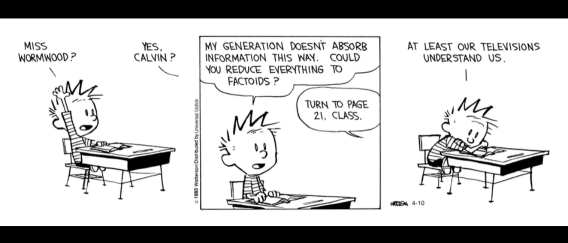
And choon and video to really cheer you up. Seriously, watch it...
Thursday, 21 March 2013
Fostering independent learning through mobile technology
 Today's blog post was inspired by a talk I was asked to give at #SSATeachMeet on how mobile technology can foster independent learning in our students. It wasn't a great talk to be fair. The speaker was knackered from an observation by the Head in the morning, a full day and a break and after school duty, had tried to cram in too much to his 7 minutes, and then garbled his way through most of it when the tech gave out (the irony is lost on nobody), and consequently, had anyone tried to get a question in edgeways, they would have been greeted by the old Queen song "Don't Stop Me Now" (though the second line would have been omitted for obvious "bricking it"reasons). Well, that's the last time anyone asks me to do anything like that again.
I've already written about how to use some of the apps I talked about here, so the purpose of the talk wasn't to re-hash old ground. Rather, I wanted to try to pick apart some of the key aspects of independent learning that mobile technologies can help us with, to provide a solid founding rationale for anyone wanting to move in that direction. It's a huge step, and long before you start thinking about when, how or what you're going to do, you need to ask yourself why you think mobile learning is the answer: What is the problem you are trying to solve?
In my case, I tend to get a lot of students come to my A level Film and Media classes who have ever studied the subject before. We never turn them away, but it has come to my attention that they have often scraped through their 5 A*-C grades, and been heavily supported especially in their English. Which is great to get them through the GCSE hoop, but unfortunately now I need them to start thinking for themselves, and very few of them are capable of doing that. So my original rationale for looking at mobile technology in learning, the "gap" I'd identified (to use the jargon), was student independence. I looked at many solutions, including SOLO taxonomy and flipped learning, as well as mobile technology, and ended up using a combination of all three to get my students thinking independently of me. These are my conclusions...
Mobile Learning Gets Students To Take Responsibility For Their Learning
In itself this is a huge step. A student who has a list of excuses for why they can't do something is a student who spends more time thinking up the excuses than doing the work. Mobile learning turns the onus onto them to get themselves organised. At the start of their courses, my students get a Google mail account so they can create and share Google Docs, and they create an Evernote account, so they can make their notes. I've blogged elsewhere about these apps (here and here, if you must), and I've even put tutorials online for how to use them on our Youtube Channel, so forgive me if I don't dwell on the "how to's" too much. Suffice it to say that an Evernote account allows my students to access learning in several new ways:

- By allowing them to supplement written notes with pictures (often of what I've drawn on the board), audio notes and attachments;
- By allowing them to organise these into subject files, and topic sub-folders;
- By allowing them to tag their files, and cross-reference them
- By allowing them to be stored on the cloud
There was an understandable sound of "whoop-di-doo" as I was talking about this, until I pointed to the fact that a student who arrives at his terminal exams two years down the line with a full set of notes intact and cross-referenced was already at an advantage to probably well over two-thirds of the cohort. We seem to take loss of learning material as an occupational hazard in Sixth Form, but it's tantamount to prolonged absence in some cases, so I felt that this was a great starting point when discussing the advantages of mobile technology in developing independent learners.
The Big Picture
 The second area in which students benefit from the use of mobile technology is in the ability to simply and quickly create permanent mind-maps and brainstorms which allow them to think about the bigger learning picture. Right from the start, students will use Popplet or one of many other mind-map apps to think about what they know about the topic before we start, to think about what they want to know, and to think about knowledge and skills from other subjects which they might be able to use in the one they are about to tackle. These types of connections are crucial, as they encourage students to think outside of the usual boundaries of subject areas, and to see how the world really works in an inter-connected way. Moreover, they can start to explicitly think about the big picture, and get a sense of how the topic they are about to embark upon affects the real world. In itself, this one change in outlook can provide students who are used to learning topics because "it's on the syllabus" with a much better notion of why it is important to study them, and what use they will be to them later on.
Applied Learning
The next benefit I've found in using mobile technology is in the way it facilitates flipped learning. I've talked about what flipped learning is before, and in many ways the idea isn't revolutionary (last century it was simply called "prep", but I like the fancy new pseudo-pedagogibabble!). But the world of homework research is made immeasurably easier and more interesting when combined with mobile learning. Not only can we set learning from a variety of different sources and source types, matched to the students' ability levels and the types of material they access most easily, from videos to online powerpoints to audio podcasts, but we can also use some great online tools to set associated quizzes for our students to try at the same time as the learning, in order to allow them to judge just how good their understanding or mastery of a concept is. I talked last night about TED-Ed as one such resource. It has allowed me to find some great videos, and flip them by creating quizzes for each one, as well as flipping some of my own Youtube tutorials: Here is an example of one I got my A level students to do, with initial quick-fire recollection and deduction questions (to make sure they'd watched it and learnt the facts!), and other more open-ended questions which prepared them for the sorts of issues we'd be talking about in the classroom.

What that means is that I could come into the classroom, look at the test results, and straight away split my students into differentiated groups on the basis of how well they dealt with the material: Groups needing more support get extra scaffolding, groups who clearly dealt with it easily get stretch material, and off we go. Tick the OFSTED boxes about personalised learning at the same time. If that's your cup of tea.
Inter-Dependent Learning and Collaboration
 If mobile technology does one thing, it allows students to share and work together in a much more meaningful way than ever before. Apps like GoogleDocs and Evernote are great for sharing over a variety of platforms, including Twitter, e-mail download etc. With GoogleDocs, students can even work simultaneously in real time on the same document from different locations, whether that be classrooms in school or from home. Not only that, but they can comment on each other's work. While at first one area of mobile learning I struggled with was showing evidence of self, peer and teacher assessment, this kind of sharing makes that easy and permanently recorded for them to refer to, unlike the sticky notes I used to find lying around my classroom after an über-fruitful peer assessment session, where the fruits had clearly fallen on stony ground!
Recently, however, I have seen others extend this idea even further by publishing essays and research online via Twitter or other forums, and asking the outside world for feedback. As I mentioned in my talk, a couple of weeks back some students of mine had been researching, discussing and writing about the problems facing the UK film industry. When we put their essays out for public critique, can you imagine the level of motivation they got when they received two comments from two British film producers? "Quite chuffed" doesn't really do it justice! But this invitation to outside experts to scrutinise our work grounds the students in the real-world context of their learning, and gets them already engaging with the issues and the people they aspire to work with in the future. Do they really need me any more?
The Meta-Cognitive Dimension
The real benefits for me of using mobile technology to foster independence are about the meta-cognitive skills the students develop. A mobile device, with an array of apps which do similar but not identical things, gets students really thinking about learning itself, and selecting the tools by which they learnt best*. They have to think about how they will research, assimilate, learn, remember and revise their work. They have to think about a way of presenting their learning to me which most clearly demonstrates their understanding and their progress. So I could end up marking an interactive book with videos and full glossary in it (Creative Book Builder), or an animated walk-through of a process or timeline (Videoscribe), or an interactive whiteboard presentation which is narrated (Explain Everything), or even a simple collaborative pin-board where all the students have collated their ideas (Linoit). To be honest, as long as the focus remains on the learning and not the tools, then I don't mind what they present to me. But the very fact that students have to think carefully about this aspect of their learning clearly leads them towards greater autonomy.
A Changing Role For Teachers
Finally, I ended with the contention that this direction I had been talking about necessitated a change in the way we as educators view our role in the whole process. I think everyone on Twitter would agree that the idea of teachers as the sole repository of knowledge within a classroom is bunk. We have to get away from that notion of "sage on stage" and move towards being the "guide by the side", no matter how much this might threaten our little egos. "Grow a pair and get on with it!", as my mother would never have said to me, ever. It is in fact much easier to play the role of guide given the time freed up by students not needing us any more thanks to mobile learning devices! It allows us to get stuck in to some seriously timely and highly effective personalised interventions (OFSTED box-tickers: Fire away again!). But we can only do that if our interventions are informed by a system of diagnostics which is highly accurate, targeted and instant in its feedback. I've used simple apps like Traffic Lights for a quick RED/AMBER/GREEN response from students (this often tells me more about their confidence levels than their levels of understanding), as well as Socrative, an instant quick-quiz app which allows you to set multiple choice or open-ended questions, single or multiple question quizzes, starters or plenaries and even hinge questions. Each one an opportunity to change the direction of the lesson for any individual who looks like they need a bit more guidance.
The results for me have been really good, if anecdotal as yet. My Year 10 class now moan that I don't test them enough to check their understanding, or if I tell them a particular way to do a task. "Can't I do it this way?" they will ask, before justifying their request with a perfectly cogent reason why they would present their learning more effectively a different way.
If you're interested, the original prezi from TMBrum2 is here, in glorious techni-thingy. I'm sure you'll agree from above that I did astonishingly well to get it under the 6-minute limit, even though I do say so myself. @Danielharvey9 may have a video that tells a different story...
* If that sentence sounds wrong, check it again. It's right, I promise: The plural "do" refers to the multiple apps, while the singular "gets" accords with the "mobile device". But it took me three read-throughs (should that be reads-through?) to see why it was right!
Saturday, 16 February 2013
Bring Your Own Device in schools - an implementation strategy Part 2
I blogged a little while ago about the journey we are taking in our school to implement a SMART Learning strategy, facilitated by a scheme allowing students to bring their own devices to the learning environment. We've been through the exploration phases, the feasibility stage, and the infrastructure set-up stage in that post, so forgive me if I don't go into it again. Read it for yourselves, I can't be bothered to type it all out again, I'm on holiday, and I've given you enough repetition of the same hyperlink in the last sentence that you can't miss it!
Developing an Acceptable Use Policy:
At the time of writing it we were on the verge of conducting a school-wide Safer Internet Day project, most ably led by my co-conspirator @Gripweed1 (definitely worth following). The lesson was conducted by all mentors across all students, and Associate Staff and SLT were attached to classes too, so it was genuinely a school-wide discussion. The theme was the rights and responsibilities of using digital devices and the internet, both inside and out of school, and the ultimate aim was to engage the students in defining what would become our Acceptable Use Policy. The responses we got from students were very high quality, with a great deal more emphasis on the responsibilities they had than the rights, and a lot of intelligent discussion about where one person's rights conflicted with those of others. The results were presented in assemblies to each college by the ICT students leaders, so the students could see what we had done with their input, and we are now hoping to run a more focused Baraza*-style consultation of the students to focus their ideas down into a simple, user-friendly policy which achieves their buy-in.
* Baraza: noun, of African origin: To sit round in a village circle and have a chat about making the village a better place in order to hit FFTD targets, or something like that. I don't know. Head's idea, but works really well
Now, however, we reach the squash stage: There are a number of simultaneous processes we have to carefully carry out at the same time, but without any of them getting too far ahead of the others, lest the whole thing falls apart. The key stake-holders are all involved in these stages, because to put it simply:
 Before students start using the devices for learning, the teachers need to be ready to use them, and need to be able to overcome a range of technical obstacles in their way. You may be lucky enough to have a great team of techies in your school to be able to help out with this, but frankly, even with the best will in the world, once there are 1500 plus devices around the place, they're in it way beyond their eye-balls. Our strategy is to train a crew of digital leaders across all years whose job it will be to assist in two key ways:
Staff Training:
Our next stage in our school is to get a group of digital enthusiasts together to lead the initiative further. We could call these "dangerous teachers". We could equally call them "canon fodder" I guess, but let's stay positive! These need not, and ideally should not, be tech-experts. Restricting this part of the project to the tech-savvy will alienate anyone else too easily, and make it seem like a clique of "boys with toys", at the risk of stereotypical gender generalisation. Better to have a cross-curricular range of gifted enthusiastic amateurs who know the potential, and want to develop it.
Staff who are developing new pedagogies need time to experiment and explore. That would go for any new idea, whether it be co-construction, SOLO Taxonomy, Flipped learning or whatever. All the more so for SMART Learning. Not only do they need time to get to grips with a device, but they then need time to work out how it fits into their curriculum, what the potential for it is. Mark Anderson (@ICTEvangelist) has written some superb guidance on how to move mobile device use through a variety of stages from the enhancement of teaching to its transformation, and teachers who are taking on this challenge will have to work their way gradually through these stages to get the best out of them.

In a BYOD environment, teachers wil initially be looking at web-based tools which anyone can access no matter what device, and then be looking at more specific apps for certain tasks, some of which may be exclusive to certain platforms. At the moment, there are a great many apps I use on iPads which are simply not available on Android, but others may be, and teachers will go on to explore those, as well as eventually looking at subject-specific apps. All of this takes time and regular training, which is why the teachers shouldn't also have to worry about the technical side of things going wrong, hence the digital leadership programme.
Once the teachers feel comfortable with their devices, and their potential, it can easily be made part of those digital leaders' remits to ask what departments' needs are, and to find possible solutions to present to the teachers, almost reversing the teacher-student relationship.
For me, this is one of the most crucial areas of staff training: To get them to accept that in a fast-moving, hi-tech world, they are no longer the "sage on the stage". If teachers have the humility to accept that they may not know something, but that by working with students there will be a way to find out, they will establish strong collaborative relationships which could mark a fundamental shift in the way students see the relationship too. When students and teachers are brought down to the same sort of level, the focus on learning and progress becomes much sharper, with both parties constantly interrogating the path they're taking, and the tools they're using.
We also need to get away from the idea of "safe teaching". All teaching should be inherently dangerous, and perhaps uncertain, but if the final destination is something which is agreed from the start, collaboration will get us there in the end. Hopefully this will pave the way for a far more risk-taking culture, and it requires a brave leap of faith from leadership teams to allow their staff to try to fly, and watch them occasionally fall. But in the words of one of my favourite philosophers...
"Why do we fall? To pick ourselves up." Might be a prize for guessing the philosopher. Leave your guesses in the comments section...
Class Trials:
So after the digital leaders are trained, the next stage is class trials led by those "dangerous teachers". This would involve allowing teachers to experiment, try different ideas with different classes, getting digital leaders alongside them each step of the way, meeting regularly to discuss new needs until the staff are completely comfortable, at which point the digital leader roles can be extended even further to include pedagogical questions, such as "what works best if we are trying to...?". You can see we're not talking about an overnight process here. In my opinion, if you don't give SMART learning the time to bed in, and support it with a long-term development strategy, it will not become an effective tool in the learning toolbox.
Once those classes, teachers and digital leaders feel comfortable in their roles, and have ironed out a lot of the worst potential pitfalls, then you can start bringing the rest of the staff onboard, training them in exactly the same way.
Eventually you want to get to a stage when the technology is a non-issue. It's invisible. Its use is seamlessly integrated into classrooms in a way which enhances learning, but doesn't get in the way of learning. The same is true of behaviour problems which devices may seem to be causing. Students need to be trained into a routine of how to use mobile technology effectively to assist their learning, but if they do misuse it (for Facebook, games, texts etc), then what you have is a behaviour issue, which should be challenged as such. Part of our job as teachers is to show students that there is another way to use this type of technology, beyond the recreational. And as one BYOD enthusiast told me once, students disengaging with lessons on their mobile phone are often much easier to spot than those who are quietly simply staring out of the window. Either way, they need to be engaged in the learning process, and that's our job.
Next instalment: Parental engagement. How to sell your idea for SMART learning to get parental support for it. They're the ones paying for the devices, after all...
 For anyone interested, this is an outline of our strategy and rationale at Finham Park:
Finham Park School SMART Learning implementation strategy
Developing an Acceptable Use Policy:
At the time of writing it we were on the verge of conducting a school-wide Safer Internet Day project, most ably led by my co-conspirator @Gripweed1 (definitely worth following). The lesson was conducted by all mentors across all students, and Associate Staff and SLT were attached to classes too, so it was genuinely a school-wide discussion. The theme was the rights and responsibilities of using digital devices and the internet, both inside and out of school, and the ultimate aim was to engage the students in defining what would become our Acceptable Use Policy. The responses we got from students were very high quality, with a great deal more emphasis on the responsibilities they had than the rights, and a lot of intelligent discussion about where one person's rights conflicted with those of others. The results were presented in assemblies to each college by the ICT students leaders, so the students could see what we had done with their input, and we are now hoping to run a more focused Baraza*-style consultation of the students to focus their ideas down into a simple, user-friendly policy which achieves their buy-in.
* Baraza: noun, of African origin: To sit round in a village circle and have a chat about making the village a better place in order to hit FFTD targets, or something like that. I don't know. Head's idea, but works really well
Now, however, we reach the squash stage: There are a number of simultaneous processes we have to carefully carry out at the same time, but without any of them getting too far ahead of the others, lest the whole thing falls apart. The key stake-holders are all involved in these stages, because to put it simply:
- We can't switch on unrestricted access to wifi until we have students agreeing to how it will be used
- We can't allow students to use their devices willy-nilly (stop me if I get technical) without showing them how to use them responsibly in an educational context, to assist their learning
- We can't teach them how powerful these tools are for learning unless we have teachers trained in the use of SMART devices and pedagogy
- We can't expect the teachers to also be trained up in the potential technical problems associated with different devices, so we have to train up digital leaders to assist in technical matters
- And we can't do any of this without the rationale for it being clear to the parents themselves, who are otherwise quite within their rights to wonder how their children can learn in a class where they are allowed mobile devices out when these very same devices are exactly what prevents them getting any form of decent conversation out of their offspring once they get home at night!!
You get the idea. Lots of people to get on-board, lots to work out in terms of the order in which to do this. So this is our priority list:
Digital Leadership training:
 Before students start using the devices for learning, the teachers need to be ready to use them, and need to be able to overcome a range of technical obstacles in their way. You may be lucky enough to have a great team of techies in your school to be able to help out with this, but frankly, even with the best will in the world, once there are 1500 plus devices around the place, they're in it way beyond their eye-balls. Our strategy is to train a crew of digital leaders across all years whose job it will be to assist in two key ways:
- With basic device problems, functionality, logins, printer problems etc
- With helping the teachers source ideas for using the new technology in learning
If we can get at least one digital leader in every classroom across each year, the teacher hopefully shouldn't need to worry about stopping the entire lesson because "Sir, my phone's not working!" The teacher will have enough on their plate without having to worry about that, and moreover, the less confident a teacher is, the fewer obstacles it will take before they jack it all in as unworkable, new-fangled etc etc. The role of digital leaders is to shoulder those technical responsibilities, and that will take a lot of training.
Staff Training:
Our next stage in our school is to get a group of digital enthusiasts together to lead the initiative further. We could call these "dangerous teachers". We could equally call them "canon fodder" I guess, but let's stay positive! These need not, and ideally should not, be tech-experts. Restricting this part of the project to the tech-savvy will alienate anyone else too easily, and make it seem like a clique of "boys with toys", at the risk of stereotypical gender generalisation. Better to have a cross-curricular range of gifted enthusiastic amateurs who know the potential, and want to develop it.
Staff who are developing new pedagogies need time to experiment and explore. That would go for any new idea, whether it be co-construction, SOLO Taxonomy, Flipped learning or whatever. All the more so for SMART Learning. Not only do they need time to get to grips with a device, but they then need time to work out how it fits into their curriculum, what the potential for it is. Mark Anderson (@ICTEvangelist) has written some superb guidance on how to move mobile device use through a variety of stages from the enhancement of teaching to its transformation, and teachers who are taking on this challenge will have to work their way gradually through these stages to get the best out of them.
In a BYOD environment, teachers wil initially be looking at web-based tools which anyone can access no matter what device, and then be looking at more specific apps for certain tasks, some of which may be exclusive to certain platforms. At the moment, there are a great many apps I use on iPads which are simply not available on Android, but others may be, and teachers will go on to explore those, as well as eventually looking at subject-specific apps. All of this takes time and regular training, which is why the teachers shouldn't also have to worry about the technical side of things going wrong, hence the digital leadership programme.
Once the teachers feel comfortable with their devices, and their potential, it can easily be made part of those digital leaders' remits to ask what departments' needs are, and to find possible solutions to present to the teachers, almost reversing the teacher-student relationship.
For me, this is one of the most crucial areas of staff training: To get them to accept that in a fast-moving, hi-tech world, they are no longer the "sage on the stage". If teachers have the humility to accept that they may not know something, but that by working with students there will be a way to find out, they will establish strong collaborative relationships which could mark a fundamental shift in the way students see the relationship too. When students and teachers are brought down to the same sort of level, the focus on learning and progress becomes much sharper, with both parties constantly interrogating the path they're taking, and the tools they're using.
We also need to get away from the idea of "safe teaching". All teaching should be inherently dangerous, and perhaps uncertain, but if the final destination is something which is agreed from the start, collaboration will get us there in the end. Hopefully this will pave the way for a far more risk-taking culture, and it requires a brave leap of faith from leadership teams to allow their staff to try to fly, and watch them occasionally fall. But in the words of one of my favourite philosophers...
"Why do we fall? To pick ourselves up." Might be a prize for guessing the philosopher. Leave your guesses in the comments section...
Class Trials:
So after the digital leaders are trained, the next stage is class trials led by those "dangerous teachers". This would involve allowing teachers to experiment, try different ideas with different classes, getting digital leaders alongside them each step of the way, meeting regularly to discuss new needs until the staff are completely comfortable, at which point the digital leader roles can be extended even further to include pedagogical questions, such as "what works best if we are trying to...?". You can see we're not talking about an overnight process here. In my opinion, if you don't give SMART learning the time to bed in, and support it with a long-term development strategy, it will not become an effective tool in the learning toolbox.
Once those classes, teachers and digital leaders feel comfortable in their roles, and have ironed out a lot of the worst potential pitfalls, then you can start bringing the rest of the staff onboard, training them in exactly the same way.
Eventually you want to get to a stage when the technology is a non-issue. It's invisible. Its use is seamlessly integrated into classrooms in a way which enhances learning, but doesn't get in the way of learning. The same is true of behaviour problems which devices may seem to be causing. Students need to be trained into a routine of how to use mobile technology effectively to assist their learning, but if they do misuse it (for Facebook, games, texts etc), then what you have is a behaviour issue, which should be challenged as such. Part of our job as teachers is to show students that there is another way to use this type of technology, beyond the recreational. And as one BYOD enthusiast told me once, students disengaging with lessons on their mobile phone are often much easier to spot than those who are quietly simply staring out of the window. Either way, they need to be engaged in the learning process, and that's our job.
Next instalment: Parental engagement. How to sell your idea for SMART learning to get parental support for it. They're the ones paying for the devices, after all...

Finham Park School SMART Learning implementation strategy
Subscribe to:
Posts (Atom)