Showing posts with label Well-being. Show all posts

Saturday, 10 October 2015

Well-being

I've read a lot of really good blogs recently about teacher well-being, and what a tough nut it is to crack. Depending on whether you come from a leadership point of view or a chalk-face view, you will have different interpretations of where the problems lie, and what the solutions might be.
@kevbartle talked recently about the tokenism of some approaches (free tea and coffee anyone?), or the tick-box approach we are often forced to adopt by external agencies who also want to be seen to be "doing something" to solve the problem. Surprisingly, none of them seem to work. Surprisingly.

For what it's worth, here is my contribution to the debate. I hope it gets to the nub of the problem:

The first given in the debate is this: The business of schools is to produce students who, be it through good exam results or just more ambition, self-respect and belief, are ready for the outside world. We are there to give them "life chances" in the jargon. In a utilitarian view of education, they are the product which feeds the economy, and the product has to be top-notch. From a more humanitarian perspective, students are individual humans whose contribution can improve society if we have done our job well.

The second given is that our job as teachers and school leaders is to deliver that. The ultimate needs of the students must come above our own. Unfortunately, this very often includes the needs of staff well-being, or the needs we may have as normal human beings to have a life. We have chosen a career which, if we let it, can degenerate into a massive black hole for all our energies.

In this context, my contention is this: If students are the products of the system, we are the craftspeople who shape the product. We, and I realise I am risking derision for my choice of words here, are tools. If you're happy for me to carry on with this analogy, it works like this: A craftsman chooses how well he keeps his tools. He can buy them cheap, use them until they wear out, and then just get rid of them. Or, as is the case with real craftsmen, you can look after them carefully, keep them sharp, and produce excellent work with them for a long time.

For me, the well-being debate boils down to this: As a school leader, do your actions contribute towards wearing the tools out prematurely or do they contribute towards keeping them as sharp as possible for as long as possible?

To make my point, under which of the two categories would you place the following activities?
  • Free tea and coffee at break-times
  • Creating support systems around the school (ICT, SIMS, First Aid, school comms etc) which just work reliably day in day out
  • A reliable and easy-to-use VLE
  • Time to meet in teams to plan lessons together
  • Audits of lessons, learning objectives, marking etc
  • Staff socials
  • Timetables which minimise split classes, room changes, etc
  • Timetables which give staff time to socialise and discuss daily problems
  • Setting up a staff well-being committee
  • Staff freebies, such as health insurance or discounts on well-being services
  • Thinking hard about any new initiative, and whether it adds to or distracts from the "main thing": Teaching and learning.
To me, anything which allows teachers to teach more effectively and more efficiently is a sharpening tool: Anything which gets in the way of that is blunting the effectiveness of the tool. Ultimately, that will have knock-on effects for the outcomes we produce as schools.


Sunday, 4 January 2015

Principles of a good work-life balance in teaching


Over October half-term I wrote a blog about how teachers could reconnect with themselves as people, in order to start looking for that elusive work-life balance thingy they all talk about. As we approached New Year and I indulged in the usual reflections about the year, I came to two conclusions:

1) 2014 had been extremely kind to me and my family;

2) My job as a teacher hadn't dominated my thoughts about how good the year had been.


There are lots of ways to read that, but I think it means that for me, considering what an excellent year it had been professionally (ALPS1/2 for A levels, FFTD for GCSE, major show within the Faculty, and lots of particular success stories for individual students which, while they didn't look overwhelming on paper, were significant milestones for them personally), I had also managed not to make my work the be-all and end-all of my perception of happiness. Other things have mattered more, and I think that's a great thing. Maybe it even represents personal growth. Wow.

Anyway, for this quick New Year's post, I thought I would share a few of the fundamental principles I've found helpful in the search for that balance, for no other reason than the fact that, in my opinion, a balanced, healthy teacher is a more effective teacher. Here goes...


1) Remember that some jobs are fundamentally incompatible with day-to-day family engagement: Accept this and work around it


2) Never put the quality of your life in the hands of someone else: You won't like their version of what your balanced life should look like


3) Elongate the timeframe in your search for balance: think about it over a term rather than a day or a week: What does your ideal term look like?


4) Make sure that your balance contains elements which nurture you physically, emotionally, spiritually and intellectually


5) Sweat the small stuff rather than big gestures: There is a huge difference in perception between how important you think a big gesture is, and how important others think it is. There is often a similar disparity between what you might think of as a little thing, and how much help it has been to someone else. Apparently, my offering to do someone's detention duty for them in the last couple of weeks of last term was a gesture which meant a massive amount to them at the end of a crippling term.


6) On that theme, be kind:  Not just generally a nice person. Look for opportunities to bestow kindness on others, without judging how deserving they are. Do it in secret as much as in public: The well-being benefit is as much for yourself, and these acts come back to you all the time. Actually looking out for the kind things other people do for you is equally a great way to become a more positive person: It takes your focus away from the negative, and it helps you deal with it much more successfully when the negatives arise.


That's it. Short but sweet. I hope that 2015 is your happiest, most balanced year yet.


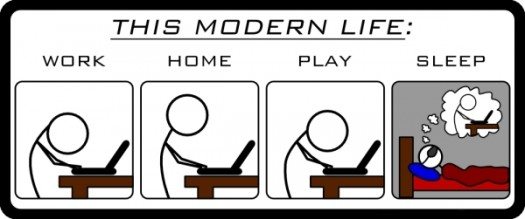
Copyright: Scott Adams, Inc.


Monday, 17 November 2014

The perpetual anxiety of education

This blog post follows a series of events which have clearly contributed to its central idea: These events include (in no particular order), a summer holiday where I truly reconnected with myself for the first time in ages, a set of excellent exam results across the Faculty I lead, a first half-term which nigh-on wiped that feel-good factor out, a Middle leadership meeting that left me feeling the overwhelming weight of national educational change coming soon, a well-being meeting where we tinkered around the edges but never really got to the crux of the problem, and a graded observation which was Good (with some outstanding features) but didn't really reflect what I've been doing this year.

What I've been doing this year is mostly consolidating a range of pedagogical tweaks I've learnt, mostly thanks to Twitterati (@headguruteacher, @HuntingEnglish, @ICTevangelist, @jkfairclough, @kathydarlison85,  @hgaldinoshea and @ragazza_inglese to name a tiny proportion) but also some fantastic colleagues at my school, and formalising them into concrete lessons via our new FROG OS VLE (a school development area). The VLE has been useful in helping me get to a really deep level of flipped learning, which I've always wanted to do, to the point where I have several classes where some students are now lessons ahead of others, and really powering through the learning. It has increased the independence of a significant number of the most motivated and able students I teach, and at the same time highlighted just how teacher-dependent some of my least able are. It has also, frustratingly, pushed me back in pedagogical terms by preventing me from combining the VLE with all of the great things I've learnt from two years of working with iPads, because the two won't talk to each other. All of which is irrelevant to the actual post, but you need the context to see why this topic is important to me.

The feeling I have at the moment is a horrendously negative feeling that I hate, because I'm not that man. I see myself as a positive person, someone who leads by example and encouragement. But at the moment I feel like quitting. I don't feel that moving up the career ladder to leadership positions is the answer, but I'm not enjoying where I am either. And I can't work out why.

Except today, it hit me. Like an epiphany. A more bleeding obvious epiphany you will probably never hear, and I appreciate that the first sign of publishing this will be greeted by a chorus of "Duh!"s, but here it is anyway. It's called the Perpetual Anxiety of Education. It's the result of the Accountability Matrix. Yes, probably very similar to the one your heard about in the Wachowski brothers' film, but not quite as entertaining. It starts with targets. As soon as targets are formulated, your job is to meet them. Aspirational or not makes no difference, you still have to meet them. And as a teacher, you spend your entire year in this state of anxiety about students meeting their targets. This of course is exacerbated by senior management, who have the same worries, but spread across the whole school, and with often only indirect power to do anything about it: Hell with a side order of chips! The less control you have, the more anxious you are likely to be. Hence the plethora of "accountability measures" deployed in order to keep checking that everyone is doing their utmost to hit those targets.

Copyright: Jantoo
As a teacher, this constant surveillance makes it very difficult for you to put it out of your mind, hence why I called it a perpetual state of anxiety. And there are few teachers who can do their job effectively without communicating this anxiety to the students. Thus the students themselves are also afflicted by the same perpetual anxiety. Ask the Year 11s in my mentor group who, despite my support and encouragement, feel this overwhelm from all sides. Because of course it's not simply teachers who are putting the pressure on, but parents as well. Are their kids doing as well as the others in their class? In their year group? In their school? What about other schools? Could we be sending our kids to a better school? What about the education system itself? Is it too soft? Is it "fit for purpose"? Is it really preparing my child to do career capital battle with that wiry, hungry little Singaporean kid I hear so much about in the papers, with his 25 hours extra tuition a day on top of his fifteen hours of regular school, per day...? Perpetual anxiety.

Now let's go back to this situation in schools. We have leadership whose job it is to deliver the targets, who have least classroom time to do it in. Their only weapons are by proxy, and they have to deploy these increasingly atomistic dictats to get the rest of their staff to get to "best practice" at all times: Do you have your MUST SHOULD COULD? Do your students know their targets? Their Working at Grades? Was the homework you set meaningful? Was it marked that day? Was it responded to in a meaningful ongoing dialogue which lasted until seconds before the exam? Did you push the students along at the perfect pace for them to cope while maintaining consistently high expectations etc? Don't get me wrong: This is NOT an anti-SLT rant, because I've been on the verge of going for these sorts of positions myself for a year or two, and the thing which has always stopped me is this very question: What would I do differently? You see, I think the vast majority of teachers and leaders are good people with the best of intentions, but these are too often warped by the target culture. The accountability matrix. What happens when you meet your target? That's a moot point to be honest. Because the vast majority of teachers only hit their target when the exam results come out. Even if you've hit them beforehand, the criticism is that you've under-estimated your target, you haven't been aspirational enough. So here's a higher one. But once the exam results are out, we have a week to celebrate the achievement of 51 weeks of anxiety-ridden stress, before 1) sending the students off to their next life stage, which will be even more target-riddled than the last, and 2) beginning a whole new round of targets of our own. Hamster-wheel, anyone?
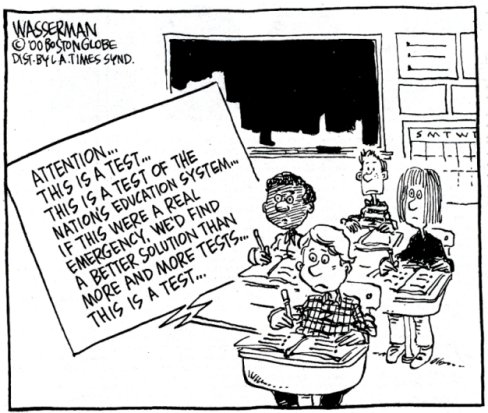
Copyright: Cartoonstock.com

And then we come to the staff well-being meeting. Where nobody can work out quite why staff aren't responding über-positively to the Friday morning cakes, the fruit bowl in the staff room, the staff silly jumper day and the disaggregated day off. These are drops in the ocean of a culture which is otherwise dominated by doubts about whether you could be doing that little bit more to hit those targets. The anxiety is the permanent, low-level background noise which defines the existence of many teachers on a day to day basis.

What's the worst thing about this state of perpetual anxiety? I'm not sure that this is just about education. There is a very good argument for saying that this pretty much covers the majority of our social ills at the moment, in a society which seems hell-bent on better and more rather than sufficient and happy. But I know which I would prefer if given the choice of how to live my life. And that's a BIG "if"...

Monday, 27 October 2014

Twelve Ways for teachers to reconnect with themselves in the holiday

It's a long-held belief of mine that teachers work bloody hard. Too hard, very often. Twenty years of practice at chalkface (now the digital interface of course), bags under the eyes and an alarming number of wrinkles I swear never used to be there can help me attest to this fact from personal experience. Whether all of this work is always efficient, effective, or indeed has ANY effect on my students' learning may well be a matter for debate, but not in this post.

In this half-term post, I want to come back to an idea I've out out a while ago, namely how teachers can remain healthy. As part of our appraisal systems this year, we've been asked to write down the number of days of absence we had last year, and I found that these stats had all been pre-compiled for me. The nice surprise in this otherwise fairly worrying surveillance trend was to find out that this year marks 5 years (and here I am currently touching enough wood to reconstitute an entire forest!) without illness. In a secondary school as full of snot and lack of hygiene as any teen-dominated environment, I was pretty impressed by this statistic.

I try to take care of myself. I try to devote time to myself, my physical and mental well-being, and I will take on anyone who thinks you have to be "pragmatic" about these matters. "Sometimes you've just got to get your nose to the grindstone and get it done Mike, and things like exercise go out of the window for a bit", I'm told. As far as I'm concerned, that's the thin end of the wedge. If you're going to work ridiculous numbers of hours and devote your life to teaching, at the expense often of family and friends, then you'd better be fit enough to do this for the duration, otherwise you WILL drop. I've seen this happen to too many good teachers to doubt my convictions on this one.

So half-term has come around again, I have shedloads to do, but I've started the half-term on a positive footing. Every day of this half-term, I will do something for me, something for my family, and something for my spirit. Only I couldn't think of anything. Hence, the quest began to think of activities to get myself off the work treadmill, or rather fit the work around, and between us, my daughter and I have come up with some good ones. I share them here in the hope that
a) You will get some inspiration to look after your own health;
b) You'll pass on your own recommendations for me: A virtuous circle if you like.

Anyway, here goes...

Twelve ways to reconnect with yourself this half-term...

1. Watch a good film that inspires you: For this half-term, I've chosen John Favreau's fab performance in Chef: One man's journey from Michelin-starred chef de cuisine to taco-van owner as he rediscovers the roots of his passion for cooking. Don't watch on an empty stomach.

2. Try t'ai chi or yoga. It might be new, it might feel a bit hippy, but try it. I've been doing this since the day I started teacher training, and trust me, it works. Disengage your brain, take time for yourself, take stock of where your body is at. It will thank you later, possibly in old age, possibly by making sure that you're still around to have one!

3. Play cards, or board games: Let's face it, the cards are just an excuse for a good conversation with the whole family, a drink, some nibbles. Play Top Trumps if you like. Nobody cares. Just enjoy each other's company, and laugh.

4. Read something for pleasure, not work. Read something to give you a new perspective. My personal recommendation at the moment is The Kite Runner - Great book about Afghanistan, which will help you see that country and culture in a new light.

5. Cook a meal with or for someone you love: Take care over it. Get it perfect. Enjoy the process of making, tasting, rolling, kneading. The eating isn't the only sensual part of the meal.

6. Get to know your own area as you've never quite seen it before by trying geocaching: Free membership, and millions of ready-made treasure hunts around your area.

7. Switch the heating on. Go out for a walk in the dark and the wind. Come home. Relax in the warm under a duvet. Reconnect with nature, and then appreciate the modern comforts which seclude you from being at its mercy all the time.

8. Seeing as it's October half-term (I promise I will try and update these every time we have a holiday so that all advice is guaranteed seasonal and organic!), go see a firework display with friends and children. Make an occasion of it. Take some flasks of mulled wine, roast chestnuts etc to share. Better still, make your own bonfire, and learn how to light it without matches. Get those neighbours you never have time to speak to properly round, and enjoy each other's company.


9. Switch off all your electronic devices for 24 hours: Phones, ipads, laptops, TV, the lot. Spend the time listening, to yourself, to your friends, and to your family. See what type of day you had compared to normal. If you're a digital addict like I am, you'll be amazed at how you feel after this one, once the initial frustrations wear off!

10. Get in touch with your creative side: Now that the nights have drawn in, go outside and light paint. You need a camera with a long exposure setting, then take a torch or any light source, and draw 

11. Do a taste test. Indulge your palette and reconnect to your senses. Wine, chocolate, smoothies, doesn't matter. Make loads, invite people round, and enjoy talking about your senses, including what they make of your weirder concoctions...

12. Go to an independent cinema. Watch an independent film. Watch a British film. Pride is my recommendation this month: A great (true) story about the support the LGBT community gave the striking miners during the mid-80s, and a chance to see Dominic West as a true Dancing Queen.
Hope this gives you some ideas for starters: Please leave me yours in the comments.

Happy half-term!

Tuesday, 15 April 2014

Effective revision sessions

Yesterday I ran a revision session as I often do for my students before their A level exams kick in. Usually it's a fairly dry affair, what-do-you-know, what-don't-you-know (with raised eyebrows hinting at the "and why don't you know it yet?"-ness of the latter). It's never really something I've got my head round how to do well. There must be an answer, but I'm damned if I ever found it. This year, inspired by a particularly brilliant NQT in the department, I decided to try and do things differently. Apparently, according to the students, it was brilliant. This is what we did...

First, I stopped assuming the student know HOW to revise. We went right back to basics, getting them to think about their state of health as they approach their revision tasks.

  • We talked about getting the body fit every day: Fit body = oxygenated brain = more effective learning
  • We talked about the importance of good sleep patterns, getting early nights, and switching off well before they went to bed. Most of them seemed to have no idea that being plugged in to the telly, the computer, Facebook etc just before bed meant their brains were still free-wheeling for a good while after they stopped.
  • We talked about the importance of fuel: Eating a balanced diet, with plenty of vegetables and fruit, and complex carbohydrates for slow release of energy. We talked about eating little and often while you revise so that your body isn't sluggishly dividing its energies between the brain and the digestion. We talked about water to hydrate the brain.
  • We talked about the quick energy releases of caffeine and sugar and sweets, and how the come-down is worse than the temporary benefits gained, and leads to lack of focus.
  • We talked about deep breathing to oxygenate the brain: We started with three deep in breaths, and we showed them that deep breathing is in the diaphragm, not the chest. We let those three deep breaths out as slowly as possible (record was 40 secs for one constant out-breath - pretty impressive). We followed this with three deep in breaths and let them out as forcefully and quickly as possible. They could feel more awareness, more focus (and at nine in the morning, more awake than most of them had felt all year apparently!). We explained about the importance of oxygenating the blood and the brain for peak performance.
After a while they started to see that we were in training: We were athletes, in it for the long haul, and we needed to get ourselves ready.


Next we looked at the environment for revision: Getting rid of anything extraneous, anything on the desk apart from what is required. We looked at creating an environment which isn't comfortable, on the basis that comfy and cozy equals sleepy. So the whole session was conducting without sitting down at all during the active bits, with fresh air through open windows so it wasn't too warm to concentrate, and we did the whole session in music-less silence, apart from our own discussions.


And finally we talked about sucking lemons. Old trick I think my Dad taught me before my A levels: Sets the teeth on edge, horrible taste, but my lord does it concentrate the mind!

Apparently, nobody had ever spoken to our students about this stuff, about how to get yourself in optimal condition to learn. That surprised me, but I liked the way they responded to being treated more like Olympic athletes than teaching fodder. Their response was excellent, and they really seemed to get a lot more out of it that other revision sessions they'd done.

The important bit for me was that we not only thought about these things, but we modeled them during the session: We had water stations for everyone and herbal tea if they wanted; We provided complex carbohydrate (sugar-free) flapjacks and bananas, and we kept them standing for the 25 minute sessions in a relatively cool classroom.

Lastly, before we got onto the material itself, we talked about what time of day their bodies and brains work best. We thought about timing, and what your brain can hold at any one time: We discussed working 3 hours a day, beginning early in the day. Morning is always better to get revision out of the way, and it gives them the rest of the day to look forward to, with the sense of achievement and the feel-good factor that goes with it. We talked about never revising for more than 20-25 minutes at a time, and being strictly disciplined with five minute breaks in between: Not over-eating. Rehydrating. Re-energising through breathing before the next session. And no more than 6-8 sessions in a day. And we talked about reflecting on what they'd learnt before they ended each 20-25 minute session, to increase likely retention of material. We talked about maximising this with one session reviewing this revision either later that day - 20 minutes or so - or perhaps first thing the following morning.

And finally we talked about resting and relaxing after the work is done. If they're disciplined, and they've stuck to their schedule, they've earned it as far as I'm concerned.

Oddly enough, this was probably the most important bit of the day for the students, according to the feedback we got. The whole motivation industry is well and truly established within education, but many of the students complained that once Mr Motivator had pumped them up and buggered off, they didn't necessarily know how to set about their task. This gave them an idea of what needed to be done on a daily basis in order to achieve those long-term goals, and they seemed to appreciate that help.

The rest of the sessions were dealing with particular skills and content important to my subject. We worked out how much there was to revise, how often we'd need to review each topic before the exam, and created the revision timetable we needed as a roadmap for the journey. Then we thought about the revision tasks themselves: We talked about summarising content, synthesising ideas and finding links, mind-mapping topics, applying ideas and theories to examples, practising exam tasks, but above we made it clear: NEVER simply read through notes! Revise actively, with colours, different layouts, mind maps etc, but don't just sit down. That way lies death and boredom... Or at least poor results.

And there you have it. It looks like there was no magic bullet all along. It's all just a matter of teaching the students to be aware of how they learn optimally. We'll see if it worked on results day...

ADDENDUM: If by any chance there is a magic bullet, and you've found it, please share it. I'm still curious.

Sunday, 4 August 2013

Leadership secondment: a great experience

Those of you who have been following my blog over the last few months will know/have surmised/been told/have no idea whatsoever that I was seconded to our leadership team for the past two terms. I can honestly say it probably came at the worst possible time for me, with a colleague who had just left the department and not been replaced, having to take on their exam classes, dealing with some serious personal issues of a couple of colleagues and trying to be a decent father and husband (the last two have been more or less accepted as optional by my family for all but the month of August each year, but that doesn't mean I stop trying, or at the very least feeling guilty about failing!). By the end of the process, however, I would say that it was one of the most worthwhile professional things I have done in the last few years.

The reasons for this might be divided into two: The worth lies in what I achieved (which is open to debate) and what I experienced. The latter I think is the most important, especially given the paucity of my achievements. I'm sticking with it as the most important thing at any rate. So what did I experience?

1. The opportunity to organise a whole-school project

Anyone who has read the non-leadership-y blogs of mine will know that the other element I've been captivated by this year is the potential for mobile technology to transform learning. Because of what I'd been doing in the classroom, other colleagues and leadership were getting interested in what I was doing (or wanting to know how I could justify all the expensive iPads at least). Having discussed the potential of the iPads, and the way they were transforming the teaching and learning in my classroom, it was clear that this was a way forward which could really benefit the school, but as I've written elsewhere, we were in no financial position to afford a 1:1 iPad programme. The compromise, which actually turned out to be far less of a compromise than I would have thought, was BYOD.

The scope of the project itself was huge: It consisted of getting SLT and teachers on board, getting technicians on board and working out how to get the network ready, getting student involvement, getting Digital Leaders trained, and trying to manoeuvre a lot of different elements into place simultaneously which gave me a sense of playing twelve-dimensional tetris permanently for seven months. It's arguable that there is no better training for Assistant Headship than exactly this! The whole project is now an integral part of our next three year focus in school, on the personalisation of learning, so I will genuinely be able to say that I have had an impact on teaching and learning across the school which, by the time the project is fully rolled out, will have affected every single student's learning. When you're a middle leader trying to take that next step up the career ladder, this is often the missing link, the whole-school dimension, where candidates come up short.

2. The opportunity to lead CPD

I have rarely worked in a school where there has been such a relentless focus on high-quality CPD, and where the majority of it has been provided by our in-house experts. The BYOD project gave me the chance to lead some of the individualised training our school runs for its staff in order to develop them all as far as we can, and also offered me a chance to view the principles and logistics behind that training programme. For my part, I was able to deliver CPD on how teachers can make use of mobile technology in their teaching and learning, to provide high quality assessment for learning opportunities, and to give students a huge amount of choice in how they learn, and how they present their learning. The CPD I delivered also gave my CPD co-ordinator a good idea of how advanced these practices were, and she in turn gave me the opportunity to deliver similar training to other teachers at TeachMeet Brum (1 and 2) and TeachMeet Cov, as well as at the Coventry Teaching and Learning Partnership. These consequently provided me with networking opportunities with other far-sighted teachers, middle and senior leaders and exposed me more importantly to doubts and questions about what I was introducing which were both sincere and legitimate. By the time I'd gone home to reflect on those questions and obstacles, the planned whole-school initiative was beginning to become much more water-tight, and much less likely to fail. That kind of high-level scrutiny and collaboration has been really useful in formulating my ideas, and also in giving me the confidence that the ideas themselves are worth carrying out from the point of view of enhancing teaching and learning, rather than being just another "initiative". My best moment was when a friend who is high up in the IT industry told me (after a half hour grilling me about our BYOD plans) that he couldn't find a flaw or a gap in them. High praise indeed. For the first time in my career I don't feel as defensive, and I don't see criticism as a negative, but as an opportunity for reflection and growth. Again, a real benefit to my career, no matter which direction it heads in from now.

3. The opportunity to observe a high performing leadership team

The chance to see how a high performing team operates, and what characterises them, was another key learning development for me this year. I got the opportunity to see how this team was shaped by strategic thinking and planning, long-term plans, conviction that your plan will do the job and get the best results, constant checking of the data, digging for the detail and the stories behind it, a focus on excellence rather than initiatives, a daily togetherness and opportunity to talk about operational matters, weekly meetings which were purposeful, focused and always about how to get the best for our students.
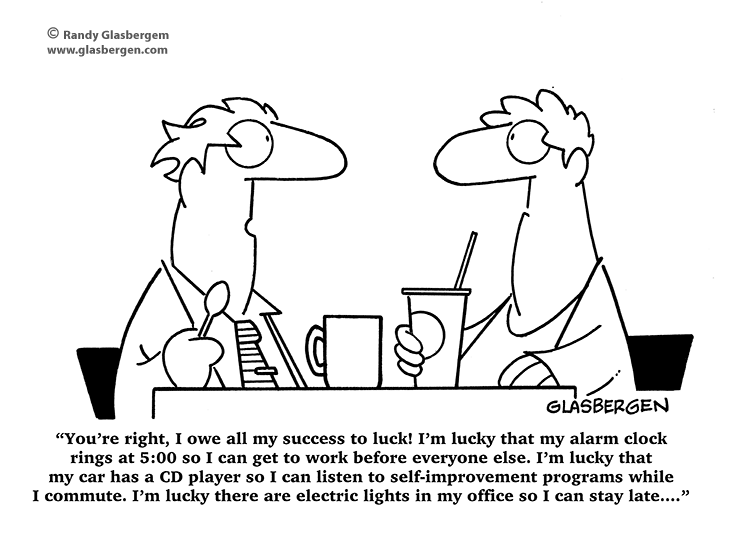
Copyright owner: Randy Glasbergen
I got to see that, while middle leaders and below often think of SLT as purely results-focused managers, they were actually focused now not just on the results, but also on the adults they wanted our students to become: There was review of the curriculum experiences of the students, their extra-curricular experiences, and the out-of-school opportunities we offer them. We spent time looking at different curriculum models such as the IB, the Middle Years Programme etc, and thinking about how closely the experiences they offered matched our aspirations for our children. Oddly enough, the current turmoil within our educational system served me well, as I got to see a team focus on the basics of the educational experience, and prioritise the things which really matter. I came to see that outstanding curriculum, teaching and learning, student experiences etc are never the result of accident or chance.

3. The opportunity to contribute

Within this context, I also had the chance to contribute to the above debates and see whether or not my own ideas stand up to scrutiny at such a high level. I think that's probably all I need to say on that section. They weren't laugh at. To my face, anyway. From my point of view, big win.

4. The opportunity to see how high-performing teams are forged

One of the most significant aspects of the secondment for me was seeing how high-performing teams are built and exploited to get the best out of each person. Like any good classroom, the team were divided differently for different tasks and projects, sometimes clearly in light of what they could bring to the project from their own expertise, but at other times to develop more latent skills which each member of the team perhaps needed to work on to become a more effective and rounded leader. There was a constant theme of support, and wanting to maximise the talents within the team, but also a feeling that they were constantly being asked to move forward, and become even better, even more balanced as individuals. What did I learn about myself within this environment? Well, apparently I've got some decent ideas. I have a focus on systems and strategy which will serve me well, but I also have a good eye on people, and hopefully won't ever put the systems above those people delivering them. Within a high performing leadership team, I held my own, hopefully, and would consider I had a shot at most AHT jobs. Having said that, you can probably see through the number of grammatical qualifiers and self-deprecations in the last few paragraphs that I haven't quite shaken off the demons of my own self-doubt. What I did get to see was that this isn't an entirely negative flaw, and that it also makes me a reflective person, which will again serve me well for the future as I try to grow professionally.

One interesting exercise we undertook as a whole team was a ColourWorks exercise, run by a company (ColourWorks, surprisingly) which asked us to answer a series of random and somewhat irritating questions and then presented us with a bunch of results about our leadership style. Considering how meaningless the exercise felt at the time I was doing it, I have to say that the results were stunningly accurate and insightful. I have  20+ page document at home about me and my leadership style from which neither I, nor any of my family, colleagues or friends have been able to fault more than about three statements. Interestingly, I am less gregarious in leadership than I like to think, and more reflective and logical. I am not pushy, or fiercely driven, and I always value consensus and people. As a result, I think I might be cut out for leadership up to certain levels, but not Headship. I am a good team player, and I can always help others improve their own ideas further, but I'm not necessarily a top leader. Perhaps it's a question of happiness or personal priorities: I find myself not driven enough by ambition to want to disrupt a work life balance which brings me great happiness and satisfaction as well as challenge. I'm not looking to be in a rut, I'm not wanting to coast: I genuinely want to be the best teacher and leader I can be, and to make a difference to as many students as possible. But I think at the very top you need a certain amount more self-belief and, let's face it, cojones, to take on those challenges and assume responsibility for everyone under you. One thing that does occur to me, however, is that someone like me, who doesn't allow things to get in the way of my own happiness, also understands how important this happiness and sense of personal satisfaction are for staff well-being as a whole, and that is an excellent attribute to have on any leadership team.

5. The opportunity to see where middle leaders fit in

As a middle leader I understand my function within the school much better now, and what opportunities I have to be able to help the leadership team by speaking up on matters whose impact I am better placed to understand than they perhaps are. This has also given me far more confidence to express those views, and I've noticed the same confidence emerging in others who have also had the same chance to undertake a secondment as I have. My bond with these people has now become much stronger as a result, and I can see that one of the points of offering secondments to middle leaders is to build this capacity for growth, self-discovery, development, and confidence. Similarly, from the leadership team's point of view, seconding middle leaders allows LT to gauge how broad or parochial the views of school issues are to those middle leaders, as well as how practical, feasible and strategic they are, so that when these middle leaders are consulted on matters affecting the whole school, the leadership have a good deal more faith in the feedback they get if they know the middle leaders in question can see things from both sides of the fence.


So in conclusion... 
  • I enjoyed the experience thoroughly
  • I enjoyed the challenges, and really enjoyed the whole-school responsibilities
  • I learnt an immense amount about how schools function, about how leadership works, and about myself and my own style of leadership
  • I learnt that leadership teams have real people in them too! And I learnt how to curb my natural tendency to bow in deference to superiors
  • I would recommend this to anyone, even if it's just to see what lies on "the other side of the fence"
  • If I hadn't been doing this on my full time-table, I think I would conclude that I might be able to manage a leadership job!
And finally, I would say I have learnt this, which I would like to pass on to all potential leaders, of the present or of the future:

Leadership without clearly defined core values, and aims which are consistent with these values, is nothing. Leadership without integrity is nothing. Leadership without reflection and questioning is nothing. Leadership without clear, consistent, transparent communication is nothing. 
There's a reason we are given twice as many ears as mouths, but once you're done using the ears, make sure that what you say is true, committed and strong.

Oh, and if any of you are thinking I could easily have describe Michael Gove here, go back and re-read the ears thing.

Now, who's going to give that job...?


Saturday, 20 April 2013

Obeying our seasonal rhythms

Last week I blogged about teacher's health after a particularly nasty shock about my own.
This week I decided to do something about it.
Last week I said I didn't have the answers to the problems I raised.
This week I tried looking for some. Over the next few weeks I'll do a few mini-blogs on each of the areas I raised during my last post, which will become more and more specific hopefully, and more and more useful.

Here's what I came up with. Please, if you're serious about maintaining your own health, may I first urge you to do two things in response to this post:
1) Have a go at some of these things, and give me some feedback on how you feel as a result: Does it work for you?
2) Please post some ideas at the bottom which you've tried, so the rest of us can try them. We're using this notion of collaborative working through Twitter et al to improve our teaching, so why should it not work to help us find solutions to over-working?

So here we go...

The first point I talked about last week was our seeming inability to obey our seasonal rhythms. I went away and tried to find something which was always very sensible advice when I used to train many years ago, and finally found it. They still ring true for me.

If you read my last blog (here), you'll notice that in TCM we talk about the 5 element system, which has correspondences in every area, including our own bodies (emotions, mental state, organs etc) and the outside world. Each element therefore has a season associated with it, and the nature of the element reflects the sorts of things we should be doing in each season to live in harmony with nature and not struggle against it so much.

Let's start with the element of Fire. Fire is the element associated with Summer (more detail here):

  • Have fun on a regular basis, even if you have to work at it at first. Make it a priority - schedule your fun, if that's what it takes. Don't compromise. Consider fun as important to your well-being as work or anything else you do.
  • Give of yourself to others. Take the time to listen. Take the risk of dipping into your own heart and finding what you have to give to others unconditionally - then just do it.
  • Live your passion, whether it be the church choir, rollerblading, preserving the environment, or writing poetry. If you don't know what your special passion is, be willing to admit that you don't. Meanwhile, stay amused and don't stop looking. When you find that great interest, dive into it wholeheartedly and enjoy!
  • Get physical. Get into your body and out of your head. Love, exercise, dance, run, play. Get your circulation going.

Earth is the element associated with Late Summer, and this is what its associations are:

  • Enjoy the abundance of fruits and fresh vegetables
    Be aware of their special qualities, each succulence different from the next. Carrots are crisp, cucumbers cool, tomatoes luscious, peaches sweet. Look at the seeds, and reflect on the fact that within each harvest lie the seeds of the next.
  • Be thoughtful of how you can nourish others.
    In this season when nature gives her bounty, we also rejoice in giving, with attention to the special needs of others. You need not wait until you can give a "great gift." A word, a courtesy, a thoughtfulness - given today - is a great gift.
  • Be conscious of the harvest of your life.
    Think about yourself, your relationships, and your work. What parts of your life are bearing fruit? Where is the harvest rich? Where do you find it stunted?
  • Consider what you need to do to make ready for the letting go of autumn.
    Holding your harvest in mind, ask what is overgrown or unneeded. What distracts you from your dearest concerns? What might you wish to simplify in yourself or in your life?

Metal is associated with the Autumn season:

  • Go through your closet, desk, garage, medicine cabinet - any cluttered storage area-and discard what you no longer need. Then donate, sell, or otherwise circulate what might be of value to others.
  • Do a mental inventory: Examine attitudes (prejudices, envies, hatreds, jealousies, resentments) stored within your psyche. When possible, contact those with whom you harbor old "stuff." Attempt to resolve the hurtful old issues, and then let them go.
  • For issues you cannot resolve directly with others, or for old issues with yourself, write them on paper, being as specific as possible. Then burn the paper, symbolically releasing the content.
  • Take time each day to breathe slowly and deeply. As you inhale the clean autumn air, feel yourself energized and purified. Feel the old negativity, impurity, and pain leave your body and psyche. Then contemplate briefly who you are without these identifications.

Finally, Water is the element associated with Winter:
  • Get more rest.
    This is nature’s season for rest, repair, and regeneration—a phase important for our next cycle of growth. The Nei Ching,oldest-known document of Chinese medicine, advises: “[In Winter], people should retire early at night and rise late in the morning, and they should wait for the rising of the sun.”
  • Schedule more time for your inner life.
    Use the energy of the season to discover more about yourself through reflection, reading literature that “restores the spirit,” being more aware of your senses, paying attention to your dreams. The winter season is an especially good time to begin the practice of meditation.
  • Choose more “warming” foods.
    As the weather cools and the body needs to generate more warmth, include more cooked foods and complex carbohydrates in your meals. Try dishes made with whole grains, squashes, beans, peas, and root vegetables such as potatoes, carrots, and garlic.
  • “Gather around the hearth” with people who mean the most to you.
    Winter evenings are an especially good time to rejuvenate and deepen relationships with those closest to you. Keep gatherings simple and relaxed.
Copyright 1997 by Neil Gumenick

And finally, let's talk about the present. Spring has finally sprung, and it is associated with the Wood element. You can read its key associations in much more detail here. However, here are a few things TCM philosophy recommends you can do to make the most of Spring's energy...

  • Begin your day early, with a brisk walk.
    Feel the sunshine pull you up and out, like the plants and animals. Watch buds rush into leaf, often doubling their size in a day. Look for birds' nests - you'll find them everywhere, even on top of air conditioners. Feel the life within you, like that outdoors, thrust up out of darkness into new possibilities. Make a garden. Eat greens.
  • Begin new things - at home, in your work, and in yourself.
    In this season when nature reinvents itself, we too can see people and situations with new eyes. Let new tissue grow over old hurts, and take fresh hope. Be creative. Make things, do things. Begin!
  • Consider how you wish to make ready for your summer harvest.
    Spring does not last forever. Use its bountiful energy wisely, so that the crops you sow - again, in yourself, in your work, and in your life - are those you wish to harvest. The energy of spring brings vision.

So there you are. Not rocket science. Just a way of making sure we're not fighting our environment too much. My experience (when I choose to listen to it!) has always shown me how much easier my life is when I don't struggle to overcome what is going on around me, and go with the flow. It is a wise teacher, and in Spring, it is reminding me that I'm as much a part of nature as everything else.

Good luck. Hope you haven't all turned into tree-hugging screaming hippies by the end of these blogs! And let me know how you get on...


Sunday, 14 April 2013

Teacher's health

Teachers' Health: What Are We Doing Wrong?

This blog goes back to one of my pet bug-bears, teachers' health. Unfortunately, it needs a bit of context. Bear with me, the points I'm making are worth it. In my opinion at any rate. Which hardly constitutes the most ringing endorsement, but it's the only one you're getting...

The other day I met up with a friend of mine who used to study taoist arts with me for many years. We taught t'ai chi together for well over a decade, studied therapeutic massage, diagnostics, acupressure, Chinese Medicine, and eventually she went on to become a professional acupuncturist and a lead teacher of acupuncture at one of the country's best acupuncture colleges. She regularly used to treat me in a preventative capacity, as is the idea in Chinese medicine: You treat people to keep them well, not once they're ill (stable door-horse bolted scenario). In fact the Chinese used to have a system whereby doctors could not charge for their services when you were ill (you couldn't earn money to pay, after all), so the whole medical system was predicated on the importance of prevention rather than cure (as is the case within our own system, which also happens to be so profitable for the major pharmaceutical companies incidentally. I'm just saying. And digressing apparently).

It has been a while since my last treatment, but this one provided me with a hell of a shock. According to my acupuncturist, my health has seriously deteriorated in the last eleven months, due to factors which can be solely attributed to teaching, despite the fact my western doctors tell me I'm doing everything perfectly. I eat well according to Western orthodoxy, I get above average amounts of exercise, and I generally look after myself. Nothing wrong, excellent health. Only I know different. I can feel that all is not well. And now I have someone telling me the same thing, someone telling me she can measure how far my constitution has been depleted. I am working at a pace which, in her own words, is constantly pushing the limits of what I am capable of withstanding, and is digging into my reserves of energy every day, not just occasionally. But they're reserves I say, that's what they're there for. And when I have no reserves left, apparently, that's it. Life essence spent. Grave time.

Not a nice thought. Especially for my family.

Now I'll be the first to acknowledge that doing an ASLDP course at the same time as a secondment to leadership, a whole-school project and running a faculty on a full timetable is a struggle, but to be honest I didn't think I was pushing it that much. My body on the other hand knows differently. And therein lies the problem: My brain seems to think it knows better, and rationalises all sorts of things which are bad for my health, to the extent of saying that this is what constitutes "normal" within the teaching profession. So here are a few of the things we're doing on a day to day basis in the teaching profession which are harmful to our health, and not to put too fine a point on it, are killing us slowly by using up our reserves of energy...

Obeying our seasonal rhythms
We've just come through a long hard winter (and I'm not even sure it's finished yet, dammit!). During that winter, every animal in the natural kingdom spent more time sleeping, expended less energy, and generally took it easy in a hibernatey type of way. Plants do the same in general: They die back, they collect their essences back into their roots, conserve their energy, distil it even, and then get ready to burst forth beautifully when the sun returns and the days lengthen. What do we do? We have our longest term, followed by an alcoholic holiday, and then straight back to work for more of the same. We leave the house when it's dark, and get home when it's dark, and then carry on working, despite the clear messages from the rest of the natural world: Rest up. And then we take our holidays when there is most energy around to be doing things, and most daylight. The beginning and end of school years are utterly at odds with the natural world, from which we are becoming ever more separate. If we had any sense, we would start in February, work our way up to our best learning in the summer, and as Autumn came and went we would harvest that knowledge (with exams, I guess), and then rest over Winter when the cycle is done.

Speaking of which... We get decent holidays in this job. So everyone keeps reminding us. But how much of your Easter holiday did you take, I wonder. Me? I spent four days on a students trip and a week in school running coursework and exam prep sessions. I doubt I'm unusual in this respect either. Whether it's because we need the time to catch up on work we've not managed to get done during the hectic term, or simply because of the guilt we feel every time someone berates us for the length of our holidays, I like many of my colleagues just seem to keep working through them. How strange.

Obeying our daily rhyhms
We can all relate to the concept of a body clock, especially when suffering from jet-lag after a long plane journey, or a really late night and lack of sleep. Your body functions in such a way as to take advantage of the 24 hours in a day, with different organs peaking at different periods according to Chinese Medicine.
As an example of this, you can see your stomach and spleen (both linked to the Earth element in TCM, which is in charge of nourishment) come online in the morning, when you need your first meal of the day: A meal eaten at that time is more effective than at any other time of the day, but how many teachers do I know who "skip breakfast" just to get in early?
(I could have used the Large Intestine between 5-7 a.m. as an example of the best time for bowel movements, but you're probably eating as you read this, so let's move on...)

All of this is fairly self-explanatory, and indeed self-evident if we stopped for a minute to listen to our bodies. Instead, we tend to listen to our schedule, our timetables and our piles of marking, which results in many of us skipping lunch, or even working through them, also no-nos in TCM. You see, in TCM, every organ is linked to functions, emotions and other areas of the body. Since we're on the Stomach and Spleen organs, I'll tell you that these are linked to the Earth element, with their functions being tied to the imagery of earth: As the source of sustenance, as the "mother" nurturer. Oddly, the emotion linked to this in Chinese medicine is called "pensiveness" or "over-thinking". It is often equated to worry and anxiety. And because the organ-emotion relationship works both ways, people who are doing a lot of thinking or worrying while they eat are actually impairing their stomach and spleen functions. Hence, when we worry, we often say we "feel sick", or that our stomachs are "tied in knots". In fact, for all the goodness you're getting from your food, you may as well not be eating most of it.

Meal times are a natural pause in the day, a time to down tools and switch onto another frequency. A time to come together and socialise and share. I don't know about you, but I have yet to work in a school environment which is conducive to that. In fact, I've heard arguments for ever shorter lunch and break-times based around the fact that "the kids will get out of control". And so we as teachers have to take another hit to our health, sometimes on a daily basis. I know that doesn't take much to distract me from eating at lunch.

Similarly, how many of us go home at night and start back on the work straight away? How many of us literally get up from the dinner table and start thinking straight away, or marking? What digestion time does that afford us? And did we even have time to savour the meal we've just eaten to give us sustenance? Did we even cook it? Or did we trust Messrs Sainsbury and co to do it for us and all we have to do is bung it in the microwave, because it's "convenient" and gives us yet more time for that all-consuming work? Because we know how much the supermarkets prioritise our health over their cheaper, more profitable ingredients...

Working with our bodies
Much of what working with our own bodies is about concerns obeying their natural rhythm, but there is more to it than that. As bi-peds, we have been walking on two legs for a long time now, and our spines, bones and musculature have aligned themselves to work optimally that way. Go ask a chiropractor how much harm we are doing ourselves sitting down for such long periods each day, leaning over the books. And it's not just your back: This constant slumping, and allowing the shoulders to hunch inwards constricts the lungs, and squashes the heart. As someone who is used to breathing very deeply, the last few months of unconscious stooping have resulted in a tangible shortness of breath. How do I know? Because we used to do one exercise based on holding one's breath years ago, which I used to be able to do for over a minute. Last week I had trouble getting to thirty seconds. I leave you to draw your own conclusions.

Our constant availability to students means we take few breaks, and when we do get time on our own, we tend to plonk ourselves down and power through as much work in one sitting as we can while there are no distractions. So far, since this shock diagnosis, I have taken a break very consciously every ten minutes while writing this blog. I can't say I've done anything less than an hour of sitting at a time over the last year.

Not only that, but the "work hard" attitude means we innately know we are missing out on life on some level, so we adopt a "play hard" attitude. I know teachers who glug a bottle of wine and half a kilo of chocolate on the sofa on a Friday night, because they've "earned it". Don't get me wrong, I don't object to alcohol and chocolate. But the lack of moderation is a ticking time-bomb if it becomes a regular part of your lifestyle and is, I would contend, a direct result of our working habits, and that's the root cause of the problem.

By the way, in case you're interested, in TCM the Liver is linked to the Wood element: It's function is the even distribution of energy throughout the body, and the smooth expression of emotions: If you have sudden mood swings, or energy blockages (highs and lows), then they can often be attributed to damage to the Wood element.

Working with our emotions
Which brings me nicely to emotions... In Chinese Medicine, there is no separation between the mental, physical, spiritual and emotional. All are linked, and therefore you can work out your own diagnosis from looking at the types of emotions you display regularly more than others. Or don't display. Because in Chinese Medicine, everything is about balance, and the lack of expression of emotions is as noteworthy as their over-expression. Controlling our emotions as "professionals" may also, believe it or not, be damaging to our health.

My teacher always used to explain it to me like a pressure cooker: You can keep the lid on as long as you like, but if you don't vent steam sometimes, you're heading for an almighty explosion! Repressing our emotions is unhealthy, but at the same time we have to be careful about being cavalier with wilfully expressing everything and damaging our students' sense of self-confidence for life! I'm not advocating that. But on the other hand, did you know that based on population averages, there is a disproportionate number of  primary school teachers who die of heart attacks? I got this from a couple of doctor friends of mine who have both noticed this pattern during their careers. My acupuncture friend explains it thus: The heart is linked to the Fire element, which is in turn linked to the emotion of joy. The constant (and sometimes false) expression of joy in some these teachers, she reckoned, places a huge burden on the heart's function, until... Same thing happens to comedians I am told. The healthy solution is to be true to your emotions, and not repress them. Easier said than done in our job.

Working with our spirits
Nourishment of the spirit is one area which on the surface of it, we would seem to be getting right. After all, the spirit is nourished by giving, and we do that every single day: It's why we call it a vocation and not a job. We are dedicated to giving to others. But the spirit needs to be nourished as well. And I've noticed that if I'm going to give a great deal every day of my life, then I work best when I surround myself with people who also nourish me, who are positive and don't act as a drain on my energy. That support mechanism is important, but even more important is to give myself time for nourishing myself. "Take a moment", as my wife says. Taste and savour the food and wine, smell the flowers, feel the sunshine on my skin. Open my lungs and breathe fresh, ion-y air. Laugh at the tiniest of silly things my daughter does, and join in, because the marking can wait. Be. And ignore the nagging compulsion to Do.

We have developed in our profession, and it may be in the modern world as a whole, a high-tempo lifestyle which is always switched on and has become the norm to us, so much so that we don't even realise the changes which have happened to our working patterns over the last few decades. I didn't anyway. Now I'll be honest and say I thought that I was doing all of the right things to look after my own health, as I've always taken it as my responsibility, and refused to abdicate responsibility for my health to someone else (I've yet to find anyone with as much of a vested interest in maintaining my health as I have for starters!). But the prognosis this week tells me I haven't been doing it well enough clearly, and I wasn't aware of it. I am losing my own sensitivity to my health, apparently through over-working. That's a shocking fact. I realise that I am complicit in this society's increasing distance from natural rhythms by virtue of not doing anything to oppose it.

So what is the solution, and what is the point of me writing this? Well, like many of you bloggers out there, I'm writing it to crystallise my own ideas, and to work out what I do about the problems I'm identifying. I realise this blog has offered no solutions, and I'll be honest and say that I don't have them as yet. But I am looking for them, and I will be testing them, and if they work, trust me, I'll be on the blog immediately with findings! Above all, however, it is NOT a call for sympathy: It is an externalisation of a thought process I need to work through for myself, and for those I love. I would partly be grateful to know that it's not just me who feels this, and I would be even more grateful for any answers. But above all, it's for me, so I hope you'll forgive me indulging myself this time out.

Hopefully you'll notice that the publication of this blog, my last for a while I think, is timed as a deliberate reminder to us to be good to ourselves as we start the new term, and as we re-calibrate our professional courses in accordance with our personal values and priorities. And as a reminder to myself, should I continue to work towards a leadership path, to think about how I set up a working environment which nurtures the bodies, minds and souls of every single person in that establishment, over and above the exam factory requirements. This I do solemnly swear...


Saturday, 16 March 2013

Making Learning Irresistible


Mick Waters
Making learning Irresistible

Last  weekend was my first experience of the Coventry Learning Partnership Plus conference, and unfortunately I didn't really get the full flavour of all the excellent workshops going on because my school volunteered me to run one! What I did have was the privilege of hearing Professor Mick Waters talk to us on the Friday night about making learning irresistible. He talked for 90 minutes. It barely felt like 10.

I talked to several people afterwards about what they'd taken from the speech. We were all inspired, but could we put our finger on what exactly the thrust of the talk had been? Could we hell! This blog is my attempt to try and draw some conclusions from what I heard, and summarise where Professor Waters thinks we should be heading in education, a direction I have to say from the outset that I whole-heartedly agree with.

By way of personal context, there has been a lot of talk in our leadership team at school about the role of character in a child's education, about teaching more than simply content, "subjects", and even learning skills. Our current education system seems intent on reducing the really important things we teach our children to lip-service, as it is perhaps not deemed to be measurable, valuable or, dare I use the jargon du jour, "rigorous". This isn't a party political point, as I think the last government's focus on targets, attainment etc are equally blame-worthy in this respect. And nor am I saying we shouldn't be accountable for our results. I am simply arguing that our present focus on what can be measured has created an unhealthy obsession with those things over the other important areas of our educational remit, namely to help students to discover who they are, what they can do, to foster their curiosity, to nurture their talents and interests, and to get them to understand how to accomplish their goals meaningfully in a way which is as beneficial to society as it is to them. Children who care, rather than children who spend, perhaps. Though I'm told this is bad for the economy. By which of course we mean the rich folk at the top of it. Moving on...

Professor Waters' starter for the ten is the contention that, in order to prepare for and learn about the outside world, the UK for some reason corrals students behind a fence, in institutions where we actually ignore and fall behind the real world all the time. We are obsessed by the need to get on, get through the content, and miss out on the chance to make things come alive. In our efforts to have our students undertake "meaningful" activities all the time, while taking the register for example (we make them do planner checks, numeracy activities, give them tonnes of information etc), we fail to realise that the real world is always there to be tapped into.

Our focus on results has another very negative effect on students: We label them. And we label them in a way which stigmatises them deeply, despite the fact that what we are labelling is transient. One child can't do equations yet. Another has difficulties focusing at a certain time of day. Another can't get to grips with a couple of particular subjects, so we label them "Not achieving 5 A*-C grades"! Here's the thing though: If you were to grade yourself in different subjects at different times, how would you fair? On a scale of Outstanding to Unsatisfactory, how would you rate your own abilities in relation to gardening, decorating, writing, taking photographs, playing an instrument or learning a language? I imagine few of us would be excellent all-rounders, but that's not to say we don't have serious talents in one or more areas: Just look at Einstein. Bit of a failure in school by all accounts. Likewise, students are at different levels in different subjects at different times, but our need to measure things makes it easy for us to focus on the numbers and not the child in front of us. Do the numbers really tell the story? Oddly enough I was listening to a Radio Four business programme the other day where several chief execs were agreeing on this very point, and saying that the data they got on their desks every day was a deeply inferior diagnostic tool compared to direct contact with their people on the ground floor and their customers. A lesson for us all perhaps...

So back to the students: Most of us start out positively in school, but even with the best of intentions, because we can't invest sufficient time to master a skill to the outcome level we want, we end up as "disillusioned triers" who give up on our ability to learn it. Waters does a great experiment with kids: He asks them how they would rate themselves in all of their school subjects. Apparently you never get more than 40% say they're any good at something. But if you ask them about how good they will be at driving and learning to drive, and whether they'll be any good as drivers, they respond overwhelmingly positively. About something they've never tried before. Is it the learning experience which puts us down, or the labeling which occurs along the way?

Similarly we could ask as professionals whether a teacher whose lesson is described as "satisfactory" is actually a satisfactory teacher? Or is this just a label? A snapshot. Under pressure too. Like a terminal exam even. Strikes me as a bit unfair to judge us this way on an annual basis, never mind judging a whole school every four years using that method. But boy do we bust a gut to get the "Outstanding" label! Professor Waters' conclusion was that the Outstanding teacher teaches good lessons consistently, but more than that: He or she also looks after the lonely child in the corridor. Is the latter any less important that the former? Are the teacher who have left a life-long impression on your lives the ones who taught tight formulaic "Outstanding" lessons every day? Or the ones who cared? Who took the time to listen to you? Who took a genuine interest in you as a person?

Many Outstanding schools are outstanding because they follow "the trudge", and they do it well, and have hit the right formula. The relentless focus on "5 A*-C grades", "RAISEOnline", CVA, the systematic monitoring, the countless interventions: All of these serve to get as many students as possible over that finish line which the data says they should cross, based on mathematical probabilities and algorithms we shouldn't question because they're far too complex for us to understand. And then they suspend the timetable for a day occasionally so that they can do a whole-school activity which will provide the rounding out of their characters (!) which society also requires. Are we really delivering that? Not according to Mick Waters', industry, the government, the parents or the Daily Mail!

A futures learning outlook

What we really need is to focus on what we hope for our students. The government is more focused on the core of knowledge, but we should be producing rounded human beings, and enthusiastic, curious learners. An outstanding teacher's role is to raise the spirits and self-esteem of their students, and to raise their gaze so that they look up at the world around them and see themselves as part of it. Our role is to help them find out who they are, and how they can make a positive difference to the world, and find a sense of their own happiness within the roles they choose for themselves. Our curriculum should be based on the big questions, with students clear about how the small matters fit into the bigger picture. It should prepare them to tackle big questions, and connect to the real world every lesson. Every child should be able to see the relevance of lessons for life in the big wide world as it is today. But I would suggest that this is just one aim. The second, and more important one as far as I am concerned, is this: If we start by showing students how their learning connects to the real world as it is, we should also be fostering the kind of curiosity and thinking which will help them shape the society that we could have. Because demonstrating to students how they could fit into modern society means we implicitly accept everything about that society, including its values and priorities. And I for one think that this demonstrates a real paucity of ambition. I would hope that our children can do a better job of society than we have. But it's unlikely to happen if we persist in telling them that what we have now is the only way it can be done.


The best summary of this perspective I've ever seen was written by a man named Kahlil Gibran, in a brilliant book full of wisdom call The Prophet. Given the daily vacillations in education policy and debate in this country, these thoughts help to anchor me as a teacher and a parent.

Your children are not your children. 
They are the sons and daughters of Life's longing for itself. 
They come through you but not from you, 
And though they are with you, yet they belong not to you. 
You may give them your love but not your thoughts. 
For they have their own thoughts. 
You may house their bodies but not their souls, 
For their souls dwell in the house of tomorrow, which you cannot visit, not even in your dreams. 
You may strive to be like them, but seek not to make them like you. 
For life goes not backward nor tarries with yesterday. 
You are the bows from which your children as living arrows are sent forth. 
The archer sees the mark upon the path of the infinite, 

And He bends you with His might that His arrows may go swift and far. 
Let your bending in the archer's hand be for gladness; 
For even as he loves the arrow that flies, so He loves also the bow that is stable.